
Match List - I with List - II. Choose the correct answer from the options given below :List - I List - II (A) White noise (I) Reduces antenna height (B) RMS noise voltage (II) \(P_{C}\left(\dfrac{m^{2}}{2}\right)\) (C) Modulation (III) Inversely proportional to \(\sqrt{T}\) (D) PDSBSC (IV) Johnson Noise
(A)-(IV), (B)-(III), (C)-(I), (D)-(II)
Two of the pairings are unambiguous and they fix the code: (A)-(IV), (B)-(III), (C)-(I), (D)-(II), option 1.
(A) White noise and Johnson noise. Johnson-Nyquist noise is thermal noise in a resistor, and its power spectral density is flat — the same at every frequency up to terahertz:
\(S(f)=4kTR\ \text{V}^{2}/\text{Hz}\)
A flat spectrum is precisely what "white" means, by analogy with white light containing all colours equally. The two names describe the same thing from different angles: one names the mechanism, the other the spectrum.
(D) PDSBSC and Pcm2/2. In double-sideband suppressed-carrier transmission the carrier is removed entirely, so the whole transmitted power is in the two sidebands. Each carries \(m^{2}P_{c}/4\), giving a total of
\(P_{DSBSC}=\dfrac{m^{2}P_{c}}{2}\)
which is exactly the sideband term of the full AM expression \(P_{t}=P_{c}\left(1+m^{2}/2\right)\) with the carrier's 1 dropped — the whole point of suppressing it.
(C) Modulation and reduced antenna height. An efficient antenna must be comparable with a wavelength, conventionally \(\lambda/4\). A 1 kHz baseband signal has \(\lambda=300\) km, needing a 75 km aerial — impossible. Modulating it onto a 1 MHz carrier shortens the wavelength to 300 m and the aerial to 75 m. Translating the signal upward in frequency is therefore the reason radio is possible at all, and it is the first justification given for modulation in every textbook.
(B) RMS noise voltage and the inverse square root. The thermal noise voltage itself is
\(V_{n}=\sqrt{4kTBR}\)
which rises as the square root of absolute temperature. The entry is therefore to be read with T as the observation time: measuring noise over a longer interval averages more independent samples, and the uncertainty of the resulting RMS estimate falls as \(1/\sqrt{T}\). This is why a noise measurement is integrated for as long as the experiment allows, and it is the only pairing left once the other three are placed.
Hence, the correct code is (A)-(IV), (B)-(III), (C)-(I), (D)-(II).
Similar Questions
Match the following lists :
List – I List – II a. PCM i. Slope overload distortion b. DM ii. Constant carrier frequency c. AM iii. Encoding d. TDM iv. Commutator The correct match is :
Match the following :
List – I List – II a. DSB-SC modulation i. envelope detection b. SSB-modulation ii. Foster Seeley c. AM-demodulation iii. Weaver's method d. Phase-shift detection iv. Balanced modulator Codes :
Match the following :
List – I List – II a. Power efficient transmission i. SSB-SC b. Most bandwidth efficient transmission of voice signal ii. VSB c. Simplest receiver iii. FM d. Bandwidth efficient transmission of signals with significant d.c. component iv. AM Codes :
Match the following lists :
List - I List - II a) 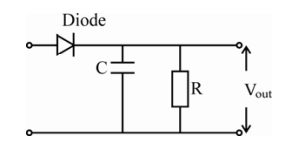
i) Frequency modulated detector b) 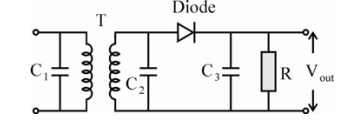
ii) Pre-emphasis c) 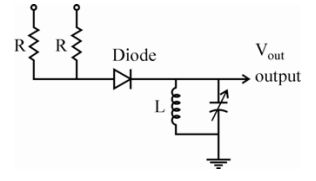
iii) Amplitude modulator d) 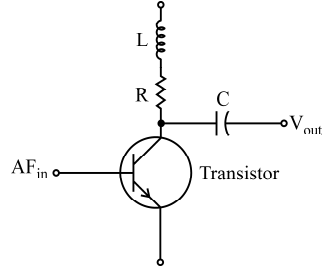
iv) Amplitude detector Choose the correct answer from the codes given below:
Match the following lists :
List -I List - II a. Power efficient transmission of signals i. AM b. Bandwidth efficient transmission of signals with significant dc signals ii. VSB c. Most bandwidth efficient transmission of voice signals iii. SSB-SC d. Simplest Receiver Circuit iv. FM Correct Codes are :
Arrange in order of the increasing Bandwidth value for the below mentioned systems :
(a) DSB-SC (b) VSB (c) FM (d) SSB
Codes :
Important Questions from Modulation
Which of the following modulations is used in India for radio transmission?
- Which of the following is a result of over-modulation?
Which of the following statements are correct?
A. DSB‐SC modulation is well suited for point to point communication involving one transmitter and one receiver.
B. VSB modulation is a linear modulation scheme.
C. SSB is a non‐linear modulation scheme.
D. FM is a linear modulation scheme.
Choose the correct answer from the options given below:
The condition for achieving distortion-less demodulation of an amplitude-modulated signal using an envelope detector is
When a broadcast AM transmitter is 50 % modulated, its antenna current is 12 A. What will be the current when the modulation depth is increased to 90%?



