
Match the following lists : The correct match is :List – I List – II a. PCM i. Slope overload distortion b. DM ii. Constant carrier frequency c. AM iii. Encoding d. TDM iv. Commutator
a-iii, b-i, c-ii, d-iv
Each entry in List II is the defining feature of exactly one system, so the matching is direct: a-iii, b-i, c-ii, d-iv — option 4.
| System | Feature | Why |
|---|---|---|
| a. PCM | iii. Encoding | Samples are quantised and coded as binary words |
| b. DM | i. Slope overload distortion | Fixed step size cannot follow a fast input |
| c. AM | ii. Constant carrier frequency | Amplitude varies; frequency does not |
| d. TDM | iv. Commutator | Rotating switch samples the channels in turn |
Slope overload — the characteristic defect of delta modulation. DM transmits one bit per sample, moving its staircase approximation up or down by a fixed step \(\Delta\) at each clock instant. The fastest the staircase can climb is therefore
\(\dfrac{\Delta}{T_{s}}=\Delta f_{s}\)
and if the input rises faster than this the approximation falls behind and cannot catch up until the input slows. The condition for avoiding it is
\(\Delta f_{s}\ge\left|\dfrac{dm(t)}{dt}\right|_{max}=A\omega_{m}\)
The opposite fault, granular noise, appears when the step is too large for a slowly varying input, so the staircase hunts about it. Adaptive delta modulation varies the step size to escape both — which is exactly what the fixed step of plain DM cannot do.
Encoding is what makes PCM digital. Sampling and quantising alone give PAM levels; the encoder turns each level into an n-bit word, and it is that step which buys regeneration and noise immunity.
The commutator is the classic picture of time-division multiplexing: a rotating switch that touches each channel in turn, giving every one its own time slot, with a matching de-commutator at the receiver kept in step by frame synchronisation. Contrast frequency-division multiplexing, where all channels are present at once but in different frequency bands.
Constant carrier frequency distinguishes AM from the angle-modulation family: in AM the envelope carries the message and the frequency stays put; in FM and PM the amplitude stays put and the frequency or phase carries the message.
Hence, the correct match is a-iii, b-i, c-ii, d-iv.
Similar Questions
Match the following :
List – I List – II a. DSB-SC modulation i. envelope detection b. SSB-modulation ii. Foster Seeley c. AM-demodulation iii. Weaver's method d. Phase-shift detection iv. Balanced modulator Codes :
Match the following :
List – I List – II a. Power efficient transmission i. SSB-SC b. Most bandwidth efficient transmission of voice signal ii. VSB c. Simplest receiver iii. FM d. Bandwidth efficient transmission of signals with significant d.c. component iv. AM Codes :
Match List - I with List - II.
List - I List - II (A) White noise (I) Reduces antenna height (B) RMS noise voltage (II) \(P_{C}\left(\dfrac{m^{2}}{2}\right)\) (C) Modulation (III) Inversely proportional to \(\sqrt{T}\) (D) PDSBSC (IV) Johnson Noise Choose the correct answer from the options given below :
Match the following lists :
List - I List - II a) 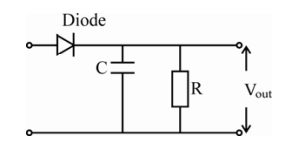
i) Frequency modulated detector b) 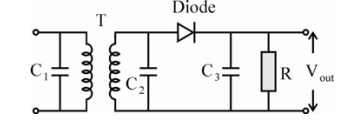
ii) Pre-emphasis c) 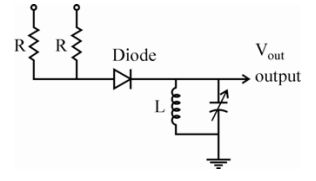
iii) Amplitude modulator d) 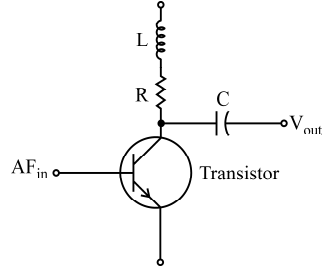
iv) Amplitude detector Choose the correct answer from the codes given below:
Match the following lists :
List -I List - II a. Power efficient transmission of signals i. AM b. Bandwidth efficient transmission of signals with significant dc signals ii. VSB c. Most bandwidth efficient transmission of voice signals iii. SSB-SC d. Simplest Receiver Circuit iv. FM Correct Codes are :
Arrange in order of the increasing Bandwidth value for the below mentioned systems :
(a) DSB-SC (b) VSB (c) FM (d) SSB
Codes :
Important Questions from Modulation
Which of the following modulations is used in India for radio transmission?
- Which of the following is a result of over-modulation?
Which of the following statements are correct?
A. DSB‐SC modulation is well suited for point to point communication involving one transmitter and one receiver.
B. VSB modulation is a linear modulation scheme.
C. SSB is a non‐linear modulation scheme.
D. FM is a linear modulation scheme.
Choose the correct answer from the options given below:
The condition for achieving distortion-less demodulation of an amplitude-modulated signal using an envelope detector is
When a broadcast AM transmitter is 50 % modulated, its antenna current is 12 A. What will be the current when the modulation depth is increased to 90%?



