
1
Simplifying Trigonometric Expressions
This question asks us to simplify a given trigonometric expression involving powers of sine and cosine. To simplify, we will use fundamental trigonometric identities and algebraic manipulation.
Understanding the Expression
The expression we need to simplify is:
\(\rm \frac{\sin^4 \theta+\cos ^4\theta}{1-2\sin^2\theta.\cos^2\theta}\)
Let's look at the numerator and denominator separately.
Simplifying the Numerator: \(\sin^4 \theta+\cos ^4\theta\)
We can rewrite the numerator \(\sin^4 \theta+\cos ^4\theta\) using algebraic identities. Recall the identity \((a+b)^2 = a^2 + b^2 + 2ab\). From this, we can write \(a^2 + b^2 = (a+b)^2 - 2ab\).
Let \(a = \sin^2 \theta\) and \(b = \cos^2 \theta\).
Then, \(\sin^4 \theta+\cos ^4\theta = (\sin^2 \theta)^2 + (\cos^2 \theta)^2\).
Applying the identity \(a^2 + b^2 = (a+b)^2 - 2ab\), we get:
\(\sin^4 \theta+\cos ^4\theta = (\sin^2 \theta + \cos^2 \theta)^2 - 2(\sin^2 \theta)(\cos^2 \theta)\)
Now, we use the fundamental trigonometric identity: \(\sin^2 \theta + \cos^2 \theta = 1\).
Substitute this into the expression:
\(\sin^4 \theta+\cos ^4\theta = (1)^2 - 2\sin^2 \theta \cos^2 \theta\)
\(\sin^4 \theta+\cos ^4\theta = 1 - 2\sin^2 \theta \cos^2 \theta\)
So, the simplified form of the numerator is \(1 - 2\sin^2 \theta \cos^2 \theta\).
Analyzing the Denominator: \(1-2\sin^2\theta.\cos^2\theta\)
The denominator of the original expression is \(1-2\sin^2\theta.\cos^2\theta\). This is exactly the same as the simplified form of the numerator we found.
Putting it Together
Now substitute the simplified numerator back into the original expression:
\(\rm \frac{\sin^4 \theta+\cos ^4\theta}{1-2\sin^2\theta.\cos^2\theta} = \frac{1 - 2\sin^2 \theta \cos^2 \theta}{1 - 2\sin^2 \theta \cos^2 \theta}\)
Assuming the denominator is not zero (which is generally true for real \(\theta\) as explained below), the expression simplifies to:
\(\frac{1 - 2\sin^2 \theta \cos^2 \theta}{1 - 2\sin^2 \theta \cos^2 \theta} = 1\)
Condition for Denominator Not Being Zero
The denominator \(1-2\sin^2\theta.\cos^2\theta\) would be zero if \(1 = 2\sin^2\theta.\cos^2\theta\). We know that \(\sin(2\theta) = 2\sin\theta\cos\theta\), so \(\sin^2(2\theta) = 4\sin^2\theta\cos^2\theta\), which means \(\sin^2\theta\cos^2\theta = \frac{\sin^2(2\theta)}{4}\). Substituting this, we get \(1 = 2 \left(\frac{\sin^2(2\theta)}{4}\right) = \frac{\sin^2(2\theta)}{2}\). This means \(\sin^2(2\theta) = 2\). However, the maximum value of \(\sin^2\) of any angle is 1. Since \(\sin^2(2\theta)\) cannot be greater than 1, \(\sin^2(2\theta) = 2\) has no real solution for \(\theta\). Therefore, the denominator \(1-2\sin^2\theta.\cos^2\theta\) is never zero for real values of \(\theta\).
Conclusion
The simplified value of the expression \(\rm \frac{\sin^4 \theta+\cos ^4\theta}{1-2\sin^2\theta.\cos^2\theta}\) is 1.
Reviewing the Options
- 1. 1
- 2. 2
- 3. -1
- 4. 0
Our simplified value is 1, which matches option 1.
| Step | Expression | Explanation |
|---|---|---|
| 1 | \(\sin^4 \theta+\cos ^4\theta\) | Start with the numerator. |
| 2 | \((\sin^2 \theta)^2 + (\cos^2 \theta)^2\) | Rewrite using squares. |
| 3 | \((\sin^2 \theta + \cos^2 \theta)^2 - 2\sin^2 \theta \cos^2 \theta\) | Apply \(a^2+b^2 = (a+b)^2 - 2ab\) with \(a=\sin^2\theta, b=\cos^2\theta\). |
| 4 | \((1)^2 - 2\sin^2 \theta \cos^2 \theta\) | Use \(\sin^2 \theta + \cos^2 \theta = 1\). |
| 5 | \(1 - 2\sin^2 \theta \cos^2 \theta\) | Simplify the numerator. |
| 6 | \(\rm \frac{1 - 2\sin^2 \theta \cos^2 \theta}{1-2\sin^2\theta.\cos^2\theta}\) | Substitute the simplified numerator into the original expression. |
| 7 | \(1\) | Cancel the identical numerator and denominator. |
Revision Table: Trigonometric Identities
| Identity | Description |
|---|---|
| \(\sin^2 \theta + \cos^2 \theta = 1\) | The fundamental Pythagorean identity relating sine and cosine. |
| \(\sin(2\theta) = 2\sin\theta\cos\theta\) | Double angle identity for sine. Useful for rewriting \(\sin\theta\cos\theta\). |
| \(a^2 + b^2 = (a+b)^2 - 2ab\) | An algebraic identity useful for rewriting sums of squares. |
| \(a^4 + b^4 = (a^2+b^2)^2 - 2a^2b^2\) | A specific application of the previous identity for fourth powers. |
Additional Information: Simplifying Complex Trigonometric Expressions
Simplifying trigonometric expressions often involves recognizing patterns and applying fundamental identities. Here are some tips:
- Look for opportunities to use the Pythagorean identity \(\sin^2 \theta + \cos^2 \theta = 1\).
- Try to factor expressions or expand squares using algebraic identities.
- Convert all terms to sine and cosine if possible, especially in expressions involving tan, cot, sec, or cosec.
- Look for double angle or other compound angle identities if angles like \(2\theta\) or \(\theta/2\) appear.
- If the expression involves powers like \(\sin^4 \theta\) or \(\cos^4 \theta\), think about how they relate to \(\sin^2 \theta\) and \(\cos^2 \theta\). The algebraic identity \(a^2+b^2=(a+b)^2-2ab\) is very useful here.
- Always check if the denominator can be zero, although in many standard problems, it will be designed to be non-zero for real values of the variable.
- Practice is key! Work through various examples to become comfortable with different techniques.
By applying these strategies, we can simplify complex trigonometric expressions effectively.
Similar Questions
If sin t + cos t = \(\frac{4}{5}\), then find sin t. cos t.
If sec A + tan A = 5,then sin A is equal to:
Simplify the given expression.
\(\frac{1+sin^4 \theta+cos^4\theta}{cos^2 \theta+sin^4\theta}\)
Which of the following will satisfy a2 = b2 + (ab)2 for the values a and b?
If sec x – cos x = 4, then what will be the value of \({{(1 \ + \ cos^2 x)} \over cos x}\)?
If cos θ + cos2θ =1, find the value of \(\sqrt{\sin^4θ + \cos^2θ}\).
If Sin θ = \(\frac{4}{5}\), find the value of tan θ - Cot θ.
In the given figure if AD ⊥ BC, AC = 26 units, CD = 10 units, BC = 42 units, ∠DAC = x and ∠B = y then the value of \(\rm \frac{6}{\cos x}-\frac{5}{\cos y}+8\tan y\) is:
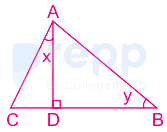
If a cot θ + b cosec θ = p and b cot θ + a cosec θ = q then p2 - q2 is equal to ______.
If \(\rm \cot A=\frac{12}{5}\), then the value of (sin A + cos A) × cosec A is _______.
Important Questions from Trigonometric Ratios and Identities
What is the ratio of the greatest to the smallest value of 2 – 2 sin x – sin 2x, 0 ≤ x ≤ (π/2)?
If sinθ = \(\frac{4}{5}\) , Find the value of sin3θ
If x, y are acute angles, where 0 < x + y < 90° and sin(3x - 40°) = cos (3y + 40°), then the value of tan (x + y) is equal to
What is (1 + cot θ - cosec θ)(1 + tan θ + sec θ) equal to?
If \(\sin \theta =\frac{3}{5}\) and \(\cos \theta =\frac{4}{5}\) , then the value of \(\frac{1+\tan \theta}{1-\cot \theta}\) is:



