Which of the following dienes is least suitable for Diels-Alder reaction with maleic anhydride ?
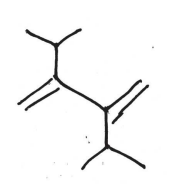
This question is built on drawn structures, so the criterion for judging the options is set out below.
The Diels-Alder reaction has one absolute geometric requirement: the diene must be able to adopt the s-cis conformation. Only then do the terminal carbons lie close enough to reach both ends of the dienophile in the cyclic transition state. A diene that cannot reach s-cis simply does not react, however electron rich it may be.
So the least suitable diene is whichever one is locked s-trans or is prevented from reaching s-cis by sterics.
Two situations cause this. A diene held rigidly s-trans in a ring system — for example the two double bonds in separate fused rings of a steroid-like skeleton — can never rotate into position, and is completely unreactive. Separately, bulky substituents at the 2 and 3 positions, or a substituent that clashes on rotation, raise the energy of the s-cis form so much that the equilibrium population becomes negligible.
The contrast is instructive. Cyclopentadiene is permanently locked s-cis by its ring, which is why it is exceptionally reactive — so much so that it dimerises on standing at room temperature and must be cracked before use. Butadiene itself prefers s-trans but rotates freely, so it reacts perfectly well.
Electronics matter too, but secondarily: the reaction has normal electron demand, so electron-donating groups on the diene accelerate it, and maleic anhydride is such a good dienophile precisely because its two carbonyls lower the LUMO.
Per the official final answer key the answer is option (D).
Similar Questions
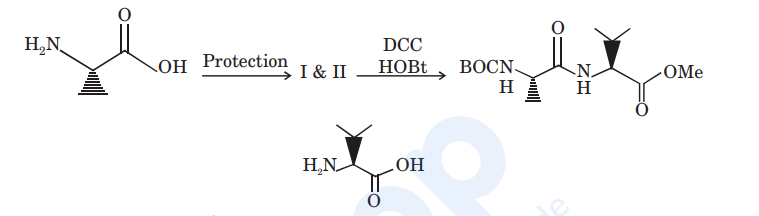
Complete the following reaction by suggesting the appropriate substrates (I & II) :
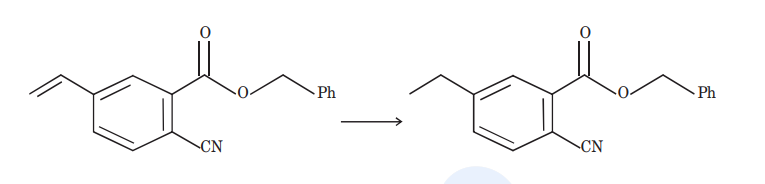
Suggest most suitable conditions for the following selective conversion :
What major product is isolated from the following reaction :
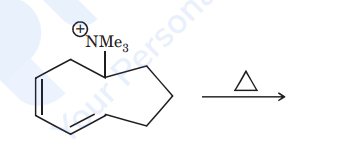
Predict stereochemical outcome of the following reaction :
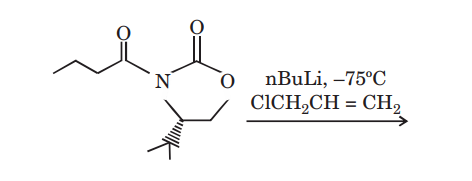
The major product of the following reaction is :
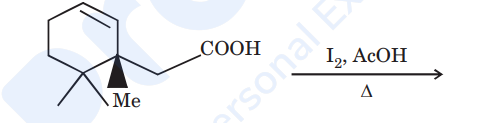
Predict the major product of the following reaction :
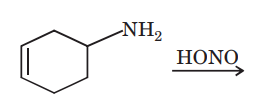
The major product of the following reaction is :
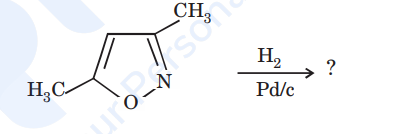
The major product of the following reaction is :
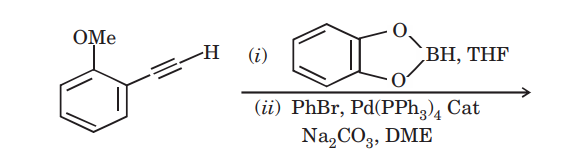
The major product formed in the following reaction is :
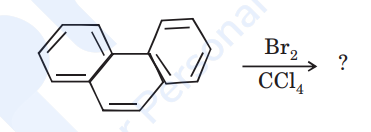
The major product formed in the following reaction is :
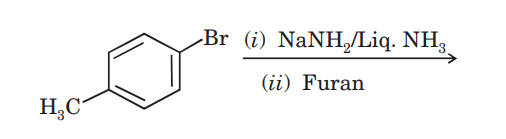
Important Questions from Chemistry in Everyday Life
Which of the following is a greenhouse gas?
I. Methane
II. Nitrous oxide
The gas which turns lime water milky is:
Liquefied Petroleum Gas (LPG) is mainly a mixture of:
Among the following, the conducting form of carbon is
Which of the following is NOT a Fossil Fuel?