Predict stereochemical outcome of the following reaction :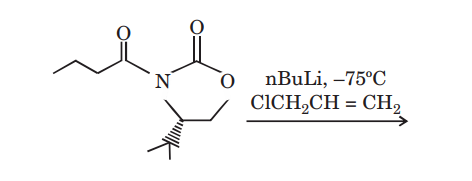
The new stereogenic center formed will have `R' configuration
The stem carries a drawn structure; the four options are text and are reproduced in full above.
The oxazolidinone shown is an Evans chiral auxiliary, and this is the classic asymmetric alkylation. The reaction is a benchmark method precisely because it does not give a racemic or 1:1 outcome, which immediately makes the "equal amounts of both diastereomers" option wrong.
The mechanism explains the selectivity. nBuLi at -75°C removes the proton α to the acyl carbonyl, generating a lithium enolate. That enolate is held in a rigid, chelated arrangement: the metal bridges the enolate oxygen and the oxazolidinone carbonyl oxygen, locking the two carbonyls anti to one another and fixing the geometry of the whole system.
With the enolate face-locked, the substituent on the oxazolidinone ring (typically isopropyl or benzyl) shields one face completely. The electrophile — here allyl chloride — can only approach from the opposite, unhindered face. Alkylation therefore occurs with high diastereoselectivity, routinely better than 95 : 5.
A new stereogenic centre is created at the α carbon, since it now bears four different groups, so the last option is also excluded. Which of R or S results depends on which enantiomer of the auxiliary was used, and that is read from the drawn structure.
The auxiliary is later removed hydrolytically or reductively and can be recovered and reused, which is what makes the method practical.
Per the official final answer key the new stereogenic centre has the `R' configuration.
Similar Questions
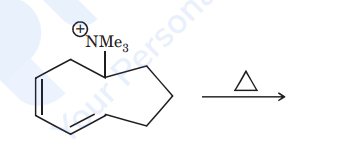
What major product is isolated from the following reaction :
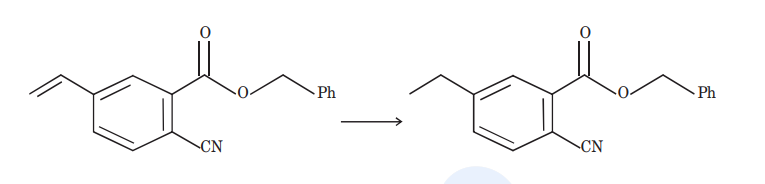
Suggest most suitable conditions for the following selective conversion :
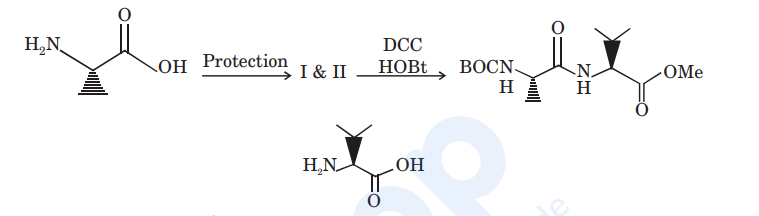
Complete the following reaction by suggesting the appropriate substrates (I & II) :
Predict the major product of the following reaction :
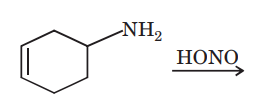
The major product formed in the following reaction is :
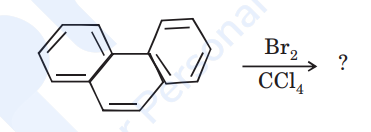
Predict the major product of the following reactions based on HSAB principle :

The major product of the following reaction is :
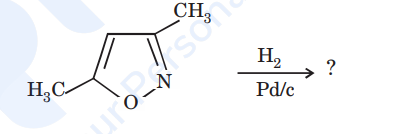
Predict the major product of the following reaction :
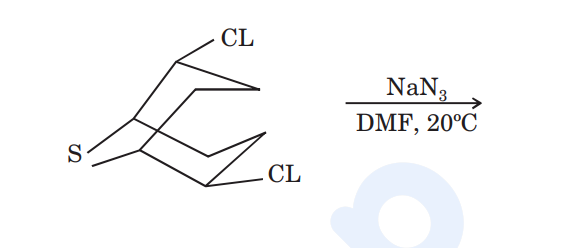
The major product of the following reaction is :
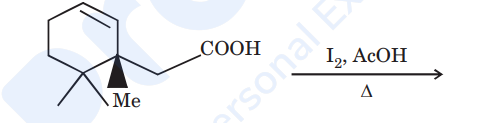
The major product of the following reaction is :
Important Questions from Chemistry in Everyday Life
Which of the following is a greenhouse gas?
I. Methane
II. Nitrous oxide
Which one of the following is used in soda-acid fire extinguishers?
The separation of two immiscible liquids can be done based on the difference in their_______.
Orange juice contains ______ acid due to which it tastes sour.
Impure water can be made pure