The significance of weight average ($\overline{M}w$) and number average ($(\overline{M}n)$) molecular weights is that :
$(\overline{M}w$) is sensitive to high molecular weight and Mn is sensitive to low molecular weight
A polymer sample contains chains of many different lengths, so its molecular weight must be averaged — and the two common averages weight the distribution differently.
Number average counts every molecule equally:
\(M_n = \frac{\sum N_i M_i}{\sum N_i}\).
Because it is a simple head count, a large population of short chains pulls it down strongly — so \(M_n\) is sensitive to low molecular weight species. It is measured by methods that count molecules, such as osmometry and end-group analysis.
Weight average weights each chain by its own mass:
\(M_w = \frac{\sum N_i M_i^{2}}{\sum N_i M_i}\).
The \(M_i^{2}\) term means a single heavy chain counts far more than a single light one, so \(M_w\) is sensitive to high molecular weight species. It is measured by techniques that respond to mass, such as light scattering.
So the correct statement pairs each average with the end of the distribution it emphasises, and the first two options simply reverse that pairing.
The fourth option states the polydispersity index the wrong way round. The index is defined as \(PDI = \frac{M_w}{M_n}\), not \(\frac{M_n}{M_w}\). Since \(M_w \ge M_n\) always, the PDI is at least 1, equalling exactly 1 only for a perfectly monodisperse sample where all chains are identical — as in a protein. Synthetic polymers typically give values from about 1.05 for living anionic polymerisation up to 20 or more for free-radical processes, so the ratio is a direct measure of how broad the chain-length distribution is.
Hence Mw is sensitive to high molecular weight and Mn to low molecular weight species.
Similar Questions
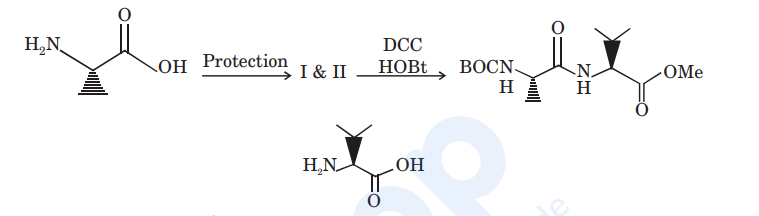
Complete the following reaction by suggesting the appropriate substrates (I & II) :
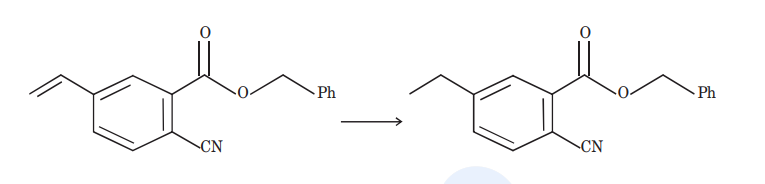
Suggest most suitable conditions for the following selective conversion :
What major product is isolated from the following reaction :
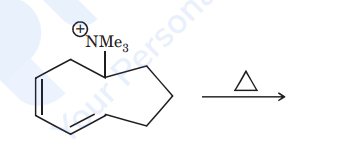
Predict stereochemical outcome of the following reaction :
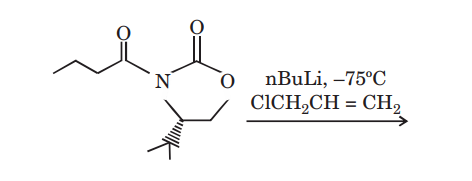
The major product of the following reaction is :
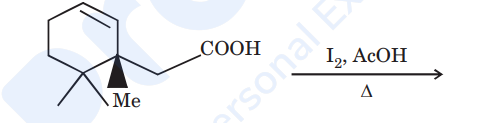
Predict the major product of the following reaction :
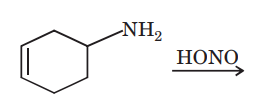
The major product of the following reaction is :
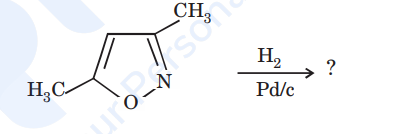
The major product of the following reaction is :
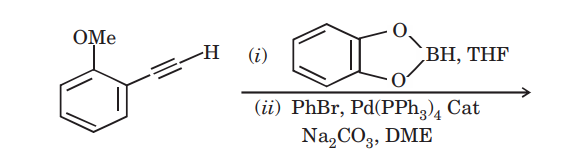
The major product formed in the following reaction is :
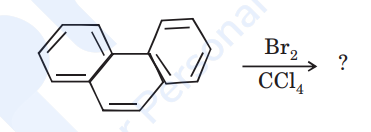
The major product formed in the following reaction is :
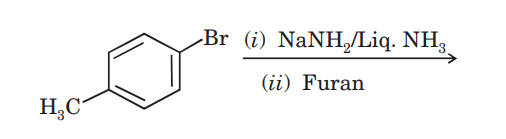
Important Questions from Chemistry in Everyday Life
Which of the following is a greenhouse gas?
I. Methane
II. Nitrous oxide
The gas which turns lime water milky is:
Liquefied Petroleum Gas (LPG) is mainly a mixture of:
Among the following, the conducting form of carbon is
Which of the following is NOT a Fossil Fuel?