UPSC Mains 2026 GS 3 Paper 4 Question Paper with Solution; Download PDF
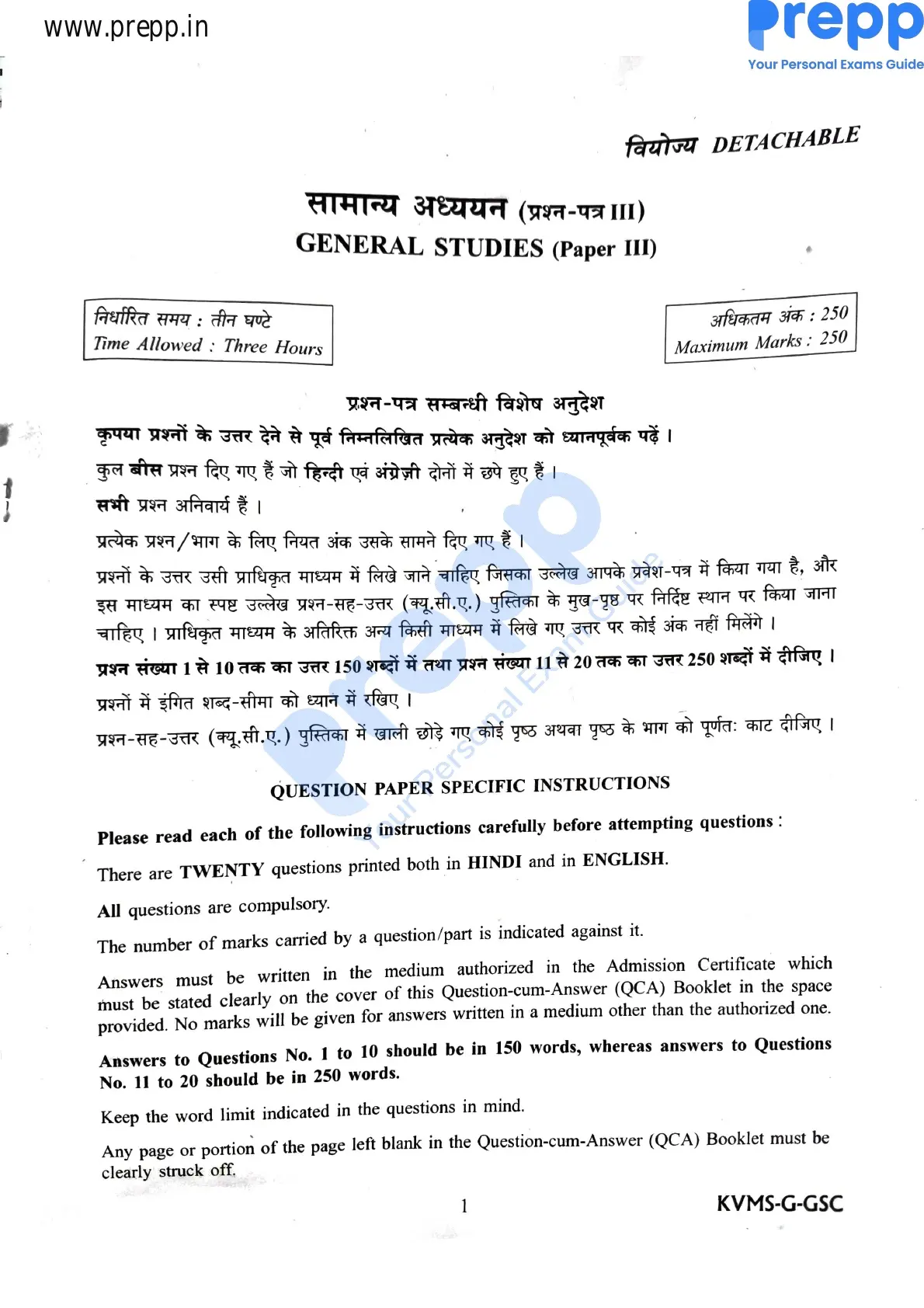
UPSC Mains 2026 GS 3 Question Paper, along with detailed solutions, is available here for download in PDF format. The Union Public Service Commission (UPSC) conducted the General Studies Paper III examination on Aug 23, 2026, during the forenoon session from 9:00 AM to 12:00 Noon. General Studies Paper III is Paper IV of the UPSC Civil Services Main Examination and carries a total of 250 marks. Candidates were given 3 hours to complete the examination.
Click Here to Download: UPSC Mains 2026 Question Paper PDF with Solutions
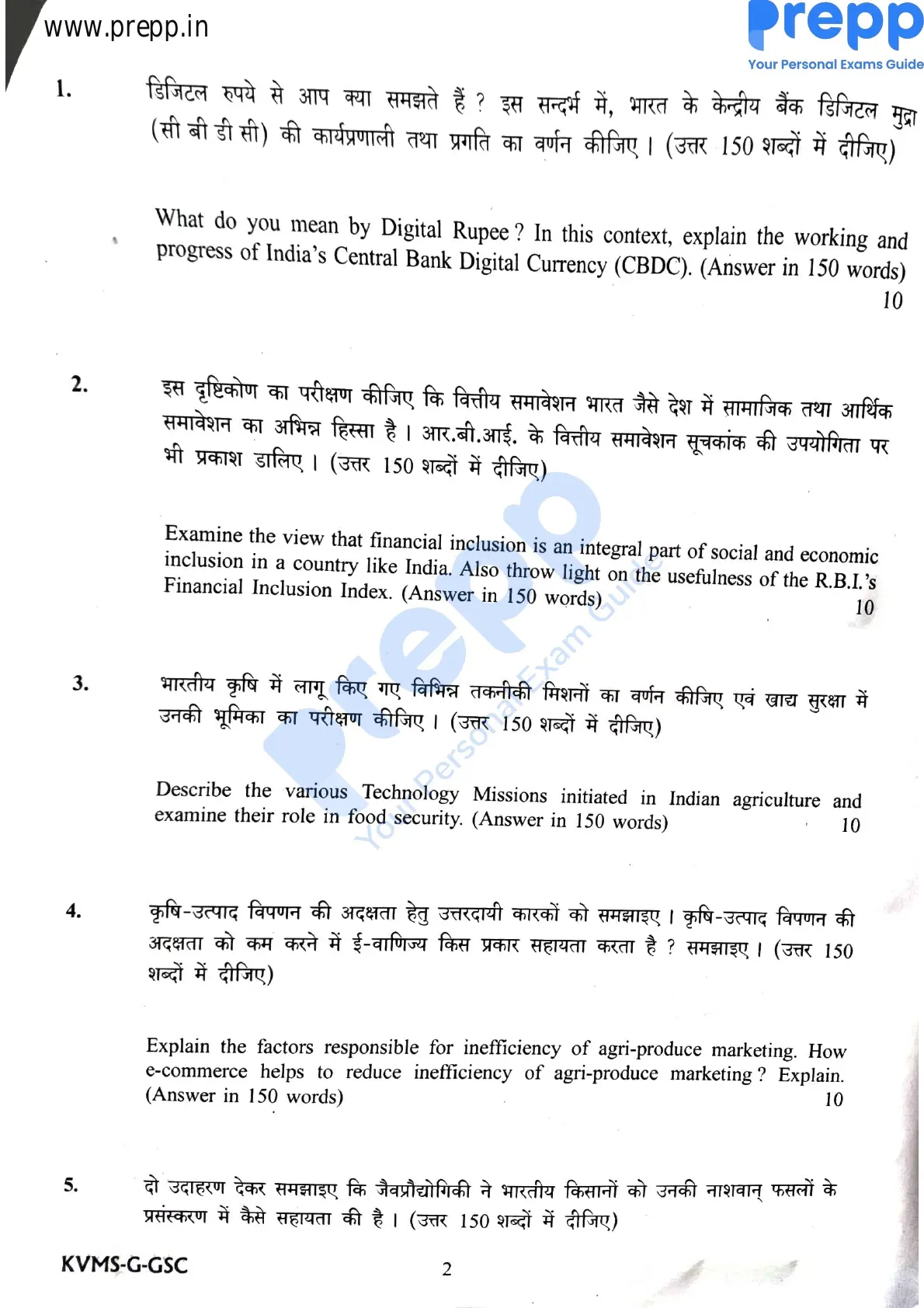
Q1. डिजिटल रुपये से आप क्या समझते हैं? इस सन्दर्भ में, भारत के केन्द्रीय बैंक डिजिटल मुद्रा (सी बी डी सी) की कार्यप्रणाली तथा प्रगति का वर्णन कीजिए।
What do you mean by Digital Rupee? In this context, explain the working and progress of India's Central Bank Digital Currency (CBDC).
Q2. इस दृष्टिकोण का परीक्षण कीजिए कि वित्तीय समावेशन भारत जैसे देश में सामाजिक तथा आर्थिक समावेशन का अभिन्न हिस्सा है। आर.बी.आई. के वित्तीय समावेशन सूचकांक की उपयोगिता पर भी प्रकाश डालिए।
Examine the view that financial inclusion is an integral part of social and economic inclusion in a country like India. Also throw light on the usefulness of the R.B.I.'s Financial Inclusion Index.
Q3. भारतीय कृषि में लागू किए गए विभिन्न तकनीकी मिशनों का वर्णन कीजिए एवं खाद्य सुरक्षा में उनकी भूमिका का परीक्षण कीजिए।
Describe the various Technology Missions initiated in Indian agriculture and examine their role in food security.
Q4. कृषि-उत्पाद विपणन की अदक्षता हेतु उत्तरदायी कारकों को समझाइए। कृषि-उत्पाद विपणन की अदक्षता को कम करने में ई-वाणिज्य किस प्रकार सहायता करता है? समझाइए।
Explain the factors responsible for inefficiency of agri-produce marketing. How e-commerce helps to reduce inefficiency of agri-produce marketing? Explain.
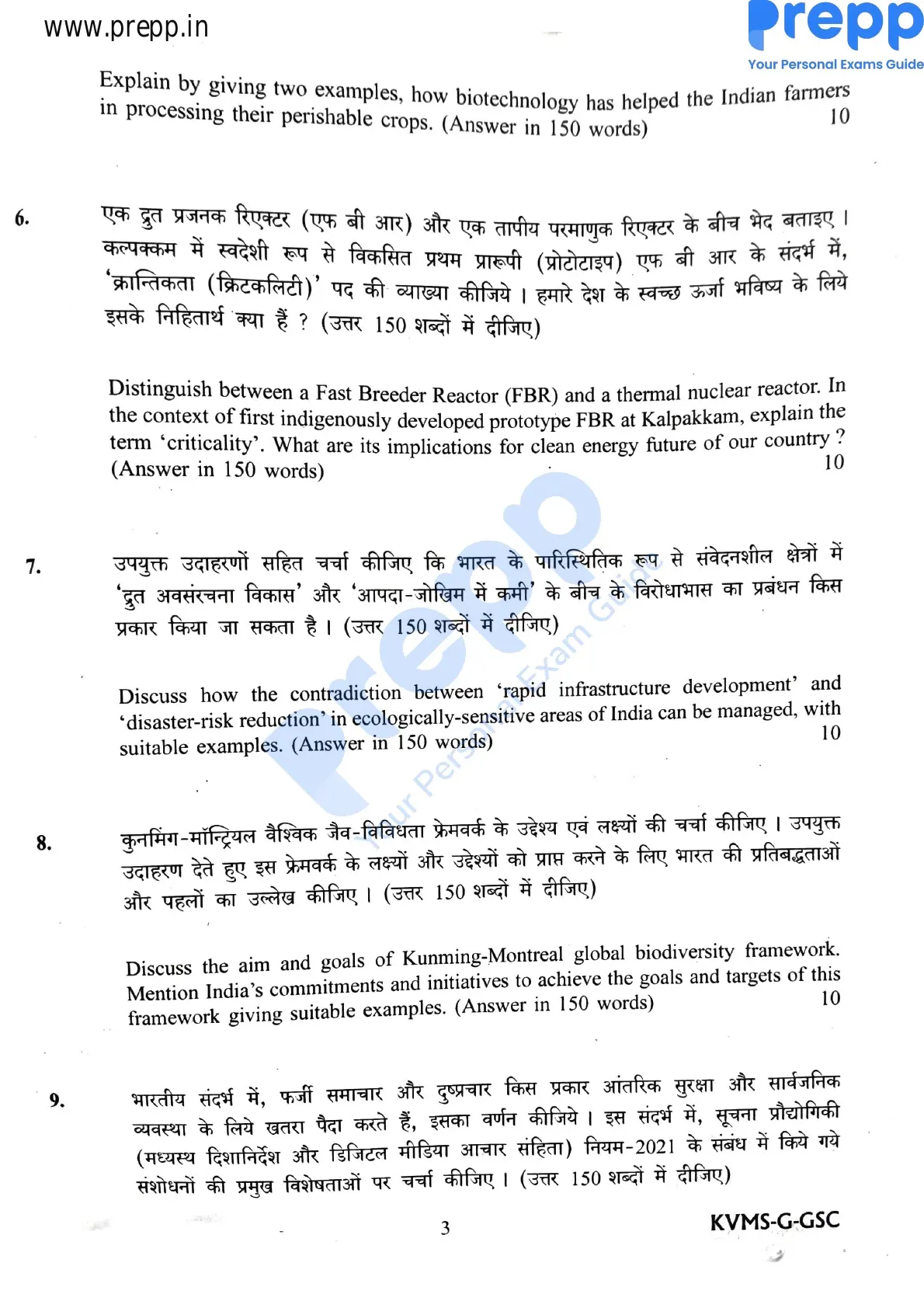
Q5. दो उदाहरण देकर समझाइए कि जैवप्रौद्योगिकी ने भारतीय किसानों को उनकी नाशवान् फसलों के प्रसंस्करण में कैसे सहायता की है।
Explain by giving two examples, how biotechnology has helped the Indian farmers in processing their perishable crops.
Q6. एक द्रुत प्रजनक रिएक्टर (एफ बी आर) और एक तापीय परमाणुक रिएक्टर के बीच भेद बताइए। कल्पक्कम में स्वदेशी रूप से विकसित प्रथम प्रारूपी (प्रोटोटाइप) एफ बी आर के संदर्भ में, 'क्रान्तिकता (क्रिटकलिटी)' पद की व्याख्या कीजिये। हमारे देश के स्वच्छ ऊर्जा भविष्य के लिये इसके निहितार्थ क्या हैं?
Distinguish between a Fast Breeder Reactor (FBR) and a thermal nuclear reactor. In the context of first indigenously developed prototype FBR at Kalpakkam, explain the term 'criticality'. What are its implications for clean energy future of our country?
Q7. उपयुक्त उदाहरणों सहित चर्चा कीजिए कि भारत के पारिस्थितिक रूप से संवेदनशील क्षेत्रों में 'द्रुत अवसंरचना विकास' और 'आपदा-जोखिम में कमी' के बीच के विरोधाभास का प्रबंधन किस प्रकार किया जा सकता है।
Discuss how the contradiction between 'rapid infrastructure development' and 'disaster-risk reduction' in ecologically-sensitive areas of India can be managed, with suitable examples.
Q8. कुनमिंग-मॉन्ट्रियल वैश्विक जैव-विविधता फ्रेमवर्क के उद्देश्य एवं लक्ष्यों की चर्चा कीजिए। उपयुक्त उदाहरण देते हुए इस फ्रेमवर्क के लक्ष्यों और उद्देश्यों को प्राप्त करने के लिए भारत की प्रतिबद्धताओं और पहलों का उल्लेख कीजिए।
Discuss the aim and goals of Kunming-Montreal global biodiversity framework. Mention India's commitments and initiatives to achieve the goals and targets of this framework giving suitable examples.
Q9. भारतीय संदर्भ में, फर्जी समाचार और दुष्प्रचार किस प्रकार आंतरिक सुरक्षा और सार्वजनिक व्यवस्था के लिये खतरा पैदा करते हैं, इसका वर्णन कीजिये। इस संदर्भ में, सूचना प्रौद्योगिकी (मध्यस्थ दिशानिर्देश और डिजिटल मीडिया आचार संहिता) नियम-2021 के संबंध में किये गये संशोधनों की प्रमुख विशेषताओं पर चर्चा कीजिए।
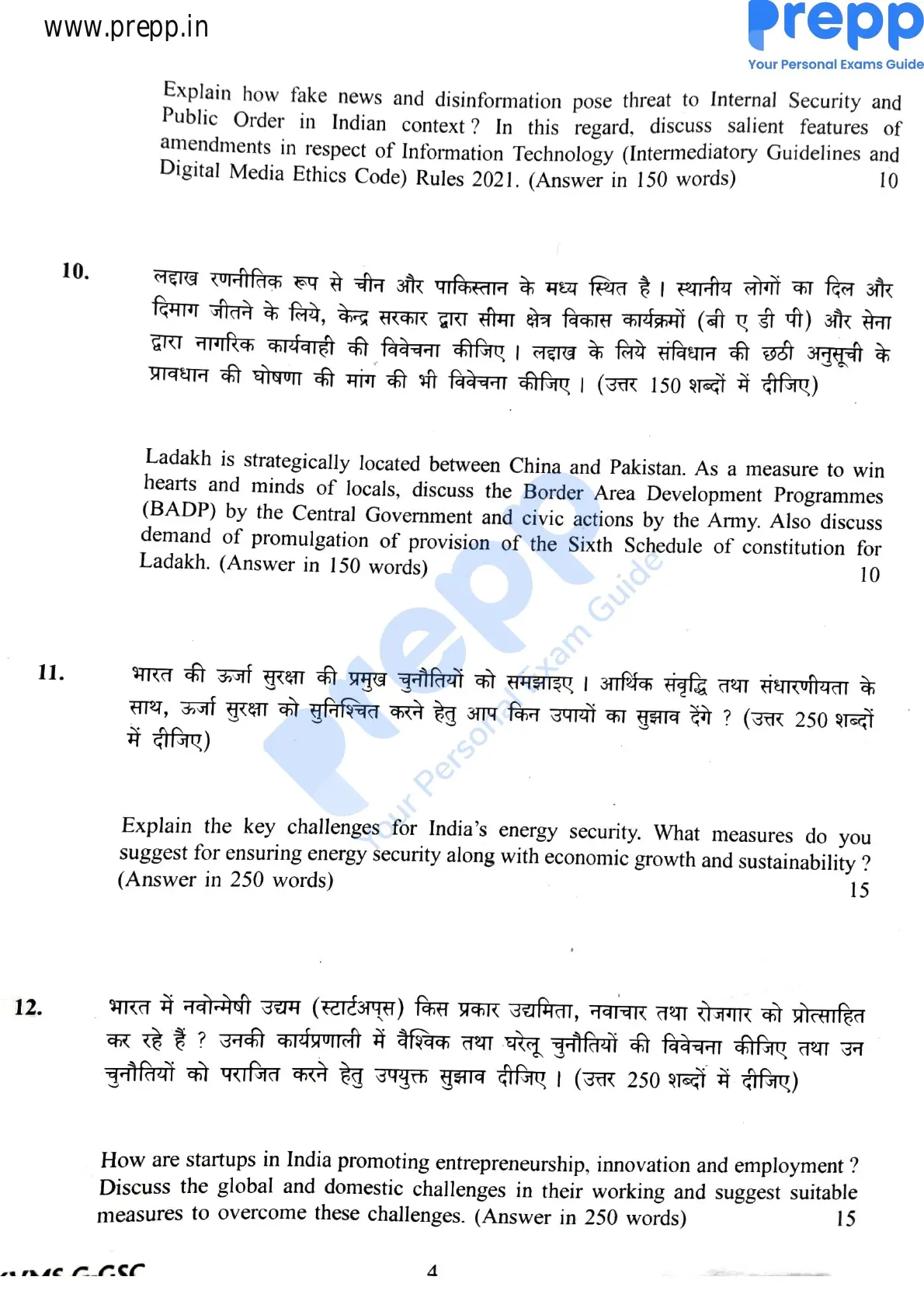
Explain how fake news and disinformation pose threat to Internal Security and Public Order in Indian context? In this regard, discuss salient features of amendments in respect of Information Technology (Intermediatory Guidelines and Digital Media Ethics Code) Rules 2021.
Q10. लद्दाख रणनीतिक रूप से चीन और पाकिस्तान के मध्य स्थित है। स्थानीय लोगों का दिल और दिमाग जीतने के लिये, केन्द्र सरकार द्वारा सीमा क्षेत्र विकास कार्यक्रमों (बी ए डी पी) और सेना द्वारा नागरिक कार्यवाही की विवेचना कीजिए। लद्दाख के लिये संविधान की छठी अनुसूची के प्रावधान की घोषणा की मांग की भी विवेचना कीजिए।
Ladakh is strategically located between China and Pakistan. As a measure to win hearts and minds of locals, discuss the Border Area Development Programmes (BADP) by the Central Government and civic actions by the Army. Also discuss demand of promulgation of provision of the Sixth Schedule of constitution for Ladakh.
Q11. भारत की ऊर्जा सुरक्षा की प्रमुख चुनौतियों को समझाइए। आर्थिक संवृद्धि तथा संधारणीयता के साथ, ऊर्जा सुरक्षा को सुनिश्चित करने हेतु आप किन उपायों का सुझाव देंगे?
Explain the key challenges for India's energy security. What measures do you suggest for ensuring energy security along with economic growth and sustainability?
Q12. भारत में नवोन्मेषी उद्यम (स्टार्टअप्स) किस प्रकार उद्यमिता, नवाचार तथा रोजगार को प्रोत्साहित कर रहे हैं? उनकी कार्यप्रणाली में वैश्विक तथा घरेलू चुनौतियों की विवेचना कीजिए तथा उन चुनौतियों को पराजित करने हेतु उपयुक्त सुझाव दीजिए।
How are startups in India promoting entrepreneurship, innovation and employment? Discuss the global and domestic challenges in their working and suggest suitable measures to overcome these challenges.
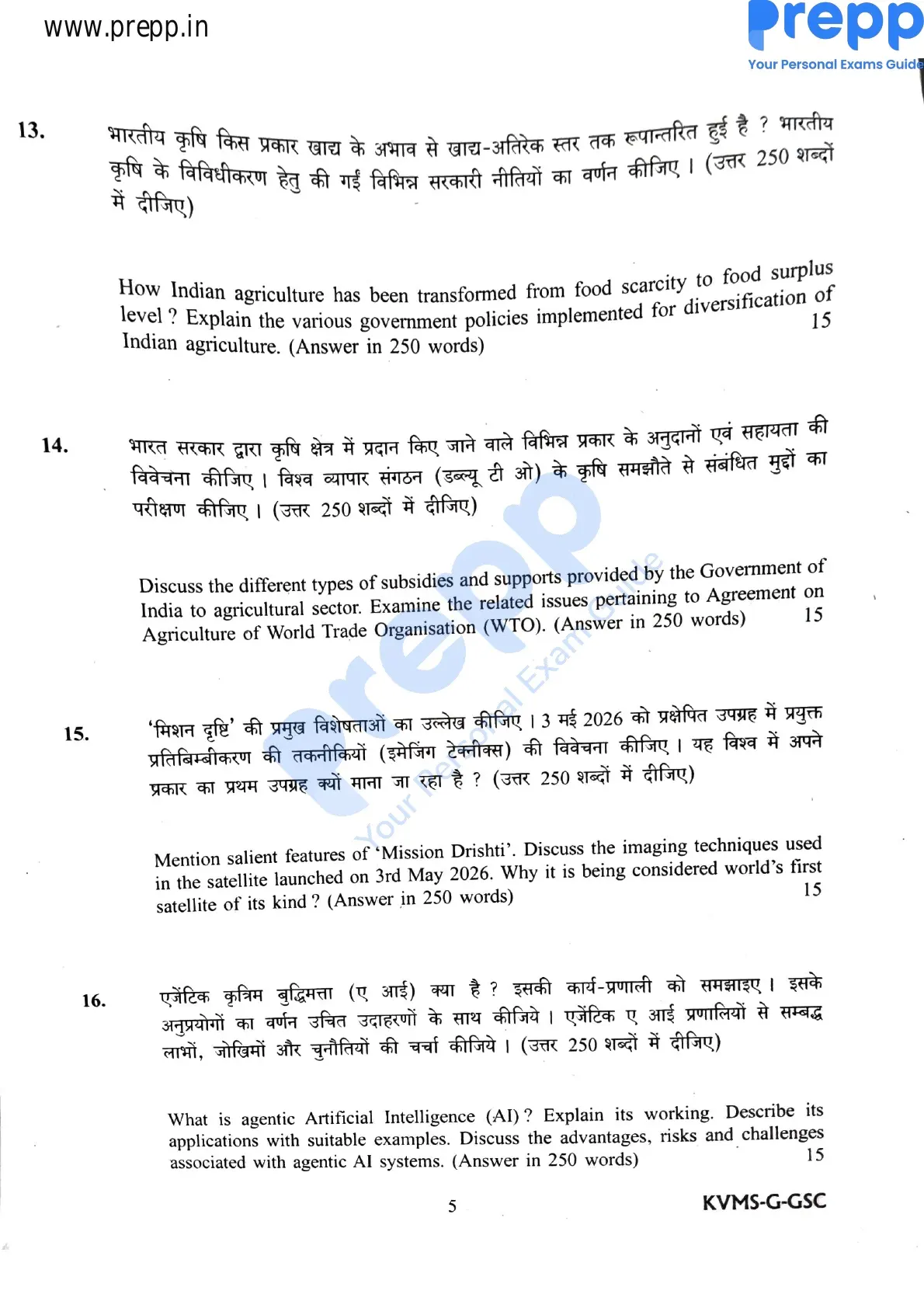
Q13. भारतीय कृषि किस प्रकार खाद्य के अभाव से खाद्य-अतिरेक स्तर तक रूपान्तरित हुई है? भारतीय कृषि के विविधीकरण हेतु की गई विभिन्न सरकारी नीतियों का वर्णन कीजिए।
How Indian agriculture has been transformed from food scarcity to food surplus level? Explain the various government policies implemented for diversification of Indian agriculture.
Q14. भारत सरकार द्वारा कृषि क्षेत्र में प्रदान किए जाने वाले विभिन्न प्रकार के अनुदानों एवं सहायता की विवेचना कीजिए। विश्व व्यापार संगठन (डब्ल्यू टी ओ) के कृषि समझौते से संबंधित मुद्दों का परीक्षण कीजिए।
Discuss the different types of subsidies and supports provided by the Government of India to agricultural sector. Examine the related issues pertaining to Agreement on Agriculture of World Trade Organisation (WTO).
Q15. 'मिशन दृष्टि' की प्रमुख विशेषताओं का उल्लेख कीजिए। 3 मई 2026 को प्रक्षेपित उपग्रह में प्रयुक्त प्रतिबिम्बीकरण की तकनीकियों (इमेजिंग टेक्नीक्स) की विवेचना कीजिए। यह विश्व में अपने प्रकार का प्रथम उपग्रह क्यों माना जा रहा है?
Mention salient features of 'Mission Drishti'. Discuss the imaging techniques used in the satellite launched on 3rd May 2026. Why it is being considered world's first satellite of its kind?
Q16. एजेंटिक कृत्रिम बुद्धिमत्ता (ए आई) क्या है? इसकी कार्य-प्रणाली को समझाइए। इसके अनुप्रयोगों का वर्णन उचित उदाहरणों के साथ कीजिये। एजेंटिक ए आई प्रणालियों से सम्बद्ध लाभों, जोखिमों और चुनौतियों की चर्चा कीजिये।
What is agentic Artificial Intelligence (AI)? Explain its working. Describe its applications with suitable examples. Discuss the advantages, risks and challenges associated with agentic AI systems.
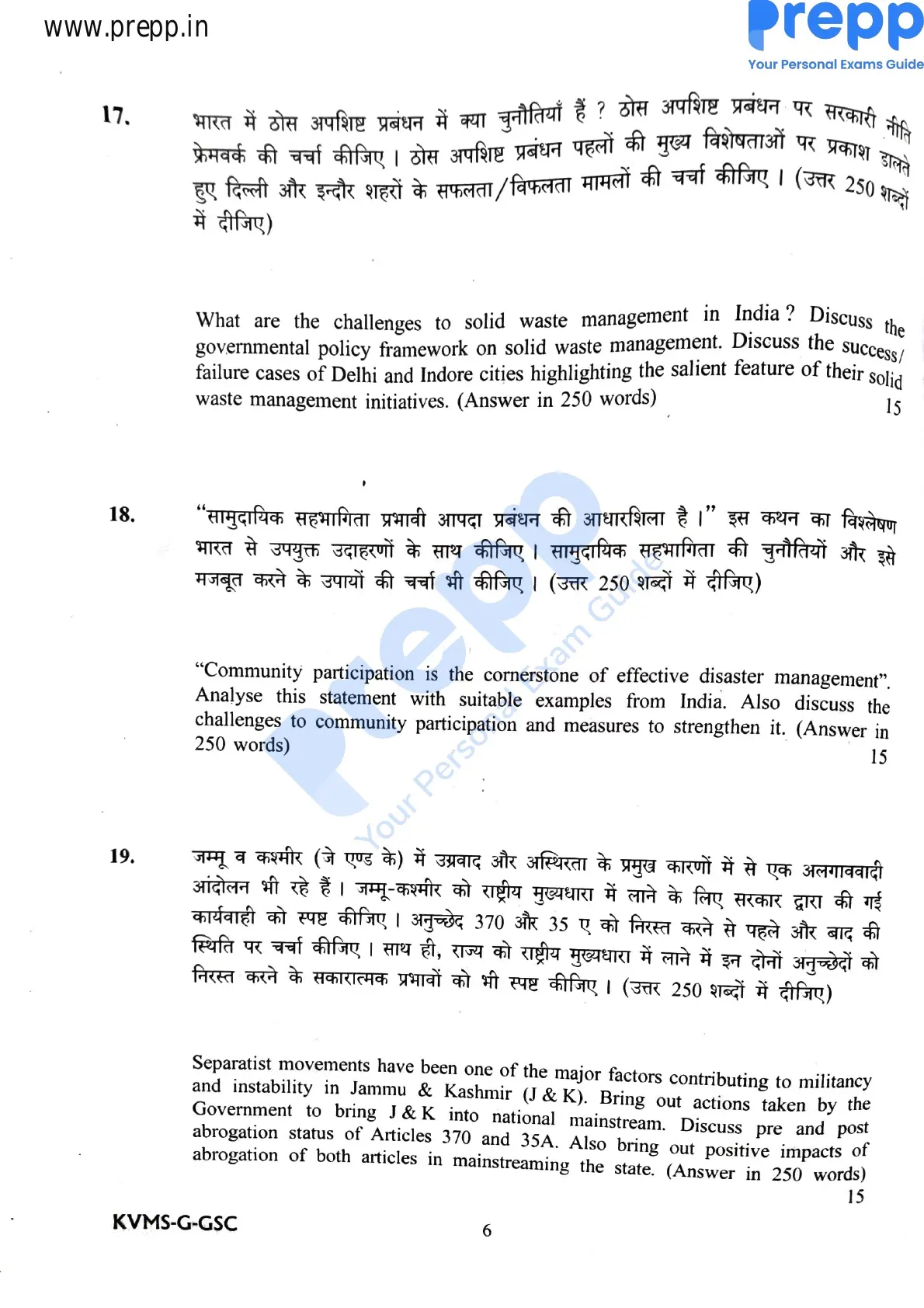
Q17. भारत में ठोस अपशिष्ट प्रबंधन में क्या चुनौतियाँ हैं? ठोस अपशिष्ट प्रबंधन पर सरकारी नीति फ्रेमवर्क की चर्चा कीजिए। ठोस अपशिष्ट प्रबंधन पहलों की मुख्य विशेषताओं पर प्रकाश डालते हुए दिल्ली और इन्दौर शहरों के सफलता/विफलता मामलों की चर्चा कीजिए।
What are the challenges to solid waste management in India? Discuss the governmental policy framework on solid waste management. Discuss the success/failure cases of Delhi and Indore cities highlighting the salient feature of their solid waste management initiatives.
Q18. "सामुदायिक सहभागिता प्रभावी आपदा प्रबंधन की आधारशिला है।" इस कथन का विश्लेषण भारत से उपयुक्त उदाहरणों के साथ कीजिए। सामुदायिक सहभागिता की चुनौतियों और इसे मजबूत करने के उपायों की चर्चा भी कीजिए।
"Community participation is the cornerstone of effective disaster management". Analyse this statement with suitable examples from India. Also discuss the challenges to community participation and measures to strengthen it.
Q19. जम्मू व कश्मीर (जे एण्ड के) में उग्रवाद और अस्थिरता के प्रमुख कारणों में से एक अलगाववादी आंदोलन भी रहे हैं। जम्मू-कश्मीर को राष्ट्रीय मुख्यधारा में लाने के लिए सरकार द्वारा की गई कार्यवाही को स्पष्ट कीजिए। अनुच्छेद 370 और 35 ए को निरस्त करने से पहले और बाद की स्थिति पर चर्चा कीजिए। साथ ही, राज्य को राष्ट्रीय मुख्यधारा में लाने में इन दोनों अनुच्छेदों को निरस्त करने के सकारात्मक प्रभावों को भी स्पष्ट कीजिए।
Separatist movements have been one of the major factors contributing to militancy and instability in Jammu & Kashmir (J & K). Bring out actions taken by the Government to bring J & K into national mainstream. Discuss pre and post abrogation status of Articles 370 and 35A. Also bring out positive impacts of abrogation of both articles in mainstreaming the state.
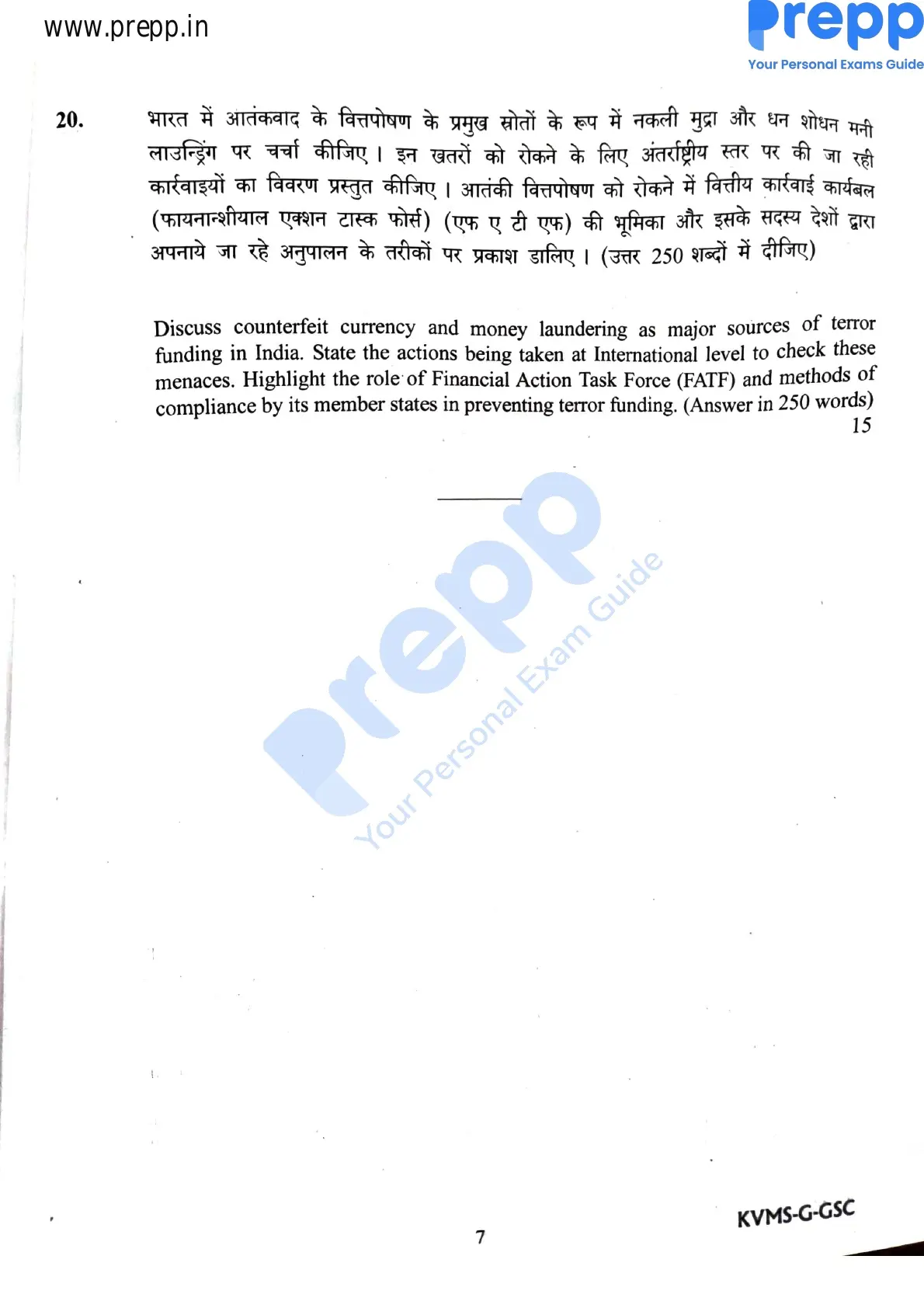
Q20. भारत में आतंकवाद के वित्तपोषण के प्रमुख स्रोतों के रूप में नकली मुद्रा और धन शोधन (मनी लाउन्ड्रिंग) पर चर्चा कीजिए। इन खतरों को रोकने के लिए अंतर्राष्ट्रीय स्तर पर की जा रही कार्रवाइयों का विवरण प्रस्तुत कीजिए। आतंकी वित्तपोषण को रोकने में वित्तीय कार्रवाई कार्यबल (फायनान्शीयल एक्शन टास्क फोर्स) (एफ ए टी एफ) की भूमिका और इसके सदस्य देशों द्वारा अपनाये जा रहे अनुपालन के तरीकों पर प्रकाश डालिए।
Discuss counterfeit currency and money laundering as major sources of terror funding in India. State the actions being taken at International level to check these menaces. Highlight the role of Financial Action Task Force (FATF) and methods of compliance by its member states in preventing terror funding.
UPSC Mains GS 3 Paper 4 Question Paper with Detailed Solution; Download PDF (August 23, 2026)
 Never Miss a Sarkari Job Alert! Get instant notifications and exam news right inside your chat.
  Click here to join Prepp on WhatsApp
 Boost Your Preparation with Free Resources! Get daily quizzes, current affairs PDFs, and study notes directly on Telegram. Click here to join Prepp on Telegram
| UPSC Mains 2026 Essay Paper 1 Question Paper PDF | UPSC Mains 2026 GS 1 Paper 2 Question Paper PDF |
| UPSC Mains 2026 GS 2 Paper 3 Question Paper PDF | UPSC Mains 2026 GS 4 Paper 5 Question Paper PDF |
Click Here to Download: UPSC CSE Prelims & Mains 2026 Question Paper PDFs
UPSC Mains 2026 GS 3 is Paper IV of the Civil Services Main Examination and carries a total of 250 marks. The paper is descriptive in nature, and candidates are given 3 hours to complete it. General Studies Paper III covers Technology, Economic Development, Biodiversity, Environment, Security and Disaster Management. Based on the prevailing UPSC Mains General Studies paper pattern, the question paper generally consists of 20 compulsory questions. Questions 1 to 10 generally carry 10 marks each with an answer limit of about 150 words, while Questions 11 to 20 carry 15 marks each with an answer limit of about 250 words. There is no negative marking in the GS 3 paper.
UPSC Mains 2026 GS 3 Question Paper FAQs
Ques: When was the UPSC Mains 2026 GS 3 Paper conducted?
Ans: The UPSC Mains 2026 GS 3 Paper was conducted on Aug 23, 2026, from 9:00 AM to 12:00 Noon. It was Paper IV of the Civil Services Main Examination 2026.
Ques: How many marks were there in the UPSC Mains GS 3 Paper?
Ans: The UPSC Mains GS 3 Paper carried a total of 250 marks. It is one of the merit-counting General Studies papers in the Civil Services Main Examination.
Ques: How many questions were asked in the UPSC Mains 2026 GS 3 Paper?
Ans: The UPSC Mains 2026 GS 3 Paper consisted of 20 compulsory questions. Questions 1 to 10 carried 10 marks each and required answers in about 150 words, while Questions 11 to 20 carried 15 marks each and required answers in about 250 words.
Ques: What was the duration of the UPSC Mains 2026 GS 3 Paper?
Ans: Candidates were given 3 hours to complete the UPSC Mains 2026 GS 3 Paper. The examination was held from 9:00 AM to 12:00 Noon on Aug 23, 2026.
Ques: What topics were asked in the UPSC Mains 2026 GS 3 Question Paper?
Ans: The UPSC Mains 2026 GS 3 Question Paper included questions on Digital Rupee and CBDC, financial inclusion, agriculture, food security, agricultural marketing, biotechnology, nuclear energy, biodiversity, disaster management, energy security, startups, Mission Drishti, Agentic AI, solid waste management, internal security, fake news, Jammu & Kashmir, terror financing and FATF.
Ques: Where can I download the UPSC Mains 2026 GS 3 Question Paper PDF?
Ans: The UPSC Mains 2026 GS 3 Question Paper PDF and detailed solution PDF are available here for download. Candidates can use the question paper to review the topics asked, analyse the paper pattern and improve their preparation for upcoming UPSC examinations.
Download the PREPP App and attempt FREE IAS Exam Mock Tests and get complete study material!
UPSC IAS : CSAT - Mini Live Test

Live Test : UPSC CSE Prelims CSAT (Paper-II) (Oct 20 - 23)
Full Test - 04: UPSC CSE Prelims CSAT (Paper-II)
Full Test - 03: UPSC CSE Prelims CSAT (Paper-II)
UPSC CSE Prelims 2026 GS Paper 1 Question Paper (24-May-2026)
UPSC CSE Prelims 2026 CSAT Paper 2 Question Paper (24-May-2026)

17 February 2025 | The Hindu Must Read Articles | Current Affairs

16 February 2026 | The Hindu Must Read Articles | Current Affairs

13 February 2026 | The Hindu Must Read Articles | Current Affairs









Comments