UPSC Mains 2026 GS 1 Paper 2 Question Paper with Solution; Download PDF
UPSC Mains 2026 GS 1 Question Paper, along with detailed solutions, is available here for download in PDF format. The Union Public Service Commission (UPSC) conducted the General Studies Paper I examination on Aug 22, 2026, during the forenoon session from 9:00 AM to 12:00 Noon. General Studies Paper I is Paper II of the UPSC Civil Services Main Examination and carries a total of 250 marks. Candidates were given 3 hours to complete the examination.
Click Here to Download: UPSC Mains 2026 Question Paper PDF with Solutions
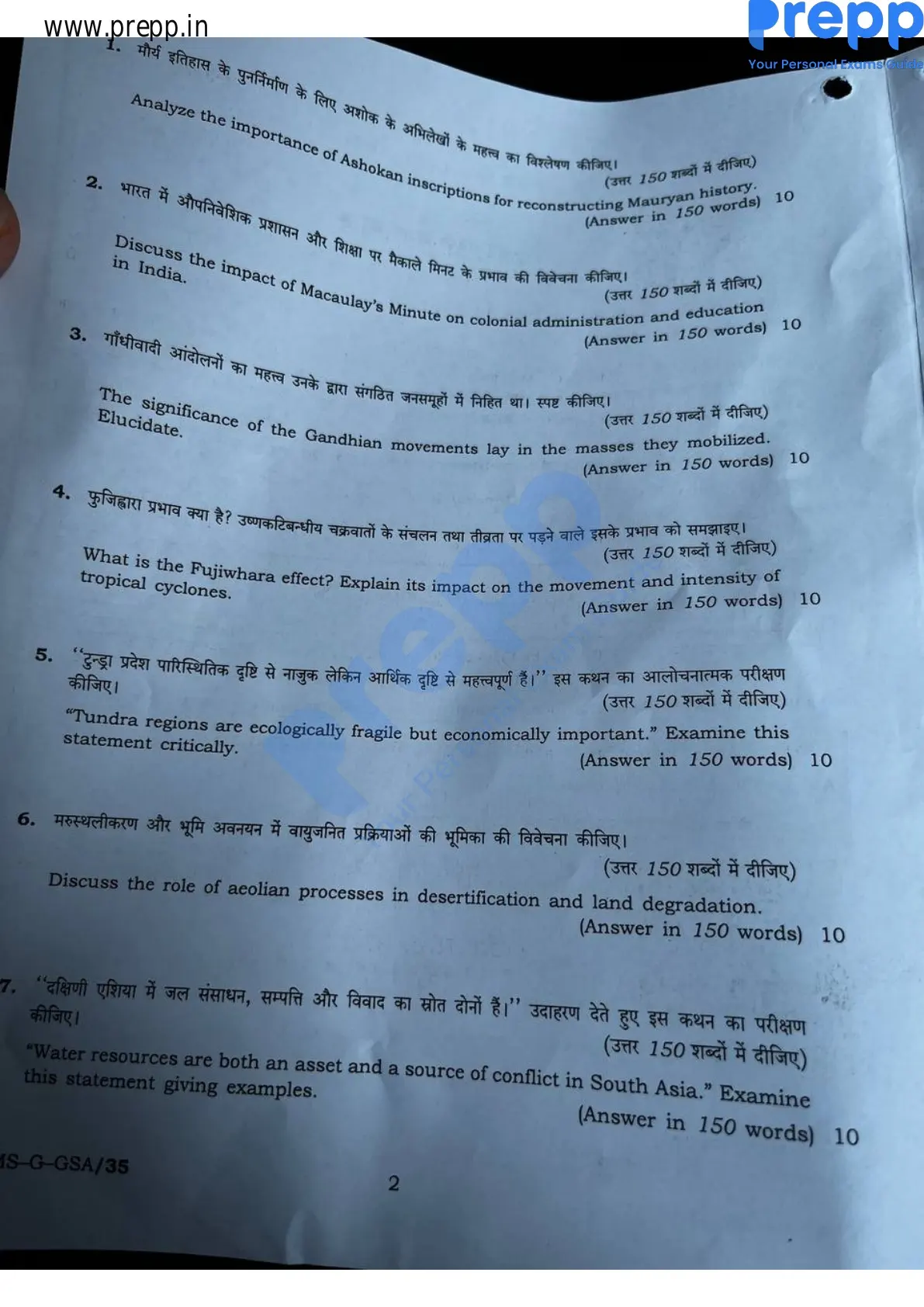
Q1. मौर्य इतिहास के पुनर्निर्माण के लिए अशोक के अभिलेखों के महत्त्व का विश्लेषण कीजिए।
Analyze the importance of Ashokan inscriptions for reconstructing Mauryan history.
Q2. भारत में औपनिवेशिक प्रशासन और शिक्षा पर मैकाले मिनट के प्रभाव की विवेचना कीजिए।
Discuss the impact of Macaulay's Minute on colonial administration and education in India.
Q3. गाँधीवादी आंदोलनों का महत्त्व उनके द्वारा संगठित जनसमूहों में निहित था। स्पष्ट कीजिए।
The significance of the Gandhian movements lay in the masses they mobilized. Elucidate.
Q4. फुजिह्वारा प्रभाव क्या है? उष्णकटिबन्धीय चक्रवातों के संचलन तथा तीव्रता पर पड़ने वाले इसके प्रभाव को समझाइए।
What is the Fujiwhara effect? Explain its impact on the movement and intensity of tropical cyclones.
Q5. "टुंड्रा प्रदेश पारिस्थितिक दृष्टि से नाजुक लेकिन आर्थिक दृष्टि से महत्त्वपूर्ण हैं।" इस कथन का आलोचनात्मक परीक्षण कीजिए।
"Tundra regions are ecologically fragile but economically important." Examine this statement critically.
Q6. मरुस्थलीकरण और भूमि अवनयन में वायुजनित प्रक्रियाओं की भूमिका की विवेचना कीजिए।
Discuss the role of aeolian processes in desertification and land degradation.
Q7. "दक्षिणी एशिया में जल संसाधन, सम्पत्ति और विवाद का स्रोत दोनों हैं।" उदाहरण देते हुए इस कथन का परीक्षण कीजिए।
"Water resources are both an asset and a source of conflict in South Asia." Examine this statement giving examples.
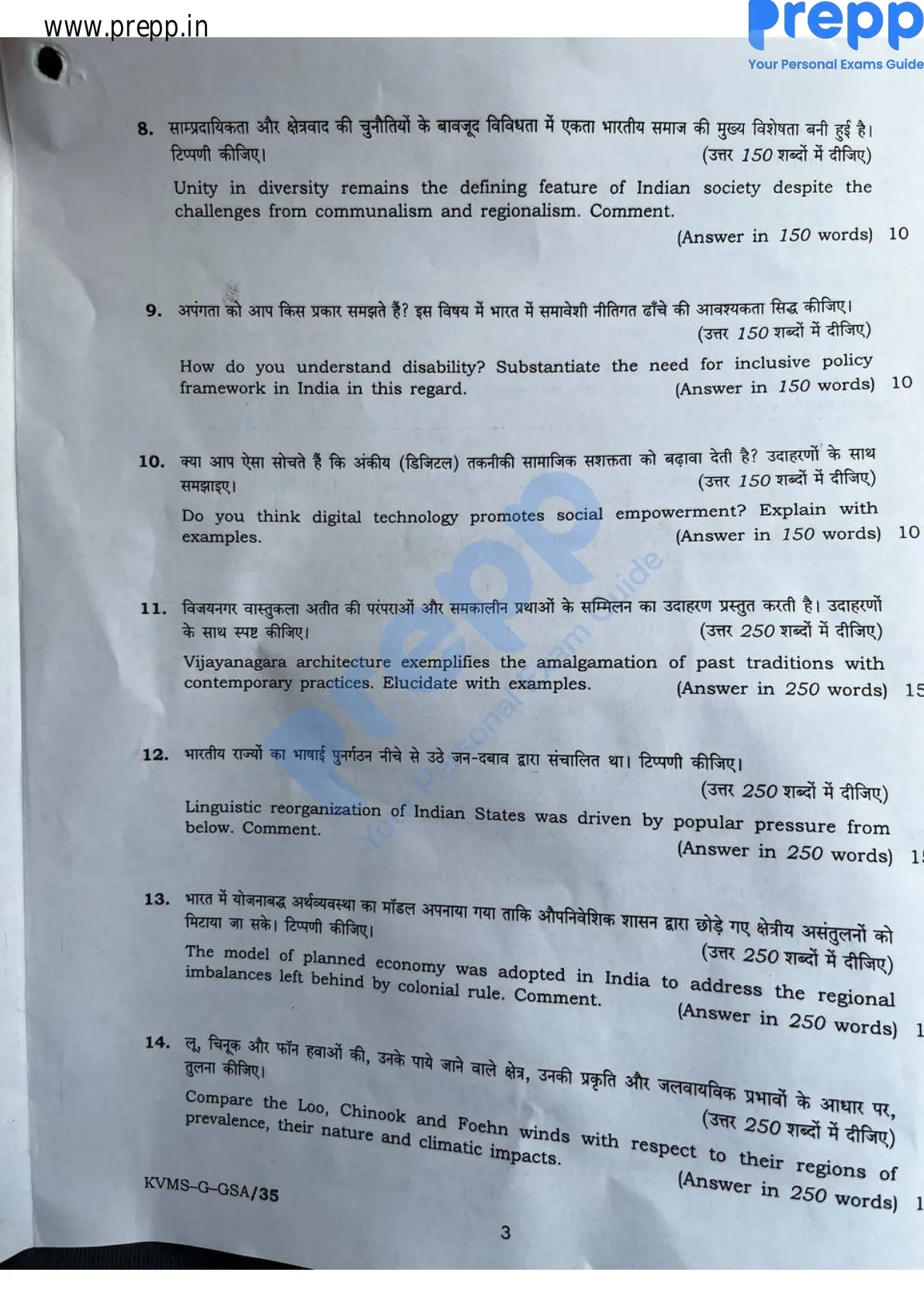
Q8. साम्प्रदायिकता और क्षेत्रवाद की चुनौतियों के बावजूद विविधता में एकता भारतीय समाज की मुख्य विशेषता बनी हुई है। टिप्पणी कीजिए।
Unity in diversity remains the defining feature of Indian society despite the challenges from communalism and regionalism. Comment.
Q9. अपंगता को आप किस प्रकार समझते हैं? इस विषय में भारत में समावेशी नीतिगत ढाँचे की आवश्यकता सिद्ध कीजिए।
How do you understand disability? Substantiate the need for inclusive policy framework in India in this regard.
Q10. क्या आप ऐसा सोचते हैं कि अंकीय (डिजिटल) तकनीकी सामाजिक सशक्तता को बढ़ावा देती है? उदाहरणों के साथ समझाइए।
Do you think digital technology promotes social empowerment? Explain with examples.
Q11. विजयनगर वास्तुकला अतीत की परंपराओं और समकालीन प्रथाओं के सम्मिलन का उदाहरण प्रस्तुत करती है। उदाहरणों के साथ स्पष्ट कीजिए।
Vijayanagara architecture exemplifies the amalgamation of past traditions with contemporary practices. Elucidate with examples.
Q12. भारतीय राज्यों का भाषाई पुनर्गठन नीचे से उठे जन-दबाव द्वारा संचालित था। टिप्पणी कीजिए।
Linguistic reorganization of Indian States was driven by popular pressure from below. Comment.
Q13. भारत में योजनाबद्ध अर्थव्यवस्था का मॉडल अपनाया गया ताकि औपनिवेशिक शासन द्वारा छोड़े गए क्षेत्रीय असंतुलनों को मिटाया जा सके। टिप्पणी कीजिए।
The model of planned economy was adopted in India to address the regional imbalances left behind by colonial rule. Comment.
Q14. लू, चिनूक और फॉन हवाओं की, उनके पाये जाने वाले क्षेत्र, उनकी प्रकृति और जलवायविक प्रभावों के आधार पर, तुलना कीजिए।
Compare the Loo, Chinook and Foehn winds with respect to their regions of prevalence, their nature and climatic impacts.
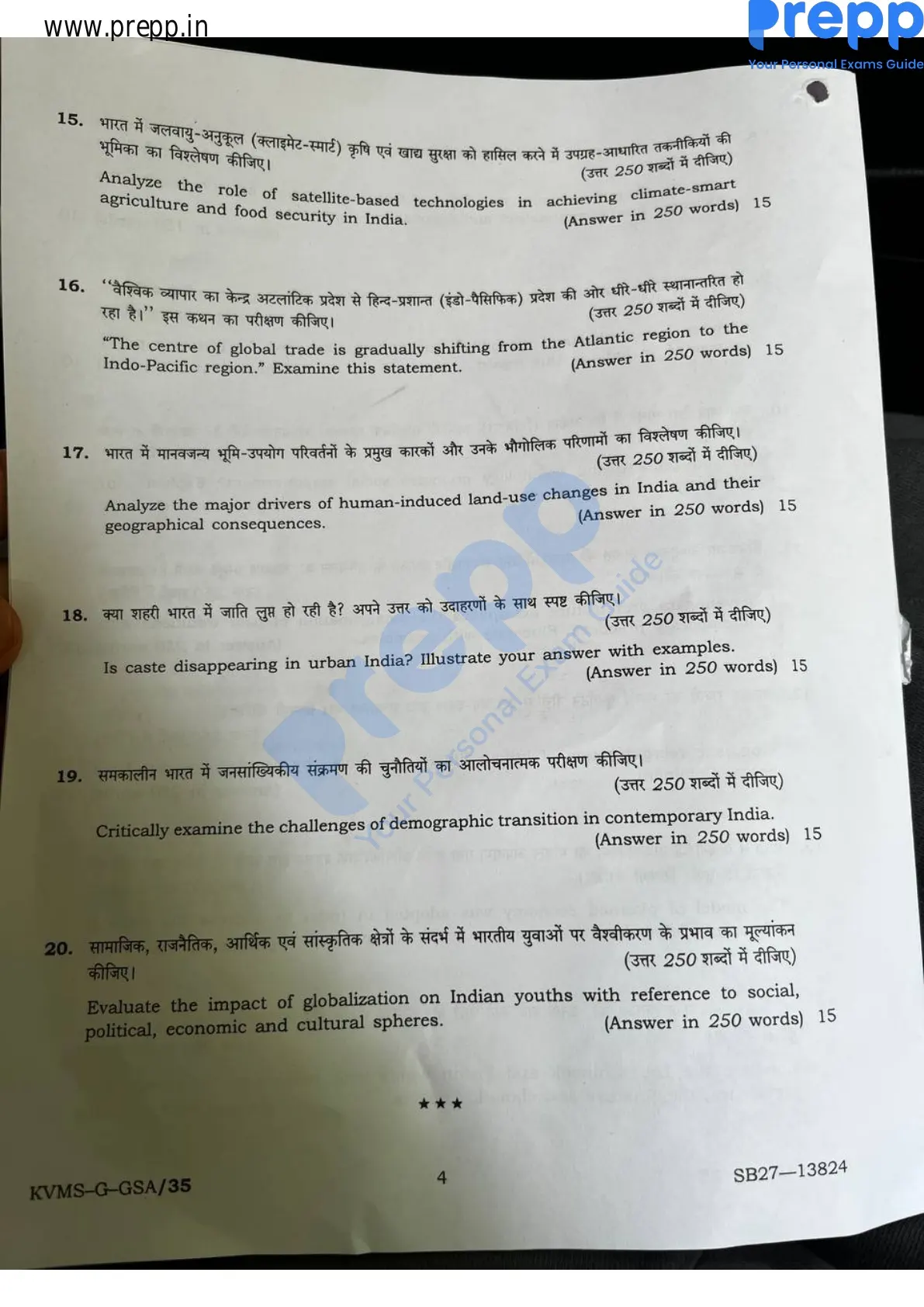
Q15. भारत में जलवायु-अनुकूल (क्लाइमेट-स्मार्ट) कृषि एवं खाद्य सुरक्षा को हासिल करने में उपग्रह-आधारित तकनीकियों की भूमिका का विश्लेषण कीजिए।
Analyze the role of satellite-based technologies in achieving climate-smart agriculture and food security in India.
Q16. "वैश्विक व्यापार का केन्द्र अटलांटिक प्रदेश से हिन्द-प्रशान्त (इंडो-पैसिफिक) प्रदेश की ओर धीरे-धीरे स्थानान्तरित हो रहा है।" इस कथन का परीक्षण कीजिए।
"The centre of global trade is gradually shifting from the Atlantic region to the Indo-Pacific region." Examine this statement.
Q17. भारत में मानवजन्य भूमि-उपयोग परिवर्तनों के प्रमुख कारकों और उनके भौगोलिक परिणामों का विश्लेषण कीजिए।
Analyze the major drivers of human-induced land-use changes in India and their geographical consequences.
Q18. क्या शहरी भारत में जाति लुप्त हो रही है? अपने उत्तर को उदाहरणों के साथ स्पष्ट कीजिए।
Is caste disappearing in urban India? Illustrate your answer with examples.
Q19. समकालीन भारत में जनसांख्यिकीय संक्रमण की चुनौतियों का आलोचनात्मक परीक्षण कीजिए।
Critically examine the challenges of demographic transition in contemporary India.
Q20. सामाजिक, राजनैतिक, आर्थिक एवं सांस्कृतिक क्षेत्रों के संदर्भ में भारतीय युवाओं पर वैश्वीकरण के प्रभाव का मूल्यांकन कीजिए।
Evaluate the impact of globalization on Indian youths with reference to social, political, economic and cultural spheres.
UPSC Mains GS 1 Paper 2 Question Paper with Detailed Solution; Download PDF (August 22, 2026)
 Never Miss a Sarkari Job Alert! Get instant notifications and exam news right inside your chat.
  Click here to join Prepp on WhatsApp
 Boost Your Preparation with Free Resources! Get daily quizzes, current affairs PDFs, and study notes directly on Telegram. Click here to join Prepp on Telegram
| UPSC Mains 2026 Essay Paper 1 Question Paper PDF | UPSC Mains 2026 GS 2 Paper 3 Question Paper PDF |
| UPSC Mains 2026 GS 3 Paper 4 Question Paper PDF | UPSC Mains 2026 GS 4 Paper 5 Question Paper PDF |
Click Here to Download: UPSC CSE Prelims & Mains 2026 Question Paper PDFs
UPSC Mains 2026 GS 1 is Paper II of the Civil Services Main Examination and carries a total of 250 marks. The paper is descriptive in nature, and candidates are given 3 hours to complete it. General Studies Paper I covers Indian Heritage and Culture, History and Geography of the World and Society. Based on the prevailing UPSC Mains General Studies paper pattern, the question paper generally consists of 20 compulsory questions. Questions 1 to 10 generally carry 10 marks each with an answer limit of about 150 words, while Questions 11 to 20 carry 15 marks each with an answer limit of about 250 words. There is no negative marking in the GS 1 paper.
UPSC Mains 2026 GS 1 Question Paper FAQs
Ques: When was the UPSC Mains 2026 GS 1 Paper conducted?
Ans: The UPSC Mains 2026 GS 1 Paper was conducted on Aug 22, 2026, from 9:00 AM to 12:00 Noon. It was Paper II of the Civil Services Main Examination 2026.
Ques: How many marks were there in the UPSC Mains GS 1 Paper?
Ans: The UPSC Mains GS 1 Paper carried a total of 250 marks. It is one of the merit-counting General Studies papers in the Civil Services Main Examination.
Ques: How many questions were asked in the UPSC Mains 2026 GS 1 Paper?
Ans: The UPSC Mains 2026 GS 1 Paper consisted of 20 compulsory questions. Questions 1 to 10 carried 10 marks each and required answers in about 150 words, while Questions 11 to 20 carried 15 marks each and required answers in about 250 words.
Ques: What was the duration of the UPSC Mains 2026 GS 1 Paper?
Ans: Candidates were given 3 hours to complete the UPSC Mains 2026 GS 1 Paper. The examination was held from 9:00 AM to 12:00 Noon on Aug 22, 2026.
Ques: What topics were asked in the UPSC Mains 2026 GS 1 Question Paper?
Ans: The UPSC Mains 2026 GS 1 Question Paper included questions from Indian History, Art & Culture, Geography and Indian Society. Key topics included Ashokan inscriptions, Macaulay's Minute, Gandhian movements, Vijayanagara architecture, linguistic reorganisation, physical geography, climate-related phenomena, water resources, social diversity, disability, digital empowerment, caste, demographic transition and globalization.
Ques: Where can I download the UPSC Mains 2026 GS 1 Question Paper PDF?
Ans: The UPSC Mains 2026 GS 1 Question Paper PDF and detailed solution PDF are available here for download. Candidates can use the paper to review the questions asked, understand the latest UPSC Mains question trends and improve their preparation for future attempts.
Download the PREPP App and attempt FREE IAS Exam Mock Tests and get complete study material!
UPSC IAS : CSAT - Mini Live Test

Live Test : UPSC CSE Prelims CSAT (Paper-II) (Oct 20 - 23)
Full Test - 04: UPSC CSE Prelims CSAT (Paper-II)
Full Test - 03: UPSC CSE Prelims CSAT (Paper-II)
UPSC CSE Prelims 2026 GS Paper 1 Question Paper (24-May-2026)
UPSC CSE Prelims 2026 CSAT Paper 2 Question Paper (24-May-2026)

17 February 2025 | The Hindu Must Read Articles | Current Affairs

16 February 2026 | The Hindu Must Read Articles | Current Affairs

13 February 2026 | The Hindu Must Read Articles | Current Affairs









Comments