The metal ions that are commonly present at the active site of hydrolytic enzymes is :
Zn2+, Mg2+, Ca2+
The key idea is that hydrolytic enzymes do not carry out redox chemistry — they cleave bonds by delivering water or hydroxide. The metal's job is to act as a Lewis acid: to polarise the substrate carbonyl or phosphate, and to lower the pKa of a bound water molecule so that a nucleophilic hydroxide is available at physiological pH.
That job description calls for ions with a fixed oxidation state, so that no unwanted electron transfer occurs. Zn2+, Mg2+ and Ca2+ are exactly such ions — all redox inert, all good Lewis acids.
Zn2+ is the classic hydrolytic cofactor: carbonic anhydrase, carboxypeptidase A and the matrix metalloproteinases all use it, and its d10 configuration means no ligand-field preference, allowing flexible coordination geometry at the active site.
Mg2+ is central to phosphate hydrolysis — ATPases, phosphatases, and the ribozymes — where it stabilises the developing negative charge of the transition state.
Ca2+ appears in enzymes such as phospholipase A2 and in nucleases, again as a structural and polarising centre.
The other sets all contain redox-active metals. Cu2+, Fe2+, Co2+, Mn2+ and Ni2+ readily change oxidation state, and that is precisely why biology places them in oxidases, oxygenases, catalases and electron-transfer proteins rather than in hydrolases — a redox-active ion in a hydrolytic site would risk damaging side reactions.
Hence the metal ions commonly found at hydrolytic active sites are Zn2+, Mg2+ and Ca2+.
Similar Questions
Iron-enterobactin [Fe (ent)]3- complex has a dissociation content of 10-49 at pH = 7. Calculate the number of uncomplexed Fe3+ ions in a litre of 1 M solution in water at pH = 7.
The polypyrrole ring present in vitamin B12 is :
In the enzymolysis, the following graph represent Lineweaver-Burk plots for :
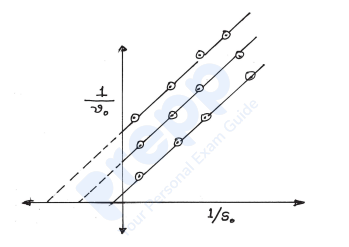
Enzymolysis with the following mechanism :
\[ E + S \xrightleftharpoons[k_{-1}]{k_1} ES \] \[ ES \xrightarrow{k_2} E + P \] \[ E + I \rightleftharpoons EI \] \[ \therefore\ (I \equiv \text{inhibitor}) \quad I_1 < I_2 < I_3 \]
The following behaviors are noted.
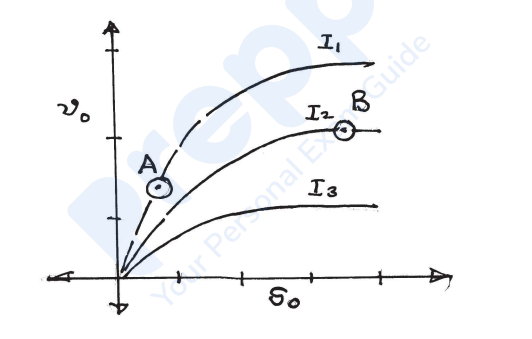
Orders of the reaction, at point `A' and point `B' marked on the graph would be :
Important Questions from Biomolecules
The chemical name of Vitamin D 3is:
Which of the following food comes under complex carbohydrate?
I. Potatoes
II. Sweets
III. Pasta
IV. Wheat
Following are the pKa's of the ionizable groups in lysine
pKa 1 = 2.16 (α - carboxylic group)
pKa 2 = 9.06 (α - amino group)
pKa 3 = 10.54 (ε - amino group)
Which one of the following options represents the pl of lysine?
How many hydrogen bonds involving the backbone CO and NH can be observed in an α‐helix consisting of 15 amino acid residues?
In eukaryotic cells, covalently attached lipids help to anchor some water soluble proteins to the plasma membrane. One group of cytosolic proteins are anchored to the cytosolic face of membrane by a fatty acyl group (e.g. myristate or palmitate). These groups are generally covalently attached to which amino acids present at the N‐terminus of the polypeptide chain?