
High tonnage kettles are generally used in circulation lines with volumes up to _______?
11 kV
Understanding High Tonnage Kettles and Circulation Lines
High tonnage kettles are large industrial vessels typically used for heating, mixing, or processing significant volumes of materials, often liquids or semi-solids. These kettles are frequently integrated into circulation lines, which are systems designed for continuous flow and processing of material.
In industrial settings, equipment like high tonnage kettles requires substantial electrical power, particularly if they involve heating elements, powerful stirrers, or pumps for circulation. The voltage supplied to such equipment is a critical factor influencing power transmission efficiency, equipment design, and safety.
Voltage Levels in Industrial Applications
Electrical distribution systems use various voltage levels. Low voltages (e.g., 400V, 480V) are common for smaller machinery and lighting. Medium voltages (typically 1 kV to 35 kV) are used for distributing power over shorter distances within industrial plants or for powering larger motors and equipment directly. High voltages (above 35 kV) are primarily used for long-distance power transmission.
High tonnage kettles, handling large volumes and requiring significant power, often necessitate a medium voltage supply. Using a higher voltage allows for lower current for the same power output ($\text{Power} = \text{Voltage} \times \text{Current}$), which reduces conductor size and power losses ($P_{loss} = I^2 R$) in the cabling.
Analyzing the Voltage Options
Let's consider the typical applications of the given voltage options in the context of industrial equipment:
- 22 kV: This is also a medium voltage level used in distribution networks, sometimes for supplying power to large industrial sites or substations. It can be used for high-power equipment, but 11 kV might be more common for direct connection to large motors or heaters within a plant due to equipment availability and cost considerations in some regions.
- 11 kV: This is a very common medium voltage level widely used in industrial plants for distributing power and directly supplying large motors, heaters, and other high-power equipment. It offers a good balance between transmission efficiency and the cost and availability of equipment designed to operate directly at this voltage.
- 33 kV: This is a higher medium voltage level, often used for primary distribution within a large industrial complex or supplying power from a substation to major load centers. While possible to have equipment operating at 33 kV, 11 kV is often preferred for terminal equipment like large motors or heaters due to equipment cost and complexity.
- 50 kV: This falls into the higher end of medium voltage or low end of high voltage depending on classification standards. 50 kV is typically used for sub-transmission or distribution to very large industrial customers or substations, rather than directly connecting to individual pieces of equipment like kettles within a plant.
Considering the typical industrial practices for supplying power to high-power equipment like high tonnage kettles in circulation lines, 11 kV is a widely adopted standard for direct connection to machinery requiring substantial power, balancing efficiency and practical implementation costs.
Conclusion on High Tonnage Kettle Voltage
Based on common industrial electrical standards and the power requirements of high tonnage kettles operating in circulation lines with significant volumes, 11 kV represents a standard and practical medium voltage level for supplying such equipment directly.
| Voltage Level | Typical Application Examples |
|---|---|
| Low Voltage (< 1 kV) | Small motors, lighting, control circuits |
| Medium Voltage (1 kV - 35 kV) | Large motors, heavy machinery, distribution within large plants |
| High Voltage (> 35 kV) | Long-distance power transmission, supply to major substations |
Revision Table: High Tonnage Kettles
Review key points about high tonnage kettles and voltage.
- High tonnage kettles are large industrial processors.
- Used in circulation lines for continuous processing.
- Require significant electrical power.
- Medium voltage levels are used for power supply.
- 11 kV is a common industrial medium voltage for large equipment.
Additional Information: Industrial Power Systems
Understanding industrial power systems is crucial for designing and operating large facilities. Key concepts include:
- Substations: Transform transmission voltage to distribution or utilization voltage.
- Switchgear: Equipment used to control, protect, and isolate electrical circuits.
- Motor Control Centers (MCCs): House motor starters and control equipment, often operating at lower voltages, but fed from medium voltage distribution.
- Transformers: Used to step voltage up or down. Kettles operating at medium voltage might be supplied directly from a substation or a local transformer stepping down a higher distribution voltage to 11 kV.
Similar Questions
Current is measured using:
Which of the following is not true with respect to the ammeter & voltmeter?
Which of the following devices is used for measuring the speed of DC machines?
How many wattmeter elements are needed at minimum to measure the power of a 3-phase circuit?
Which of the expressions is true for the balanced condition of the following wheatstone bridge?
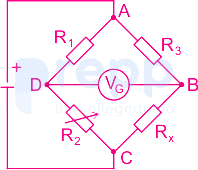
Wheatstone bridge can be used to measure ______.
Controlling Torque in megger is provided by:
A 60 microampere meter has a resistance of 100 ohms. If the meter has to measure 100 mA, then the value of current through the shunt is
Temperature control in bridge measurement is required because a difference in temperature will cause a difference in:
In a single phase induction type energy meter, maximum torque is produced when the shunt magnetic flux:
Important Questions from Measuring Instruments
Microscope is used for the study of which of the following?
What does a Vernier Caliper measure?
'Anemometer' is an instrument used for measuring the
Instrument used to observe changes in the solar system is :
The Windvane instrument measures the ______.



