Question
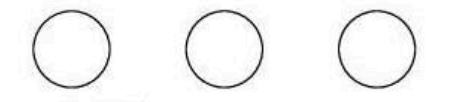
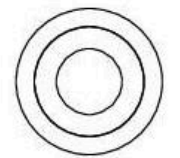
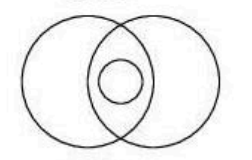
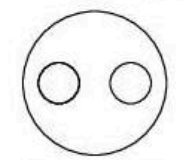
Which of the following has a uniform scale ?
This question was previously asked in
CUET PG 2026 Agri-Business Management Question Paper (25-Mar-2026) (Shift 2)
The correct answer is
Spring Control
Uniform Scale Identification
The question asks to identify the control mechanism that results in a uniform scale in measuring instruments. A uniform scale means the divisions are equally spaced, implying a linear relationship between the measured quantity and the instrument's deflection.
Control Mechanisms and Scale Uniformity
Let's analyze the options based on how they provide controlling torque ($\tau_c$) and its relationship with the deflection angle ($\theta$):
- Spring Control: The controlling torque provided by a spring is directly proportional to the angle of deflection. Mathematically, $\tau_c \propto \theta$. If the deflecting torque ($\tau_d$) is also proportional to the quantity being measured (e.g., current $I$), then at equilibrium ($\tau_d = \tau_c$), the deflection angle $\theta$ is directly proportional to the measured quantity ($I \propto \theta$). This results in a uniform scale.
- Gravity Control: This method uses gravity. The controlling torque is proportional to the sine of the deflection angle, $\tau_c \propto \sin\theta$. This leads to a non-linear relationship between the measured quantity and deflection, resulting in a non-uniform scale, particularly compressed at the beginning.
- Air Damping & Eddy Current Damping: These methods are primarily used for damping oscillations to bring the pointer quickly to its final position. They do not provide the necessary controlling torque to determine the scale's linearity. Scale linearity depends on the *control* mechanism, not the *damping* mechanism.
Conclusion on Uniform Scale
Based on the analysis, the spring control mechanism provides a controlling torque proportional to deflection, which is essential for achieving a uniform scale.
Therefore, Spring Control is the mechanism that has a uniform scale.
Was this answer helpful?
Similar Questions
- If $A \in R_{n \times n}$; $\det A=0$, then :
A. A is non singular and the rows and columns of A are linearly independent
B. A is non-singular and the rows and columns of A are linearly dependent
C. A is non-singular and A has one zero rows
D. A is singular
E. A is singular and rows and columns of A are linearly dependent
Choose the correct answer from the options given below : - The matrix equation $AX=0$, represents :
- The greatest rate of increase of $f = xy^{2}z^{3}$ at the point $(0, -1, -2)$ is :
- The derivative of $y = \int_{0}^{\ln x} \sin e^{t} dt$ is :
- If $\lambda = 0$, is an eigen values of A, then $\det(A)$ is :
- If A is a null Matrix, then its rank is :
- Given below are two statements : one is labelled as Assertion (A) and the other is labelled as Reason (R).
Assertion (A) : If $u = xy f\left(\frac{y}{x}\right)$, then $x \frac{\partial u}{\partial x} + y \frac{\partial u}{\partial y} = 2u$
Reason (R) : Given function u is homogeneous of degree 2 in $x$ and $y$.
In the light of the above statements, choose the most appropriate answer from the options given below : - Solving a second order Differential equation using Laplace transform :
A. Partial fraction expansion
B. Apply initial conditions in Laplace domain
C. Take Laplace transform of differential equation
D. Obtain time domain solution
Choose the correct answer from the options given below : - Determining Eigenvalues of a matrix :
A. Solve the characteristic equation
B. Form matrix $A - \lambda I$
C. Compute determinant
D. Identify eigenvalues
Choose the correct answer from the options given below : - A lag network for compensation normally consists of :
A. R, L and C elements
B. R and L elements
C. R and C elements
D. R only
E. L only
Choose the correct answer from the options given below :
Important Questions from Mixed Topic (CUET PG)
- Kalpsutra, the illustrated canonical text is from:-
- The Harappan city almost exclusively devoted to craft production was-:
- Mohandas Karamchand Gandhi launched quit India movement after the failure of:-
- The "Objectives Resolution" was introduced in constituent assembly by:-
- Who among the following was not a member of the constituent assembly:-
Need Expert Advice?
Upcoming Exams
GATE
February 06, 2027
Test Series

CUET
CUET PG Psychology (HUQP20) 2026 Mock Test Series
10 Tests
792 Attempts
3.7(15)
English
More Questions from CUET PG