Direction : Study the following bar graph and answer the questions that follow : Marks obtained in written and oral exams in five sections (A, B, C, D and E) of a class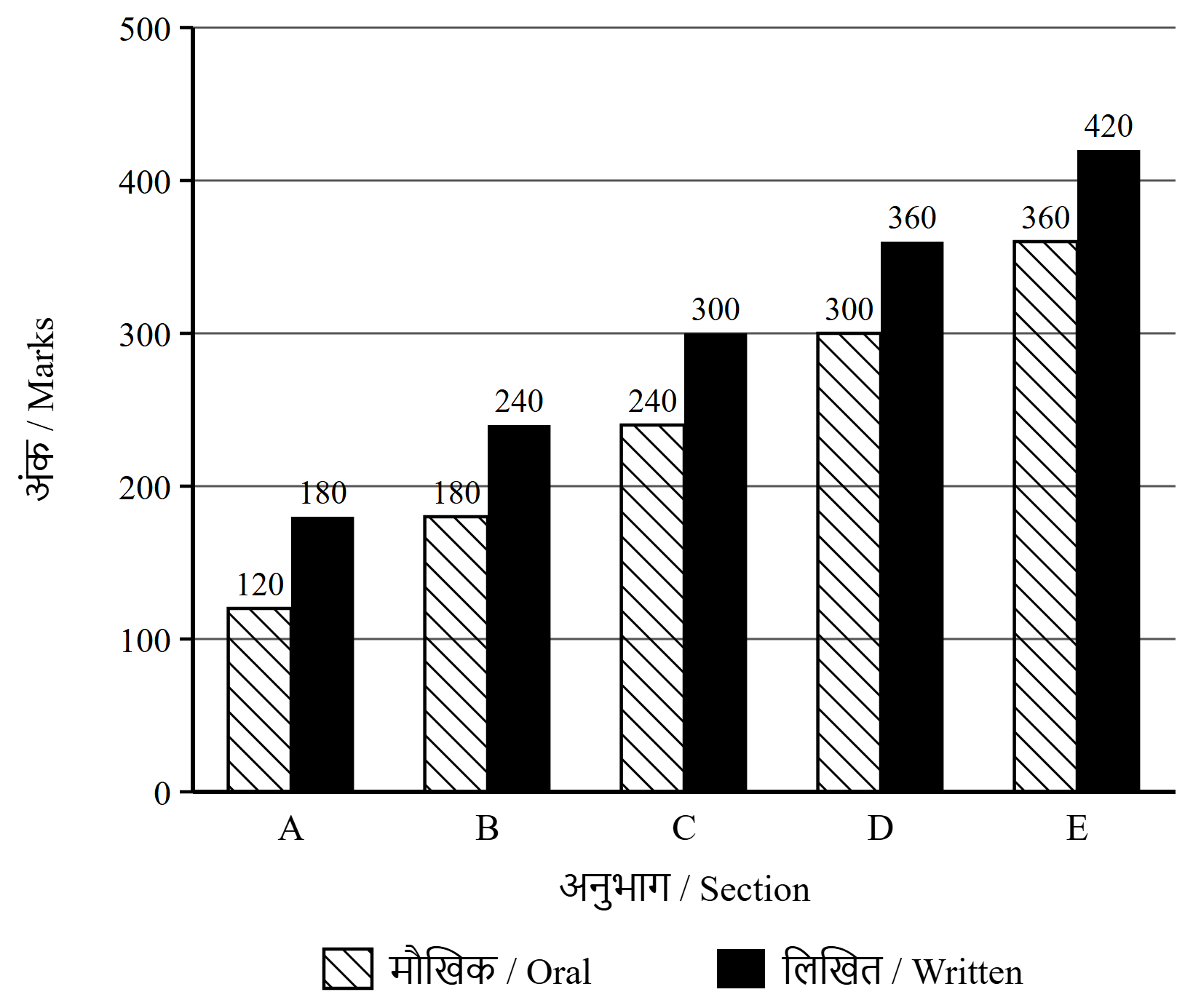
By what percentage are the oral exam marks obtained in Section A less than the oral exam marks obtained in Section D ?
60%
From the bar graph, (oral, written) marks are A (120, 180), B (180, 240), C (240, 300), D (300, 360) and E (360, 420). 'Less than D' means the difference is measured as a percentage of Section D's oral marks.
Step 1 — Oral marks: Section A = 120 and Section D = 300; difference = 300 − 120 = 180.
Step 2 — Percentage less = \(\frac{180}{300} \times 100 = 60\%\).
Step 3 — 40% is Section A's oral marks as a share of Section D's (120 ÷ 300), not the shortfall, and 50% and 70% do not follow from these values.
60% option is correct.
Similar Questions
What is the ratio of the total number of units sold by Stores P and Q to the number of units sold by Store T ?
If the number of returned units at Store S decreases by 50%, while the number of units sold remains unchanged, by what percentage will Store S’s net retained units increase ?
If 60 units sold are transferred from Store T to Store P, while the number of returned units at every store remains unchanged, what is the ratio of revised net retained units of Store P to Store T ?
Which store has the highest percentage of returned units relative to its units sold ?
What are the total net retained units for Stores R and S ?
What is the ratio of the combined number of customers served during the Evening Shift at Branches B and D to that served during the Morning Shift at Branches C and E ?
If the number of students who appeared at Centre E decreases by 20%, while the number who passed remains unchanged, what will be the new percentage of students who passed at Centre E ?
What is the ratio of the total number of students who passed at Centres A and D to the total number of students who appeared at Centres A and D ?
What percentage of the total number of students who appeared at both Centres B and D passed at these two centres ?
At which of the following centres is the number of students who did not pass the highest ?
Important Questions from Bar Graph
Directions:
Study the following Bar-chart and the data provided to answer the questions that follow:
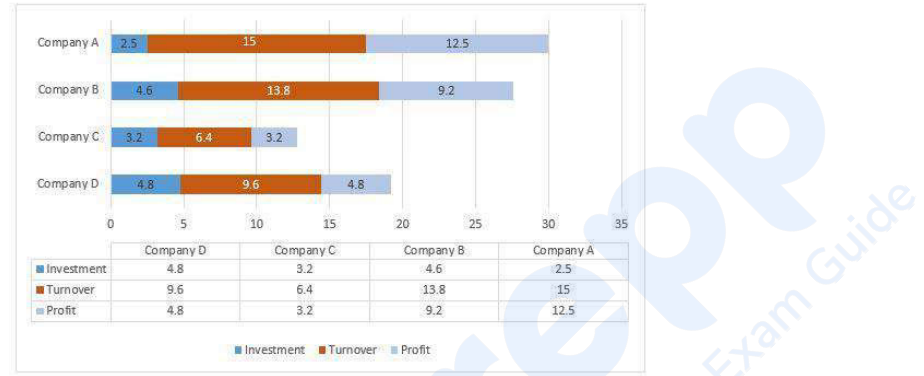
Investment, Turnover and Profit of four different companies A, B, C and D are given. (In Lakhs)
What percentage of turnover of company D is profit of company C. (Upto two decimals).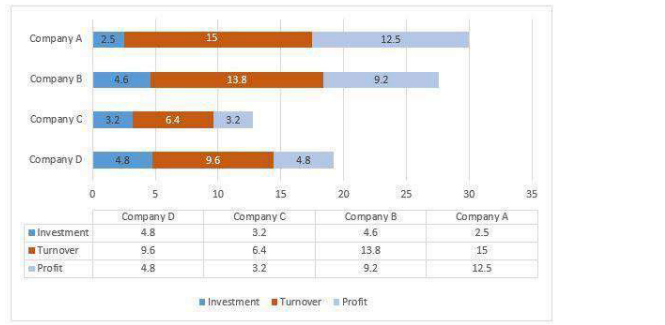
- Find the total number of employees in factory Q over the given years. (In hundreds)
- What is the average number of employees in factory R over the given years approximately? (In hundreds)
Study the following Bar-chart and the data provided to answer the questions that follow:Investment, Turnover and Profit of four different companies A, B, C and D are given. (In Lakhs)Investment, Turnover and Profit of four different companies A, B, C and D are given. (In Lakhs)Out of the given four companies which one has highest profit proportion? (Profit proportion = Profit/Investment)
Directions:
Study the following Bar-chart and the data provided to answer the questions that follow:
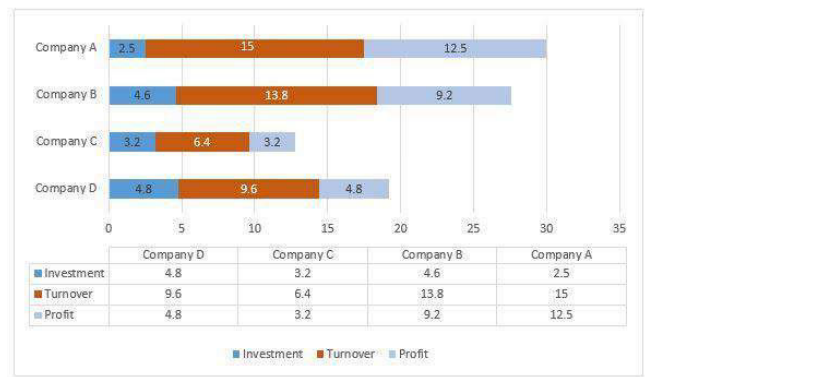
Investment, Turnover and Profit of four different companies A, B, C and D are given. (In Lakhs)
What is the gain percentage of Company C?