History Optional Paper 1 Question Paper 2025 with Detailed Solution; Download PDF
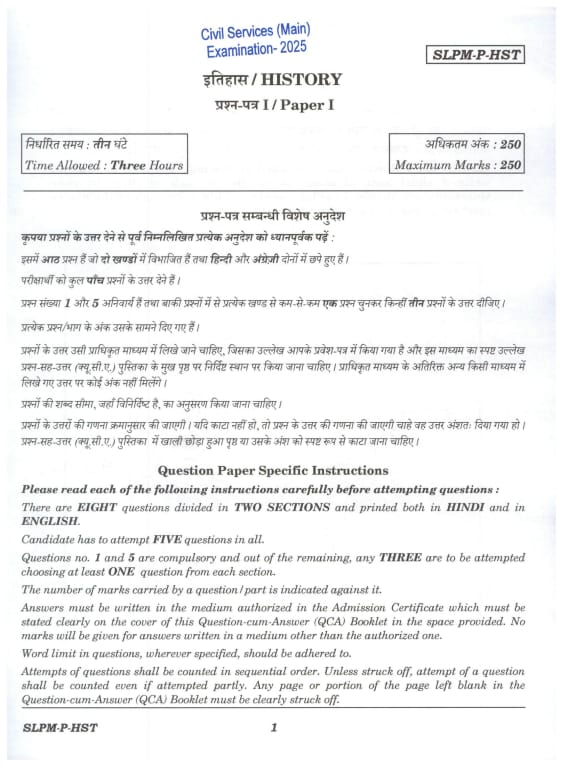
UPSC Mains 2025 Question Paper for History Optional Paper-I is available here to download in PDF Format. The exam has been conducted on August 31, 2025, in Forenoon Session (9 AM to 12 Noon). Check UPSC IAS 2025 Question Papers. This Paper comprises 8 questions which are of 250 marks. The duration of the exam is 3 hours.
SECTION A / (खण्ड A)
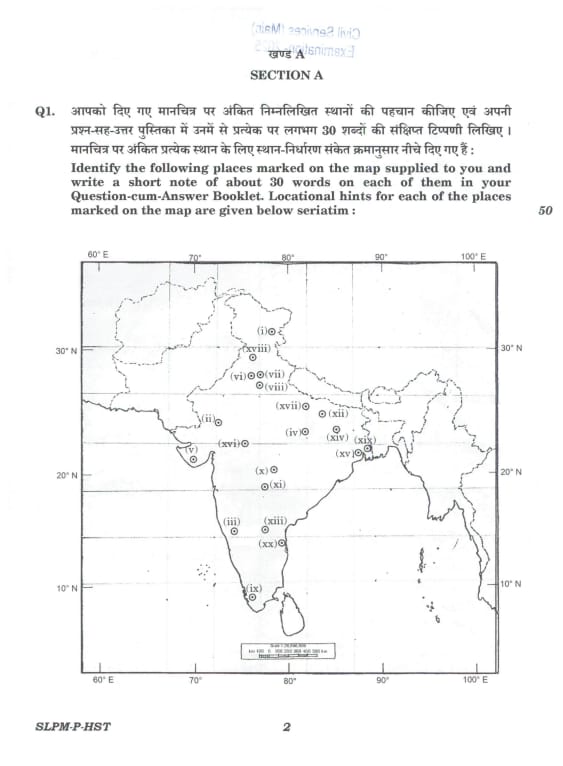
Q1. Identify the following places marked on the map supplied to you and write a short note of about 30 words on each of them in your Question-cum-Answer Booklet. Locational hints for each of the places marked on the map are given below seriatim :
आपको दिए गए मानचित्र पर अंकित निम्नलिखित स्थानों की पहचान कीजिए एवं अपनी प्रश्न-सह-उत्तर पुस्तिका में उनमें से प्रत्येक पर लगभग 30 शब्दों की संक्षिप्त टिप्पणी लिखिए । मानचित्र पर अंकित प्रत्येक स्थान के लिए स्थान-निर्धारण संकेत क्रमानुसार नीचे दिए गए हैं : (Marks 50)
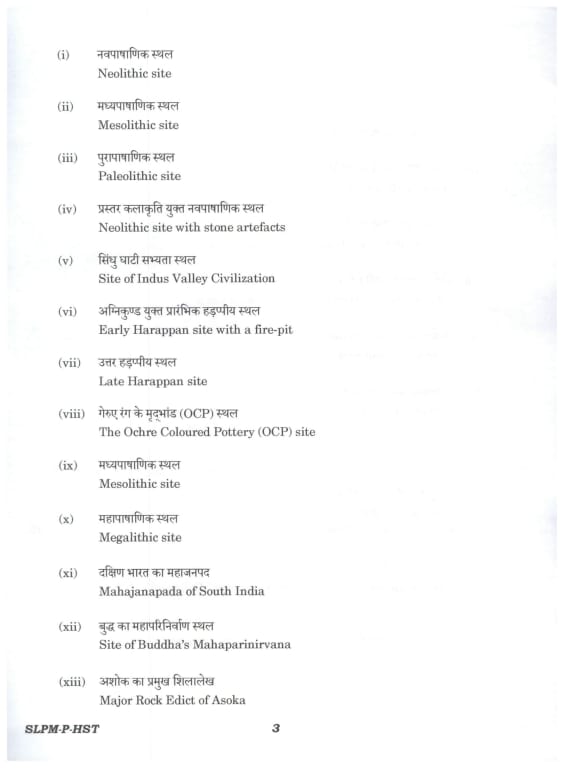
(i) Neolithic site
नवपाषाणिक स्थल
(ii) Mesolithic site
मध्यपाषाणिक स्थल
(iii) Paleolithic site
पुरापाषाणिक स्थल
(iv) Neolithic site with stone artefacts
प्रस्तर कलाकृति युक्त नवपाषाणिक स्थल
(v) Site of Indus Valley Civilization
सिंधु घाटी सभ्यता स्थल
(vi) Early Harappan site with a fire-pit
अग्निकुण्ड युक्त प्रारंभिक हड़प्पीय स्थल
(vii) Late Harappan site
उत्तर हड़प्पीय स्थल
(viii) The Ochre Coloured Pottery (OCP) site
गेरुए रंग के मृद्भांड (OCP) स्थल
(ix) Mesolithic site
मध्यपाषाणिक स्थल
(x) Megalithic site
महापाषाणिक स्थल
(xi) Mahajanapada of South India
दक्षिण भारत का महाजनपद
(xii) Site of Buddha's Mahaparinirvana
बुद्ध का महापरिनिर्वाण स्थल
(xiii) Major Rock Edict of Asoka
अशोक का प्रमुख शिलालेख
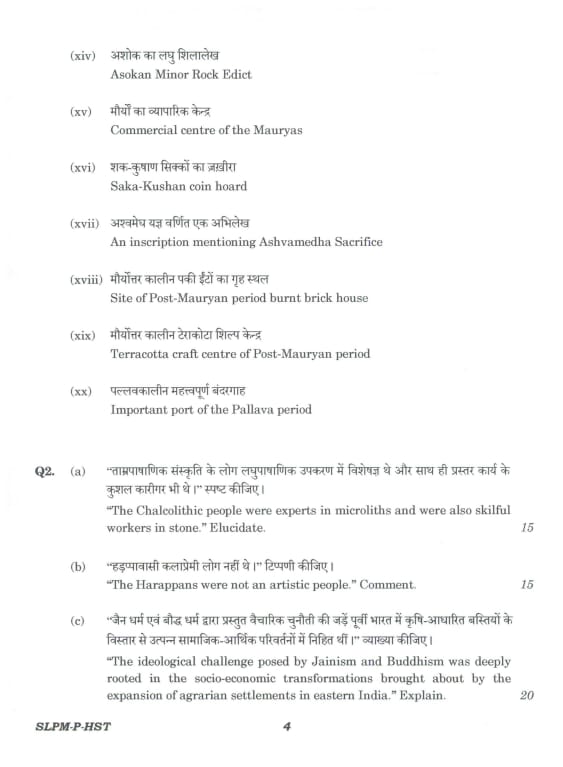
(xiv) Asokan Minor Rock Edict
अशोक का लघु शिलालेख
(xv) Commercial centre of the Mauryas
मौयों का व्यापारिक केन्द्र
(xvi) Saka-Kushan coin hoard
शक-कुषाण सिक्कों का जखीरा
(xvii) An inscription mentioning Ashvamedha Sacrifice
अश्वमेघ यज्ञ वर्णित एक अभिलेख
(xviii) Site of Post-Mauryan period burnt brick house
मौर्योत्तर कालीन पकी ईंटों का गृह स्थल
(xix) Terracotta craft centre of Post-Mauryan period
मौर्योत्तर कालीन टेराकोटा शिल्प केन्द्र
(xx) Important port of the Pallava period
पल्लवकालीन महत्त्वपूर्ण बंदरगाह
Q2.(a) "The Chalcolithic people were experts in microliths and were also skilful workers in stone." Elucidate.
"ताम्रपाषाणिक संस्कृति के लोग लघुपाषाणिक उपकरण में विशेषज्ञ थे और साथ ही प्रस्तर कार्य के कुशल कारीगर भी थे।" स्पष्ट कीजिए। (Marks 15)
(b) "The Harappans were not an artistic people." Comment.
"हड़प्पावासी कलाप्रेमी लोग नहीं थे।" टिप्पणी कीजिए।(Marks 15)
(c) "The ideological challenge posed by Jainism and Buddhism was deeply rooted in the socio-economic transformations brought about by the expansion of agrarian settlements in eastern India." Explain.
"जैन धर्म एवं बौद्ध धर्म द्वारा प्रस्तुत वैचारिक चुनौती की जड़ें पूर्वी भारत में कृषि-आधारित बस्तियों के विस्तार से उत्पन्न सामाजिक-आर्थिक परिवर्तनों में निहित थीं।" व्याख्या कीजिए।(Marks 20)
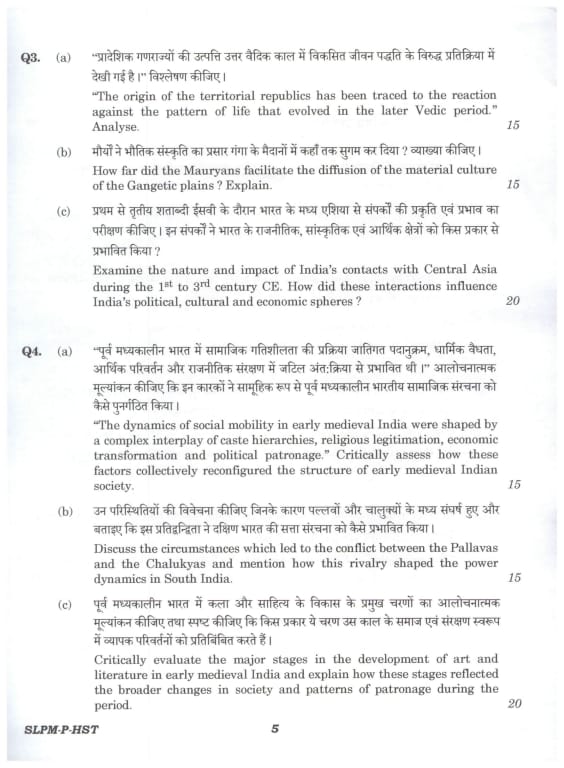
Q3.(a) "The origin of the territorial republics has been traced to the reaction against the pattern of life that evolved in the later Vedic period." Analyse.
"प्रादेशिक गणराज्यों की उत्पत्ति उत्तर वैदिक काल में विकसित जीवन पद्धति के विरुद्ध प्रतिक्रिया में देखी गई है।" विश्लेषण कीजिए।(Marks 15)
(b) How far did the Mauryans facilitate the diffusion of the material culture of the Gangetic plains? Explain.
मौयों ने भौतिक संस्कृति का प्रसार गंगा के मैदानों में कहाँ तक सुगम कर दिया? व्याख्या कीजिए।(Marks 15)
(c) Examine the nature and impact of India's contacts with Central Asia during the 1st to 3rd century CE. How did these interactions influence India's political, cultural and economic spheres?
प्रथम से तृतीय शताब्दी ईसवी के दौरान भारत के मध्य एशिया से संपकों की प्रकृति एवं प्रभाव का परीक्षण कीजिए। इन संपकों ने भारत के राजनीतिक, सांस्कृतिक एवं आर्थिक क्षेत्रों को किस प्रकार से प्रभावित किया ? (20 Marks)
Q4.(a) "The dynamics of social mobility in early medieval India were shaped by a complex interplay of caste hierarchies, religious legitimation, economic transformation and political patronage" Critically assess how these factors collectively reconfigured the structure of early medieval Indian society.
"पूर्व मध्यकालीन भारत में सामाजिक गतिशीलता की प्रक्रिया जातिगत पदानुक्रम, धार्मिक वैधता, आर्थिक परिवर्तन और राजनीतिक संरक्षण में जटिल अंतः क्रिया से प्रभावित थी।" आलोचनात्मक मूल्यांकन कीजिए कि इन कारकों ने सामूहिक रूप से पूर्व मध्यकालीन भारतीय सामाजिक संरचना को कैसे पुनर्गठित किया।(15Marks)
(b) Discuss the circumstances which led to the conflict between the Pallavas and the Chalukyas and mention how this rivalry shaped the power dynamics in South India.
उन परिस्थितियों की विवेचना कीजिए जिनके कारण पल्लवों और चालुक्यों के मध्य संघर्ष हुए और बताइए कि इस प्रतिद्वन्द्विता ने दक्षिण भारत की सत्ता संरचना को कैसे प्रभावित किया।(15Marks)
(c) Critically evaluate the major stages in the development of art and literature in early medieval India and explain how these stages reflected the broader changes in society and patterns of patronage during the period.
पूर्व मध्यकालीन भारत में कला और साहित्य के विकास के प्रमुख चरणों का आलोचनात्मक मूल्यांकन कीजिए तथा स्पष्ट कीजिए कि किस प्रकार ये चरण उस काल के समाज एवं संरक्षण स्वरूप में व्यापक परिवर्तनों को प्रतिबिंबित करते हैं।(20 Marks)
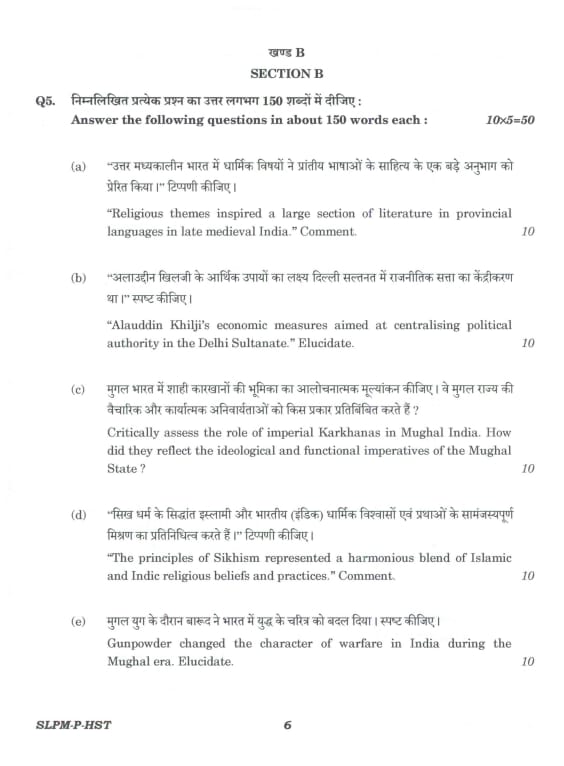
SECTION B/ (खण्ड B)
Q5. Answer the following questions in about 150 words each:
निम्नलिखित प्रत्येक प्रश्न का उत्तर लगभग 150 शब्दों में दीजिए: (Marks 10 * 5 = 50)
(a) "Religious themes inspired a large section of literature in provincial languages in late medieval India." Comment.
"उत्तर मध्यकालीन भारत में धार्मिक विषयों ने प्रांतीय भाषाओं के साहित्य के एक बड़े अनुभाग को प्रेरित किया।" टिप्पणी कीजिए। (Marks 10)
(b) "Alauddin Khilji's economic measures aimed at centralising political authority in the Delhi Sultanate." Elucidate.
"अलाउद्दीन खिलजी के आर्थिक उपायों का लक्ष्य दिल्ली सल्तनत में राजनीतिक सत्ता का केंद्रीकरण था।" स्पष्ट कीजिए।(Marks 10)
(c) Critically assess the role of imperial Karkhanas in Mughal India. How did they reflect the ideological and functional imperatives of the Mughal State?
मुगल भारत में शाही कारखानों की भूमिका का आलोचनात्मक मूल्यांकन कीजिए। वे मुगल राज्य की वैचारिक और कार्यात्मक अनिवार्यताओं को किस प्रकार प्रतिबिंबित करते हैं?(Marks 10)
(d) "The principles of Sikhism represented a harmonious blend of Islamic and Indic religious beliefs and practices." Comment.
"सिख धर्म के सिद्धांत इस्लामी और भारतीय (इंडिक) धार्मिक विश्वासों एवं प्रथाओं के सामंजस्यपूर्ण मिश्रण का प्रतिनिधित्व करते हैं।" टिप्पणी कीजिए।(Marks 10)
(e) Gunpowder changed the character of warfare in India during the Mughal era. Elucidate.
मुगल युग के दौरान बारूद ने भारत में युद्ध के चरित्र को बदल दिया। स्पष्ट कीजिए।(Marks 10)
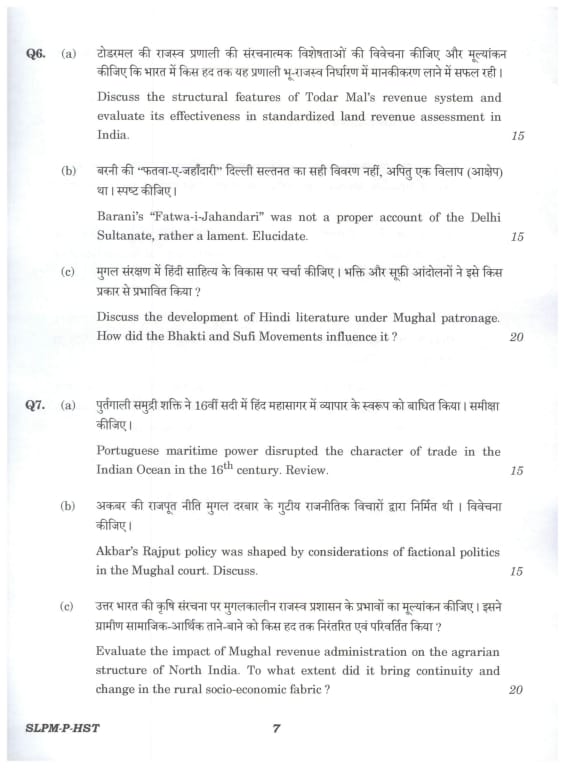
Q6.(a) Discuss the structural features of Todar Mal's revenue system and evaluate its effectiveness in standardized land revenue assessment in India.
टोडरमल की राजस्व प्रणाली की संरचनात्मक विशेषताओं की विवेचना कीजिए और मूल्यांकन कीजिए कि भारत में किस हद तक यह प्रणाली भू-राजस्व निर्धारण में मानकीकरण लाने में सफल रही।(Marks 15)
(b) Barani's "Fatwa-i-Jahandari" was not a proper account of the Delhi Sultanate, rather a lament. Elucidate.
बरनी की "फतवा-ए-जहाँदारी" दिल्ली सल्तनत का सही विवरण नहीं, अपितु एक विलाप (आक्षेप) था। स्पष्ट कीजिए।(Marks 15)
(c) Discuss the development of Hindi literature under Mughal patronage. How did the Bhakti and Sufi Movements influence it?
मुगल संरक्षण में हिंदी साहित्य के विकास पर चर्चा कीजिए। भक्ति और सूफ़ी आंदोलनों ने इसे किस प्रकार से प्रभावित किया ?(Marks 20)
Q7.(a) Portuguese maritime power disrupted the character of trade in the Indian Ocean in the 16th century. Review.
पुर्तगाली समुद्री शक्ति ने 16वीं सदी में हिंद महासागर में व्यापार के स्वरूप को बाधित किया। समीक्षा कीजिए।(Marks 15)
(b) Akbar's Rajput policy was shaped by considerations of factional politics in the Mughal court. Discuss.
अकबर की राजपूत नीति मुगल दरबार के गुटीय राजनीतिक विचारों द्वारा निर्मित थी। विवेचना कीजिए।(Marks 15)
(c) Evaluate the impact of Mughal revenue administration on the agrarian structure of North India. To what extent did it bring continuity and change in the rural socio-economic fabric?
उत्तर भारत की कृषि संरचना पर मुगलकालीन राजस्व प्रशासन के प्रभावों का मूल्यांकन कीजिए। इसने ग्रामीण सामाजिक-आर्थिक ताने-बाने को किस हद तक निरंतरित एवं परिवर्तित किया ?(Marks 20)
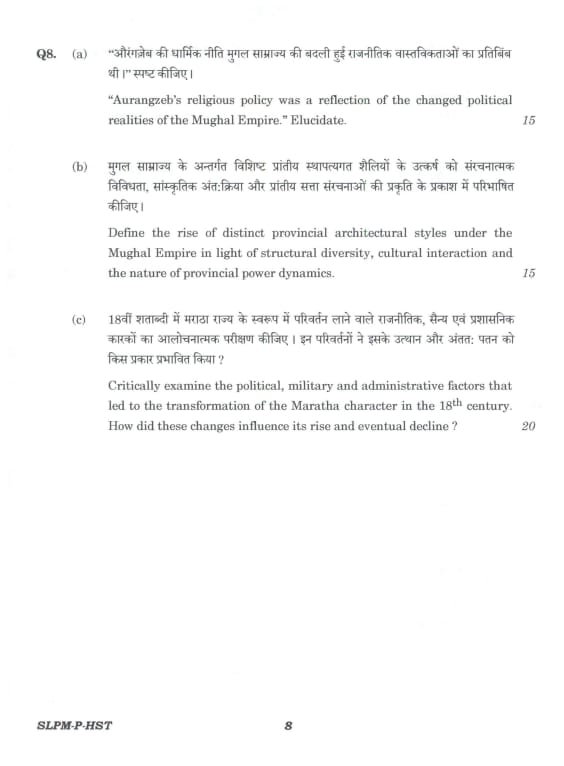
Q8.(a) "Aurangzeb's religious policy was a reflection of the changed political realities of the Mughal Empire." Elucidate.
"औरंगजेब की धार्मिक नीति मुगल साम्राज्य की बदली हुई राजनीतिक वास्तविकताओं का प्रतिबिंब थी।" स्पष्ट कीजिए।(Marks 15)
(b) Define the rise of distinct provincial architectural styles under the Mughal Empire in light of structural diversity, cultural interaction and the nature of provincial power dynamics.
मुगल साम्राज्य के अन्तर्गत विशिष्ट प्रांतीय स्थापत्यगत शैलियों के उत्कर्ष को संरचनात्मक विविधता, सांस्कृतिक अंतःक्रिया और प्रांतीय सत्ता संरचनाओं की प्रकृति के प्रकाश में परिभाषित कीजिए।(Marks 15)
(c) Critically examine the political, military and administrative factors that led to the transformation of the Maratha character in the 18th century. How did these changes influence its rise and eventual decline?
18वीं शताब्दी में मराठा राज्य के स्वरूप में परिवर्तन लाने वाले राजनीतिक, सैन्य एवं प्रशासनिक कारकों का आलोचनात्मक परीक्षण कीजिए। इन परिवर्तनों ने इसके उत्थान और अंततः पतन को किस प्रकार प्रभावित किया ?(Marks 20)
UPSC Mains History Optional Paper 1 Question Paper 2025 with Detailed Solution; Download PDF (August 31, 2025)
UPSC Previous Year Question Papers
Other Relevant Articles
| UPSC IAS Exam Syllabus | UPSC IAS Exam Pattern | UPSC IAS Exam Current Affairs |
| UPSC IAS Exam Study Materials | UPSC IAS Mock Test Series | UPSC IAS Salary |
Check the latest Government Recruitment News here.
Join Prepp Telegram Channel today for further updates.
Download the PREPP App and attempt FREE IAS Exam Mock Tests and get complete study material!

Full Test - 04: UPSC CSE Prelims CSAT (Paper-II)
Full Test - 03: UPSC CSE Prelims CSAT (Paper-II)
UPSC CSE Prelims 2026 GS Paper 1 Question Paper (24-May-2026)
UPSC CSE Prelims 2026 CSAT Paper 2 Question Paper (24-May-2026)

17 February 2025 | The Hindu Must Read Articles | Current Affairs

16 February 2026 | The Hindu Must Read Articles | Current Affairs

13 February 2026 | The Hindu Must Read Articles | Current Affairs









Comments