Who amongst the following scientist/s had no contribution in the development of the double-helix model for the structure of DNA?
Meselson and Stahl
The double-helix model of DNA was proposed by James Watson and Francis Crick in 1953. It was built on two key sets of data that were available before 1953.
Maurice Wilkins and Rosalind Franklin produced the X-ray diffraction data of DNA, which showed a helical structure and gave direct input to the model. Erwin Chargaff showed that in double-stranded DNA the amount of adenine equals thymine and the amount of guanine equals cytosine (A = T, G = C), which supported the base-pairing rule of the model.
Matthew Meselson and Franklin Stahl worked in 1958, after the model had been proposed. Using 15N and 14N in E. coli, they proved that DNA replicates semiconservatively, a prediction of the double-helix model. They tested the model; they did not contribute to building it.
Meselson and Stahl option is correct.
Similar Questions
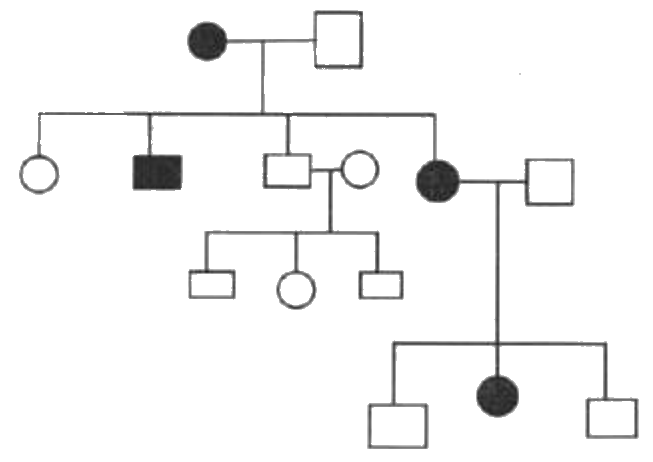
In a practical examination, the below given pedigree chart was given as spotter for identification.
The students identified the pedigree chart as ________
Identify the correct order of stages in Human evolution.
a) Homo habilis
b) Homo erectus
c) Australopithecus
d) Neanderthal man
e) Dryopithecus
According to Hugo De Vries, speciation is due to __________.
Select the statement which is ‘NOT’ true about Big Bang Theory.
Arrange the below given steps of DNA fingerprinting in sequence by selecting the appropriate option.
a) Digestion of DNA by restriction endonucleases
b) Autoradiography
c) Blotting of DNA fragments to nitrocellulose membrane
d) Isolation of DNA
e) Separation of DNA fragments by electrophoresis
In a DNA molecule, cytosine is 28%. Calculate the percentage of adenine.
Thalassemia and Sickle cell anaemia are due to a problem in globin molecule synthesis.
Select the correct statement.
Read the following statements.
Statement I: In a typical test cross, an organism showing a dominant phenotype is crossed with the recessive parent.
Statement II: The ratio of organisms showing dominant and recessive traits in F1 generation of a test cross indicates that the organism with unknown genotype is homozygous dominant.
Choose the correct option.
The classical example of point mutation is
The genotypes of husband and wife are IAIB and IAIO. Among the blood groups of their children, how many different genotypes and phenotypes are possible?
Important Questions from Genetics and Evolution
- Given below are two statements : one is labelled as Assertion A and the other is labelled as Reason R.
Assertion A : Forelimbs of human and bats are homologous.
Reason R : Forelimbs of humans and bats have similar anatomical structure.
In the light of the above statements, choose the most appropriate answer from the options given below : - Given below are two statements :
Statement I : Modern *Homo sapiens* arose in Australia and moved across continents.
Statement II : *Homo sapiens* arose around 75000 to 10000 years ago.
In the light of the above statements, choose the most appropriate answer from the options given below : A population of diploid organisms is at Hardy-Weinberg equilibrium. If the frequency of allele A is 0.1, the frequency of AA is ____________ .
Adaptive radiation in placental mammals and Australian Marsupials leading to similarity between distant species is an example of ___________
- Natural selection can lead to
(a) stabilisation
(b) genetic drift
(c) directional change
(d) disruption
Choose the correct answer from the options given below :