
Which type of washer is used for locking a nut?
Tab washer
Understanding Washers for Locking Nuts
Washers serve various purposes in bolted joints, such as distributing load, providing spacing, reducing friction, and importantly, preventing loosening due to vibration or thermal expansion/contraction. When the primary goal is to lock a nut securely in place against rotation, specific types of washers are employed as locking devices. Let's examine the given options to determine which type of washer is typically used for this purpose.
Analyzing the Options for Nut Locking
- Locking device: This is a general term. Washers that prevent nuts from loosening are a type of locking device, but this option doesn't specify the particular type of washer.
- Tab washer: A tab washer is designed with one or more tabs that can be bent up against a face of the nut or a surrounding component (like the edge of a plate or a special slot). This physical interference prevents the nut from rotating. They are considered a positive locking mechanism.
- Locking washer with lug: This option is similar to a tab washer, likely referring to a washer with a specific lug or projection used for locking. This aligns closely with the function of a tab washer. However, "Tab washer" is a widely recognized term for this type of positive locking washer.
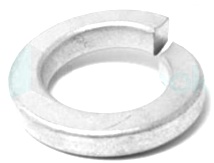
- Spring washer: Spring washers (like split lock washers, wave washers, or conical spring washers) work by providing a spring force that maintains tension in the joint. While they can help resist loosening under some conditions, they are not considered positive locking devices like tab washers. Their effectiveness can be limited under severe vibration or if the joint relaxes significantly.
Why Tab Washers are Used for Locking Nuts
Tab washers are specifically engineered to provide a positive lock. One or more tabs are initially flat. After the nut is tightened to the required torque, the relevant tab(s) are manually bent upwards against one of the flats of the nut (or bent down into a slot in the underlying component if the washer has an internal tab). This physical restraint prevents the nut from rotating relative to the washer and the bolted joint assembly. This makes them highly effective in applications where security against loosening is critical.
| Washer Type | Primary Function for Nuts | Locking Mechanism | Considered Positive Locking? |
|---|---|---|---|
| Plain Washer | Load distribution, spacing | None | No |
| Spring Washer (e.g., Split Lock) | Maintain tension, slight resistance to loosening | Friction, spring force | No |
| Tab Washer | Prevent rotation (positive lock) | Physical interference (bent tab) | Yes |
Based on their design and function, tab washers are a classic and effective type of washer used specifically for locking a nut by physically preventing its rotation.
Revision Table: Key Washer Types and Uses
| Washer Type | Common Use Case |
|---|---|
| Flat/Plain Washer | Distributing load, protecting surfaces, spacing |
| Split Lock Washer | Adding tension, resisting loosening due to vibration (limited positive lock) |
| Internal Tooth Lock Washer | Locking against rotation by biting into surfaces (more effective on softer materials) |
| External Tooth Lock Washer | Locking against rotation by biting into surfaces (more effective on softer materials) |
| Wave Washer | Providing spring force over small deflection ranges |
| Conical Spring Washer (Belleville) | Providing spring force over larger deflection ranges, maintaining tension |
| Tab Washer | Positive locking of nut or bolt head using bent tabs |
Additional Information on Locking Washers and Devices
While tab washers provide a strong positive lock, other methods and devices are also used to prevent nuts and bolts from loosening. These include:
- Nylock Nuts (Nylon Insert Lock Nuts): These have a nylon insert that deforms to grip the bolt threads, creating friction.
- All Metal Lock Nuts: These use distorted threads or a cone shape to create interference and friction.
- Jam Nuts: Using two nuts tightened against each other on the bolt thread.
- Thread Locking Adhesives: Liquid or semi-solid substances applied to the threads that cure to a hard plastic, filling gaps and bonding the threads together.
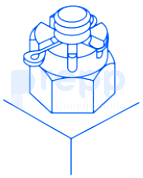
- Castle Nuts and Cotter Pins: A castle nut has slots cut into the top. A cotter pin or safety wire is passed through a hole in the bolt and through the slots in the nut to prevent rotation.
Each method has its advantages and disadvantages depending on the application, environment, vibration levels, and whether the joint needs to be frequently disassembled.
Similar Questions
Identify the part shown in the following figure.
Torque wrench is used for:
What is the name of the device shown in the picture?
Identify the tool in the given figure.
How can we remove a broken bolt from a tapped hole?
Allen key is also known as a/an ___________.
Spring washers are used under nuts to prevent _______.
What are Tab washers used for?
Identify the locking arrangement in the following figure.
Tab washers are used:
Important Questions from Fasteners
Identify the part shown in the following figure.
Torque wrench is used for:
What is the name of the device shown in the picture?
Identify the tool in the given figure.
How can we remove a broken bolt from a tapped hole?



