
Which isomerism is shown by the following pairs? CH₃CH₂CH₂OH and CH₃CH₂OCH₃
Functional isomerism
Understanding Isomerism in Organic Compounds
Isomerism is a phenomenon where two or more compounds have the same molecular formula but different structural formulas or different spatial arrangements of atoms. The given question asks us to identify the type of isomerism shown by the pair of organic compounds: CH₃CH₂CH₂OH and CH₃CH₂OCH₃.
Analyzing the Given Compounds
Let's first determine the molecular formula for both compounds:
- CH₃CH₂CH₂OH (Propan-1-ol):
- Number of Carbon atoms (C) = 3
- Number of Hydrogen atoms (H) = 3 + 2 + 2 + 1 = 8
- Number of Oxygen atoms (O) = 1
- Molecular formula: C₃H₈O
- CH₃CH₂OCH₃ (Methoxyethane):
- Number of Carbon atoms (C) = 2 + 1 = 3
- Number of Hydrogen atoms (H) = 3 + 2 + 3 = 8
- Number of Oxygen atoms (O) = 1
- Molecular formula: C₃H₈O
Both compounds have the same molecular formula, C₃H₈O. Therefore, they are isomers.
Identifying the Functional Groups
Next, let's identify the functional group present in each compound:
- CH₃CH₂CH₂OH contains the hydroxyl functional group (\(-\text{OH}\)), which is characteristic of alcohols.
- CH₃CH₂OCH₃ contains the ether functional group (\(-\text{O}-\)), where the oxygen atom is bonded to two alkyl or aryl groups.
Since the two compounds have the same molecular formula but contain different functional groups (alcohol and ether), they exhibit functional isomerism.
Explanation of Functional Isomerism
Functional isomerism is a type of structural isomerism where isomers have the same molecular formula but differ in the presence of different functional groups. This difference in functional groups leads to significant differences in their chemical and physical properties.
Comparing with Other Types of Isomerism
Let's consider why the other options are not applicable:
- Position isomerism: This occurs when the position of a functional group or a substituent differs on the same carbon chain. For example, propan-1-ol (CH₃CH₂CH₂OH) and propan-2-ol (CH₃CHOHCH₃) are position isomers. The given pair does not involve different positions of the same group; they have entirely different groups.
- Chain isomerism: This occurs when isomers have different carbon skeletons (branched vs. unbranched). For example, butane (CH₃CH₂CH₂CH₃) and 2-methylpropane ((CH₃)₃CH) are chain isomers. Both propan-1-ol and methoxyethane have a 3-carbon chain (though arranged differently, the core 'chain' idea differs). However, the primary difference here is the functional group, making functional isomerism the more specific and correct classification. Functional isomerism is a type of structural isomerism, but functional isomerism is more specific than just "structural isomerism" when the functional group changes.
- Structural isomerism: This is a broader category that includes chain, position, functional, metamerism, and tautomerism. While functional isomers are structural isomers, the question asks for the specific type shown. Functional isomerism is the most precise description for this pair.
Based on the analysis, the given pair of compounds, CH₃CH₂CH₂OH and CH₃CH₂OCH₃, are functional isomers.
Revision Table: Types of Structural Isomerism
| Type of Isomerism | Description | Example |
|---|---|---|
| Chain Isomerism | Different carbon skeletons | Butane and 2-Methylpropane |
| Position Isomerism | Different position of functional group or substituent on the same chain | Propan-1-ol and Propan-2-ol |
| Functional Isomerism | Different functional groups | Propan-1-ol and Methoxyethane |
| Metamerism | Different alkyl chains around a polyvalent functional group (like ether, ketone, ester) | Diethyl ether (CH₃CH₂OCH₂CH₃) and Methyl propyl ether (CH₃OCH₂CH₂CH₃) |
| Tautomerism | Dynamic equilibrium between two functional isomers (e.g., keto-enol tautomerism) | Acetoacetic ester (Keto form \(\rightleftharpoons\) Enol form) |
Additional Information on Functional Isomerism
Functional isomerism is a common type of isomerism in organic chemistry. Different functional groups impart distinct chemical properties to the molecules. For example, alcohols like propan-1-ol undergo reactions such as oxidation to aldehydes/ketones and carboxylic acids, esterification, and dehydration. Ethers like methoxyethane, on the other hand, are generally less reactive and primarily undergo cleavage reactions under harsh conditions. Understanding functional isomerism helps in predicting the behavior and reactivity of organic compounds.
Other common examples of functional isomers include:
- Aldehydes and Ketones (e.g., Propanal and Propanone, C₃H₆O)
- Carboxylic acids and Esters (e.g., Propanoic acid and Methyl acetate, C₃H₆O₂)
- Alkenes and Cycloalkanes (e.g., Propene and Cyclopropane, C₃H₆)
- Alkynes and Cycloalkenes (e.g., Propyne and Cyclopropene, C₃H₄)
- Alcohols and Ethers (as seen in the question)
Identifying the functional group is key to determining if compounds are functional isomers.
Important Questions from Alcohols, Phenols and Ethers
Which among the following is a trihydric alcohol?
Why does Fluorine exhibit only –1 oxidation state?
Correct order of boiling points in the following is:
(A) CH3CHO
(B) CH3COOH
(C) CH3CH2OH
(D) CH3CH3
(E) CH3CH2Cl
Choose the correct answer from the options given below:
Identify allylic alcohol:
(A) CH2= CH–CH2OH
(B) CH3= CH–CH2OH
(C)

(D)
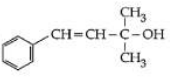
Choose the correct answer from the options given below:
In Kolbe's reaction, phenol undergoes:


