
In Kolbe's reaction, phenol undergoes:
Electrophilic substitution
Understanding Kolbe's Reaction with Phenol
Kolbe's reaction is an important chemical process used to synthesize salicylic acid (2-hydroxybenzoic acid) from phenol. In this reaction, phenol is first treated with a strong base, like sodium hydroxide (\(\text{NaOH}\)), to form sodium phenoxide. The sodium phenoxide is then heated with carbon dioxide (\(\text{CO}_2\)) under pressure, followed by acidification to yield salicylic acid.
The question asks about the type of reaction that phenol undergoes in Kolbe's reaction. More specifically, it refers to the reaction happening on the aromatic ring of the phenol derivative.
Phenol Conversion to Phenoxide Ion
Phenol itself is acidic and reacts with \(\text{NaOH}\) to form the phenoxide ion. The structure is:
\(\text{C}_6\text{H}_5\text{OH} + \text{NaOH} \rightarrow \text{C}_6\text{H}_5\text{O}^- \text{Na}^+ + \text{H}_2\text{O}\)
The phenoxide ion is significantly more reactive towards electrophiles than phenol because the negative charge on the oxygen atom is delocalized into the aromatic ring, increasing electron density, especially at the ortho and para positions.
Identifying the Electrophile and Reaction Type
In Kolbe's reaction, carbon dioxide (\(\text{CO}_2\)) acts as the electrophile. Although \(\text{CO}_2\) is a relatively weak electrophile, the high electron density in the phenoxide ion makes the reaction possible. The carbon atom in \(\text{CO}_2\) carries a partial positive charge due to the electronegativity difference between carbon and oxygen.
The \(\text{CO}_2\) molecule attacks the electron-rich aromatic ring of the phenoxide ion. This attack results in the substitution of a hydrogen atom on the ring by the carboxyl group (\(-\text{COOH}\), after subsequent steps). Reactions where an electrophile attacks an aromatic ring and replaces a hydrogen atom are classified as electrophilic aromatic substitution reactions.
In Kolbe's reaction, the \(\text{CO}_2\) electrophile primarily attacks the ortho position of the phenoxide ion, leading to the formation of 2-hydroxybenzoic acid (salicylic acid) as the major product.
Analyzing the Given Options
Let's look at why the other options are not correct for the main reaction on the aromatic ring in Kolbe's process:
- Electrophilic addition: Addition reactions typically involve breaking double or triple bonds and adding atoms across them. Aromatic rings undergo substitution rather than addition under typical conditions to maintain their stable aromaticity. Electrophilic addition can happen to alkenes, but not easily to the stable aromatic ring in this context.
- Nucleophilic addition: Nucleophilic addition usually occurs on functional groups like aldehydes or ketones (addition across \(\text{C=O}\)) or alkenes activated by electron-withdrawing groups. The aromatic ring itself is electron-rich and is generally not susceptible to nucleophilic addition unless strongly activated or under extreme conditions, which is not the case here for the reaction on the ring.
- Nucleophilic substitution: Nucleophilic substitution involves replacing a leaving group with a nucleophile. Aromatic rings can undergo nucleophilic aromatic substitution, but this typically requires strong electron-withdrawing groups on the ring or harsh conditions (like in the reaction of chlorobenzene with \(\text{NaOH}\) at high temperature and pressure). In Kolbe's reaction, the attacking species on the ring is \(\text{CO}_2\), which acts as an electrophile, not a nucleophile, and the process involves substitution of a hydrogen, not a leaving group attached to carbon.
Therefore, the reaction phenol undergoes (specifically the phenoxide ion's reaction with \(\text{CO}_2\) on the ring) is an electrophilic substitution.
| Reaction Type | Description | Relevance to Kolbe's Reaction (on ring) |
|---|---|---|
| Electrophilic Addition | Addition across double/triple bonds by an electrophile. | Not the main reaction on the aromatic ring, which prefers substitution to retain aromaticity. |
| Electrophilic Substitution | Replacement of an atom (usually H) on an aromatic ring by an electrophile. | This is the type of reaction the phenoxide ion undergoes with \(\text{CO}_2\). |
| Nucleophilic Addition | Addition across \(\text{C=O}\) or activated alkenes by a nucleophile. | Not the reaction on the aromatic ring in this case. |
| Nucleophilic Substitution | Replacement of a leaving group by a nucleophile. | Not the reaction on the aromatic ring in this case; the attacking species (\(\text{CO}_2\)) is an electrophile. |
Revision Table: Key Points of Kolbe's Reaction
| Aspect | Description |
|---|---|
| Reactant (starting from) | Phenol |
| Intermediate | Phenoxide ion (formed from phenol + base) |
| Key Reagent (electrophile) | Carbon dioxide (\(\text{CO}_2\)) |
| Reaction Type on Ring | Electrophilic Substitution |
| Major Product | Salicylic acid (2-hydroxybenzoic acid) |
| Conditions | Heating phenoxide with \(\text{CO}_2\) under pressure, followed by acidification. |
Additional Information: Aromatic Substitution on Phenol/Phenoxide
Phenol and the phenoxide ion are activating groups for electrophilic aromatic substitution. The hydroxyl group (\(-\text{OH}\)) and especially the phenoxide anion (\(-\text{O}^-\)) are strongly electron-donating through resonance, increasing electron density on the aromatic ring. This makes the ring much more reactive towards electrophiles compared to benzene.
The electron donation is strongest at the ortho and para positions. Therefore, electrophilic substitution on phenol and phenoxide primarily occurs at these positions. In Kolbe's reaction, the ortho product (salicylic acid) is favored due to specific reaction conditions and potential stabilization of the intermediate/product.
The reactivity difference between phenol and phenoxide towards electrophiles is significant. Phenoxide is much more reactive than neutral phenol due to the full negative charge on oxygen, which provides stronger activation of the ring.
Important Questions from Alcohols, Phenols and Ethers
Which among the following is a trihydric alcohol?
Why does Fluorine exhibit only –1 oxidation state?
Which isomerism is shown by the following pairs?
CH₃CH₂CH₂OH and CH₃CH₂OCH₃
Correct order of boiling points in the following is:
(A) CH3CHO
(B) CH3COOH
(C) CH3CH2OH
(D) CH3CH3
(E) CH3CH2Cl
Choose the correct answer from the options given below:
Identify allylic alcohol:
(A) CH2= CH–CH2OH
(B) CH3= CH–CH2OH
(C)

(D)
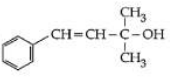
Choose the correct answer from the options given below:


