
Which among the following is a trihydric alcohol?
Glycerol
Understanding Trihydric Alcohols in Organic Chemistry
Alcohols are organic compounds containing one or more hydroxyl ($\text{-OH}$) groups attached to a saturated carbon atom. They are classified based on the number of hydroxyl groups they contain:
- Monohydric Alcohols: Contain one hydroxyl group.
- Dihydric Alcohols: Contain two hydroxyl groups. Also known as glycols.
- Trihydric Alcohols: Contain three hydroxyl groups.
- Polyhydric Alcohols: Contain more than three hydroxyl groups.
The question asks to identify a trihydric alcohol among the given options. Let's examine each option:
Analyzing the Given Options
We need to determine the structure of each compound and count the number of hydroxyl ($\text{-OH}$) groups.
- Ethanol:
Ethanol is an alcohol with the chemical formula $\text{CH}_3\text{CH}_2\text{OH}$. It has one hydroxyl ($\text{-OH}$) group.
Therefore, ethanol is a monohydric alcohol.
- Glycerol:
Glycerol, also known as glycerine or propane-1,2,3-triol, is an alcohol with the chemical formula $\text{C}_3\text{H}_8\text{O}_3$. Its structure is $\text{CH}_2\text{(OH)CH(OH)CH}_2\text{OH}$. It has three hydroxyl ($\text{-OH}$) groups, each attached to a different carbon atom.
Therefore, glycerol is a trihydric alcohol.
- Ethylene Glycol:
Ethylene glycol, also known as ethane-1,2-diol, is an alcohol with the chemical formula $\text{C}_2\text{H}_6\text{O}_2$. Its structure is $\text{CH}_2\text{(OH)CH}_2\text{OH}$. It has two hydroxyl ($\text{-OH}$) groups.
Therefore, ethylene glycol is a dihydric alcohol.
- Phenol:
Phenol has the chemical formula $\text{C}_6\text{H}_5\text{OH}$. It is an aromatic compound where a hydroxyl ($\text{-OH}$) group is directly attached to a benzene ring. It has one hydroxyl ($\text{-OH}$) group.
Although it has an $\text{-OH}$ group, its properties are different from aliphatic alcohols due to the benzene ring. However, based on the number of $\text{-OH}$ groups, it is considered a monohydric compound (or specifically, a phenol).
Comparison of the Options
| Compound | Chemical Formula / Structure Representation | Number of Hydroxyl ($\text{-OH}$) Groups | Classification by Hydroxyl Groups |
|---|---|---|---|
| Ethanol | $\text{CH}_3\text{CH}_2\text{OH}$ | One | Monohydric alcohol |
| Glycerol | $\text{CH}_2\text{(OH)CH(OH)CH}_2\text{OH}$ | Three | Trihydric alcohol |
| Ethylene Glycol | $\text{CH}_2\text{(OH)CH}_2\text{OH}$ | Two | Dihydric alcohol |
| Phenol | $\text{C}_6\text{H}_5\text{OH}$ | One | Monohydric (Phenol) |
From the analysis, Glycerol is the only compound among the options that contains three hydroxyl ($\text{-OH}$) groups.
Conclusion: Identifying the Trihydric Alcohol
Based on the definition of trihydric alcohols and the structures of the given options, Glycerol fits the description of a trihydric alcohol as it possesses three hydroxyl functional groups.
The correct answer is Glycerol.
Revision Table: Alcohol Types and Examples
| Type of Alcohol | Number of $\text{-OH}$ Groups | Example |
|---|---|---|
| Monohydric | One | Ethanol, Methanol, Propanol |
| Dihydric (Glycol) | Two | Ethylene Glycol, Propylene Glycol |
| Trihydric | Three | Glycerol |
| Polyhydric | More than three | Sorbitol, Mannitol |
Additional Information on Alcohols and Polyols
Alcohols are important organic compounds used in various applications, including solvents, fuels, and as intermediates in chemical synthesis. Polyols, which include dihydric, trihydric, and polyhydric alcohols, often have different physical properties compared to monohydric alcohols due to the presence of multiple hydrogen bonding sites (the hydroxyl groups). For instance, polyols like glycerol and ethylene glycol are viscous liquids and have higher boiling points than monohydric alcohols of comparable molecular weight.
Glycerol is widely used in pharmaceuticals, cosmetics, food production (as a sweetener and humectant), and in the production of polymers like polyurethanes.
Ethylene glycol is commonly used as an antifreeze agent.
Phenol, while having an $\text{-OH}$ group, is more acidic than aliphatic alcohols due to the resonance stabilization of the phenoxide ion.
Important Questions from Alcohols, Phenols and Ethers
Why does Fluorine exhibit only –1 oxidation state?
Which isomerism is shown by the following pairs?
CH₃CH₂CH₂OH and CH₃CH₂OCH₃
Correct order of boiling points in the following is:
(A) CH3CHO
(B) CH3COOH
(C) CH3CH2OH
(D) CH3CH3
(E) CH3CH2Cl
Choose the correct answer from the options given below:
Identify allylic alcohol:
(A) CH2= CH–CH2OH
(B) CH3= CH–CH2OH
(C)

(D)
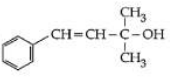
Choose the correct answer from the options given below:
In Kolbe's reaction, phenol undergoes:


