
Correct order of boiling points in the following is: (A) CH3CHO (B) CH3COOH (C) CH3CH2OH (D) CH3CH3 (E) CH3CH2Cl Choose the correct answer from the options given below:
(B), (C), (A), (E), (D)
Understanding Boiling Points and Intermolecular Forces
The boiling point of a substance is the temperature at which its vapor pressure equals the surrounding atmospheric pressure, allowing it to change from a liquid to a gas. This process requires overcoming the attractive forces between molecules in the liquid state. These attractive forces are known as intermolecular forces. Stronger intermolecular forces require more energy to overcome, resulting in higher boiling points.
There are several types of intermolecular forces:
- London Dispersion Forces (LDF): Present in all molecules, arising from temporary fluctuations in electron distribution creating instantaneous dipoles. Their strength increases with molecular size and surface area.
- Dipole-Dipole Forces: Occur between polar molecules that have permanent dipoles. The positive end of one molecule attracts the negative end of another.
- Hydrogen Bonding: A particularly strong type of dipole-dipole interaction that occurs when a hydrogen atom is bonded to a highly electronegative atom (like Oxygen, Nitrogen, or Fluorine) and is attracted to a lone pair of electrons on another electronegative atom in a different molecule.
To determine the correct order of boiling points for the given compounds, we need to identify the primary intermolecular forces present in each and compare their relative strengths.
Analyzing Intermolecular Forces in Each Compound
Let's examine the structure and polarity of each given compound:
(A) $\text{CH}_3\text{CHO}$ (Acetaldehyde): This is an aldehyde. The $\text{C}=\text{O}$ carbonyl group is polar due to the difference in electronegativity between carbon and oxygen. Acetaldehyde is a polar molecule and exhibits dipole-dipole forces in addition to London dispersion forces.
(B) $\text{CH}_3\text{COOH}$ (Acetic Acid): This is a carboxylic acid. It contains both a $\text{C}=\text{O}$ group and an $\text{-OH}$ group. The $\text{-OH}$ group allows for strong hydrogen bonding between molecules. Carboxylic acids often form dimers in which two molecules are held together by two hydrogen bonds, significantly increasing the effective molecular size and intermolecular attraction. It also exhibits dipole-dipole and London dispersion forces.
(C) $\text{CH}_3\text{CH}_2\text{OH}$ (Ethanol): This is an alcohol. It contains an $\text{-OH}$ group. The oxygen atom is highly electronegative and bonded to hydrogen, allowing for hydrogen bonding between molecules. It also exhibits dipole-dipole and London dispersion forces.
(D) $\text{CH}_3\text{CH}_3$ (Ethane): This is a simple alkane. It is a nonpolar molecule. The only intermolecular forces present are weak London dispersion forces.
(E) $\text{CH}_3\text{CH}_2\text{Cl}$ (Chloroethane): This is an alkyl halide. The $\text{C}-\text{Cl}$ bond is polar due to the electronegativity difference between carbon and chlorine. Chloroethane is a polar molecule and exhibits dipole-dipole forces in addition to London dispersion forces.
Comparing Strength of Intermolecular Forces
In general, the strength of intermolecular forces follows this order:
Hydrogen Bonding > Dipole-Dipole Forces > London Dispersion Forces
Let's rank the compounds based on the strongest intermolecular forces present:
- Compounds with Hydrogen Bonding: (B) Acetic Acid and (C) Ethanol. Acetic acid forms stronger hydrogen bonds and often exists as a dimer, giving it a higher boiling point than ethanol. So, (B) > (C).
- Compounds with Dipole-Dipole Forces (but no Hydrogen Bonding): (A) Acetaldehyde and (E) Chloroethane. Both are polar and experience dipole-dipole forces. To compare these, we also consider London dispersion forces, which depend on molecular size and electron count. The boiling point also depends on the strength of the dipole and how effectively the molecules can orient themselves. Acetaldehyde typically has a higher boiling point than chloroethane. So, (A) > (E).
- Compounds with only London Dispersion Forces: (D) Ethane. This is the least polar molecule and has the weakest intermolecular forces among the given compounds.
Determining the Correct Boiling Point Order
Combining the rankings based on intermolecular forces:
Carboxylic Acid (Hydrogen bonding, dimerization) > Alcohol (Hydrogen bonding) > Aldehyde (Dipole-dipole) > Alkyl Halide (Dipole-dipole) > Alkane (London dispersion)
Therefore, the expected order of boiling points from highest to lowest is:
- (B) Acetic Acid (Highest boiling point due to strong hydrogen bonding/dimerization)
- (C) Ethanol (High boiling point due to hydrogen bonding)
- (A) Acetaldehyde (Intermediate boiling point due to dipole-dipole forces)
- (E) Chloroethane (Lower intermediate boiling point due to dipole-dipole forces and LDF, but generally lower than aldehydes of similar size)
- (D) Ethane (Lowest boiling point due to weak London dispersion forces)
The correct order from highest to lowest boiling point is (B), (C), (A), (E), (D).
| Compound | Structure/Formula | Functional Group | Primary Intermolecular Forces | Relative Boiling Point |
|---|---|---|---|---|
| (A) Acetaldehyde | $\text{CH}_3\text{CHO}$ | Aldehyde | Dipole-Dipole, LDF | Intermediate |
| (B) Acetic Acid | $\text{CH}_3\text{COOH}$ | Carboxylic Acid | Hydrogen Bonding (strong), Dipole-Dipole, LDF | Highest |
| (C) Ethanol | $\text{CH}_3\text{CH}_2\text{OH}$ | Alcohol | Hydrogen Bonding, Dipole-Dipole, LDF | High |
| (D) Ethane | $\text{CH}_3\text{CH}_3$ | Alkane | LDF | Lowest |
| (E) Chloroethane | $\text{CH}_3\text{CH}_2\text{Cl}$ | Alkyl Halide | Dipole-Dipole, LDF | Lower Intermediate |
Revision Table: Organic Compounds and Boiling Points
| Compound | Code | Functional Group | Key Intermolecular Force | Relative Boiling Point |
|---|---|---|---|---|
| Acetic Acid | (B) | Carboxylic Acid | Strong Hydrogen Bonding | Highest |
| Ethanol | (C) | Alcohol | Hydrogen Bonding | High |
| Acetaldehyde | (A) | Aldehyde | Dipole-Dipole | Intermediate |
| Chloroethane | (E) | Alkyl Halide | Dipole-Dipole | Lower Intermediate |
| Ethane | (D) | Alkane | London Dispersion | Lowest |
Additional Information: Intermolecular Forces and Physical Properties
Intermolecular forces are crucial in determining various physical properties of substances, including boiling point, melting point, viscosity, and surface tension. Substances with stronger intermolecular forces generally have higher boiling points and melting points because more energy is required to overcome these attractions and change the state of matter.
- For nonpolar molecules, only London dispersion forces are present. Boiling points increase with increasing molecular size and surface area due to stronger LDFs.
- For polar molecules without O-H, N-H, or F-H bonds, dipole-dipole forces are also present, in addition to LDFs. These are stronger than LDFs of comparable size, leading to higher boiling points than nonpolar molecules of similar molecular weight.
- For molecules capable of hydrogen bonding (containing O-H, N-H, or F-H bonds), hydrogen bonding is the strongest intermolecular force. These substances have significantly higher boiling points compared to polar or nonpolar molecules of similar size. Carboxylic acids are particularly good at hydrogen bonding due to the polarity of both the carbonyl and hydroxyl groups and their ability to form stable dimers.
When comparing molecules, it's important to consider both the types and strengths of intermolecular forces as well as molecular size (for LDF contribution). However, the presence of hydrogen bonding usually dominates over dipole-dipole and LDFs for molecules of similar size.
Important Questions from Alcohols, Phenols and Ethers
Which among the following is a trihydric alcohol?
Why does Fluorine exhibit only –1 oxidation state?
Which isomerism is shown by the following pairs?
CH₃CH₂CH₂OH and CH₃CH₂OCH₃
Identify allylic alcohol:
(A) CH2= CH–CH2OH
(B) CH3= CH–CH2OH
(C)

(D)
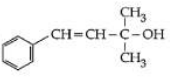
Choose the correct answer from the options given below:
In Kolbe's reaction, phenol undergoes:


