
When methyl bromide is treated with sodium tert-butoxide, the compound formed is:
tert-Butyl methyl ether
Understanding the Reaction: Methyl Bromide with Sodium tert-Butoxide
This question asks about the product formed when methyl bromide reacts with sodium tert-butoxide. This is a classic reaction involving an alkyl halide and a strong base/nucleophile, which can potentially undergo substitution ($\text{S}_{\text{N}}2$) or elimination (E2) reactions.
Identifying the Reactants
- Methyl bromide ($\text{CH}_3\text{Br}$): This is a primary alkyl halide (specifically, a methyl halide). The carbon atom bonded to the bromine is attached to only one carbon atom (actually, zero, as it's a methyl group). Primary alkyl halides are excellent substrates for $\text{S}_{\text{N}}2$ reactions due to minimal steric hindrance around the reacting carbon.
- Sodium tert-butoxide ($\text{Na}^+ \text{O}^- \text{C}(\text{CH}_3)_3$): This is the sodium salt of tert-butyl alcohol. It is a strong base because the alkoxide ion ($\text{O}^- \text{C}(\text{CH}_3)_3$) is derived from a relatively weak acid (tert-butyl alcohol). It is also a bulky nucleophile/base due to the three methyl groups attached to the carbon bearing the oxygen.
Analyzing the Possible Reactions
When an alkyl halide reacts with a base or nucleophile, we consider two main reaction types: Substitution (like $\text{S}_{\text{N}}2$) and Elimination (like E2).
Why E2 Elimination is Unlikely
E2 elimination requires the removal of a hydrogen atom from a carbon adjacent to the carbon bearing the leaving group (these are called β-hydrogens) and the simultaneous removal of the leaving group (bromine in this case). This forms a double bond.
Let's look at methyl bromide:
\$ \text{H}_3\text{C} - \text{Br} \$The carbon bonded to bromine is the α-carbon. To perform E2 elimination, there must be a β-carbon with a hydrogen attached. Methyl bromide has no carbon atoms adjacent to the α-carbon. Therefore, there are no β-hydrogens available for the bulky base (tert-butoxide) to abstract, making E2 elimination impossible with this substrate.
Why $\text{S}_{\text{N}}2$ Substitution Occurs
$\text{S}_{\text{N}}2$ substitution involves a backside attack by the nucleophile on the carbon bearing the leaving group, simultaneously pushing off the leaving group (bromide ion). This reaction is favored by:
- Strong nucleophiles
- Primary or methyl alkyl halides (due to low steric hindrance)
Sodium tert-butoxide provides the tert-butoxide ion ($\text{O}^- \text{C}(\text{CH}_3)_3$), which is a strong nucleophile (and a strong base). While it is bulky, methyl bromide is the least sterically hindered alkyl halide possible (even less hindered than primary halides). The backside attack on the methyl carbon is highly accessible to the tert-butoxide nucleophile.
Therefore, the dominant reaction pathway is $\text{S}_{\text{N}}2$ substitution, where the tert-butoxide ion replaces the bromide ion.
The Reaction Equation
The reaction proceeds as follows:
\$ \text{CH}_3\text{Br} + \text{Na}^+ \text{O}^- \text{C}(\text{CH}_3)_3 \rightarrow \text{CH}_3\text{O}\text{C}(\text{CH}_3)_3 + \text{Na}^+ \text{Br}^- \$Identifying the Product
The product formed is an ether with a methyl group ($\text{CH}_3$) and a tert-butyl group ($\text{C}(\text{CH}_3)_3$) attached to the oxygen atom. This compound is named tert-butyl methyl ether, or methyl tert-butyl ether (MTBE).
Examining the Options
Let's look at the given options:
- Diethyl ether: $\text{CH}_3\text{CH}_2\text{OCH}_2\text{CH}_3$ - Incorrect. This requires ethyl groups.
- tert-Butyl methyl ether: $\text{CH}_3\text{OC}(\text{CH}_3)_3$ - Correct. This matches the product we determined.
- Diethyl bromide: This is an alkyl halide, $\text{CH}_3\text{CH}_2\text{Br}$, not an ether, and doesn't fit the reaction product. - Incorrect.
- Methyl propyl ether: $\text{CH}_3\text{OCH}_2\text{CH}_2\text{CH}_3$ - Incorrect. This requires a propyl group.
Based on the $\text{S}_{\text{N}}2$ reaction between methyl bromide and sodium tert-butoxide, the compound formed is tert-butyl methyl ether.
| Reactant 1 | Reactant 2 | Alkyl Halide Type | Nucleophile/Base Type | Possible Reactions | Actual Reaction | Product Type | Specific Product |
|---|---|---|---|---|---|---|---|
| Methyl bromide | Sodium tert-butoxide | Methyl | Strong base, Bulky nucleophile | $\text{S}_{\text{N}}2$, E2 | $\text{S}_{\text{N}}2$ (E2 not possible due to no β-H) | Ether | tert-Butyl methyl ether |
Revision Table: Key Concepts
| Concept | Description | Relevance to Question |
|---|---|---|
| $\text{S}_{\text{N}}2$ Reaction | Bimolecular nucleophilic substitution. Favored by primary/methyl halides, strong nucleophiles. Involves backside attack. | This is the reaction type that occurs between methyl bromide and tert-butoxide. |
| E2 Reaction | Bimolecular elimination. Favored by strong bases, bulky bases, secondary/tertiary halides with β-hydrogens. Forms a double bond. | This reaction is not possible here because methyl bromide has no β-hydrogens. |
| Alkyl Halide Sterics | Steric hindrance at the α-carbon affects $\text{S}_{\text{N}}2$ reactivity (methyl > primary > secondary > tertiary). | Methyl bromide is the least hindered substrate, making $\text{S}_{\text{N}}2$ highly favorable despite the bulky nucleophile. |
| Bulky Bases/Nucleophiles | Large bases (like tert-butoxide) have difficulty accessing hindered α-carbons for $\text{S}_{\text{N}}2$ but are good at abstracting less hindered β-hydrogens for E2. | Even though tert-butoxide is bulky, the methyl carbon in methyl bromide is completely unhindered, allowing $\text{S}_{\text{N}}2$ to proceed. |
Additional Information: Williamson Ether Synthesis and Steric Effects
The reaction between an alkoxide (like sodium tert-butoxide) and a primary alkyl halide (like methyl bromide) to form an ether is a specific example of the Williamson ether synthesis. The general reaction is:
\$ \text{R}_1\text{O}^- \text{Na}^+ + \text{R}_2\text{X} \rightarrow \text{R}_1\text{OR}_2 + \text{NaX} \$where $\text{R}_2$ is typically a primary alkyl group or methyl, and $\text{X}$ is a good leaving group (like $\text{Br}$).
The success of the Williamson synthesis depends heavily on the nature of the alkyl halide ($\text{R}_2\text{X}$) and the alkoxide ($\text{R}_1\text{O}^-$). If the alkyl halide is secondary or tertiary, or if the alkoxide is very bulky and the alkyl halide has β-hydrogens, E2 elimination can become a significant or even dominant side reaction, reducing the yield of the ether.
In this specific case, methyl bromide is the simplest and least sterically hindered alkyl halide, making it highly reactive in $\text{S}_{\text{N}}2$ reactions. Even with a bulky nucleophile/base like tert-butoxide, the absence of β-hydrogens on methyl bromide prevents elimination, and the low steric hindrance on the methyl carbon strongly favors the $\text{S}_{\text{N}}2$ pathway, leading exclusively to the substitution product, tert-butyl methyl ether.
Important Questions from Alcohols, Phenols and Ethers
Which among the following is a trihydric alcohol?
Why does Fluorine exhibit only –1 oxidation state?
Which isomerism is shown by the following pairs?
CH₃CH₂CH₂OH and CH₃CH₂OCH₃
Correct order of boiling points in the following is:
(A) CH3CHO
(B) CH3COOH
(C) CH3CH2OH
(D) CH3CH3
(E) CH3CH2Cl
Choose the correct answer from the options given below:
Identify allylic alcohol:
(A) CH2= CH–CH2OH
(B) CH3= CH–CH2OH
(C)

(D)
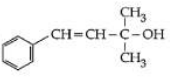
Choose the correct answer from the options given below:


