
Understanding Unbiased Sample Selection
In statistics, the goal of sampling is often to gather information about a larger population by studying a smaller subset, known as a sample. For the findings from the sample to accurately represent the population, the sample must be unbiased. An unbiased sample means that every member of the population has a fair chance of being included in the sample, and the selection process doesn't systematically favor certain individuals or groups over others.
Key Principles for Unbiased Sampling
To ensure a sample is statistically unbiased, the selection process must adhere to specific principles regarding the probability of each unit being chosen. The most fundamental principles are:
- Equal Chance of Selection: Every individual unit within the target population must have the same probability of being selected for the sample. This prevents favoring certain units and ensures representation across the board.
- Independent Chance of Selection: The selection of one unit should not influence, in any way, the probability of any other unit being selected. This means that once a unit is selected, it doesn't make it more or less likely for another specific unit to be chosen next.
Why 'Equal and Independent' Matters
The combination of an equal and independent chance of selection is the cornerstone of methods like Simple Random Sampling (SRS). In SRS, each possible sample of a given size has an equal probability of being selected. This is achieved by ensuring every unit has an equal chance, and their selections are independent events.
Let's consider why other options are less suitable:
- Guaranteed and Objective: While objectivity is desired, 'guaranteed' isn't the precise statistical term for the probability requirement.
- Equal and Reliable: 'Reliable' describes the consistency or dependability of the results, not the selection probability itself.
- Rational and Equal: 'Rational' is vague in this context; 'equal' is correct, but the selection must also be independent.
Therefore, to select an unbiased sample in a statistical sense, we need to ensure each unit has an equal and independent chance of selection. This methodology allows for valid statistical inferences about the population based on the sample data.
Important Questions from Sampling Techniques - Teaching
Homogenous subsets in the sampling are called
Match the LIST-I with LIST-II
LIST-I
Sampling frame
(Circles denotes unit selected)LIST-II
Sampling ProcedureA.
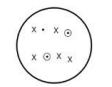
I. Systematic Sampling B.
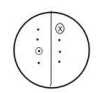
II. Cluster Sampling C.

III. Simple Random Sampling D.

IV. Stratified Random Sampling
Choose the correct answer from the options given below:- Theoretical sampling is used when.
A. Extension of the basic population is not known in advance
B. Features of the basic population are not known in advance
C. Sample Size is not defined in advance
D. Repeated drawing of sampling elements with criteria to be defined again in each step
E. Sampling is finished when the whole sample has been studied
Choose the correct answer from the options given below: - Which of the following is not a non-probability method of selecting samples from a population?
- The sampling frame from which sample is to be drawn is known as _________


