
A. Extension of the basic population is not known in advance
B. Features of the basic population are not known in advance
C. Sample Size is not defined in advance
D. Repeated drawing of sampling elements with criteria to be defined again in each step
E. Sampling is finished when the whole sample has been studied
Choose the correct answer from the options given below:
Understanding Theoretical Sampling Uses
Theoretical sampling is a method used primarily in qualitative research, particularly within the framework of Grounded Theory. It's an iterative process where data collection is guided by the emerging theory. The researcher continually collects, analyzes, and codes data, using the insights gained to decide what data to collect next and where to find it. This process aims to develop a theory with rich, well-developed concepts and properties.
Analysis of Options for Theoretical Sampling
Let's examine each option to determine when theoretical sampling is applied:
- A. Extension of the basic population is not known in advance: This is true for theoretical sampling. The focus is on developing theory, and the scope or boundaries of the population relevant to the theory become clearer and are refined during the research process, rather than being predetermined.
- B. Features of the basic population are not known in advance: This aligns with theoretical sampling. The goal is to discover properties and characteristics through data collection and analysis, so initial knowledge about the population's features is often limited and explored as the theory develops.
- C. Sample Size is not defined in advance: Theoretical sampling continues until theoretical saturation is reached – the point where collecting further data does not yield new insights or properties relevant to the emerging theory. Consequently, the sample size is not fixed beforehand but is determined by the analytical needs of the theory development.
- D. Repeated drawing of sampling elements with criteria to be defined again in each step: This accurately describes the iterative nature of theoretical sampling. Based on the emerging theory, researchers decide what additional data are needed and refine their sampling criteria for each subsequent data collection phase.
- E. Sampling is finished when the whole sample has been studied: This statement does not accurately reflect theoretical sampling. Theoretical sampling stops based on theoretical saturation, not simply upon completing the study of a pre-selected or fixed sample. The sample itself might evolve throughout the process.
Conclusion on Theoretical Sampling Application
Based on the principles of theoretical sampling, it is used when the extension and features of the relevant population are not fully known initially (A and B), when the sample size is not predetermined but determined by theoretical saturation (C), and involves iteratively refining sampling criteria as the theory develops (D). Option E describes a scenario contrary to the flexible and emergent nature of theoretical sampling.
Therefore, theoretical sampling is employed under the conditions described in options A, B, C, and D.
Important Questions from Sampling Techniques - Teaching
Homogenous subsets in the sampling are called
Match the LIST-I with LIST-II
LIST-I
Sampling frame
(Circles denotes unit selected)LIST-II
Sampling ProcedureA.
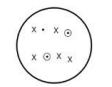
I. Systematic Sampling B.
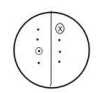
II. Cluster Sampling C.

III. Simple Random Sampling D.

IV. Stratified Random Sampling
Choose the correct answer from the options given below:- To select an unbiased sample in statistical sense we need to make sure each unit has an ______ and ______ chance of selection.
- Which of the following is not a non-probability method of selecting samples from a population?
- The sampling frame from which sample is to be drawn is known as _________


