
Sampling Frame Definition: Understanding the Source List
In research and statistics, the process of selecting a representative group from a larger population is called sampling. A key element in this process is the 'sampling frame'. The question asks for the correct term for this frame from which the sample is selected.
What is a Sampling Frame?
A sampling frame is essentially a list or map containing all the identifiable units of the population of interest. Researchers use this frame to draw their sample. Think of it as the accessible part of the target population that the sampling plan uses.
Analyzing the Options
Let's examine the given options to understand why one is the correct representation of a sampling frame:
| Option | Term | Explanation | Relevance to Sampling Frame |
| 1 | Source list | This refers to the actual list of individuals, households, or units from which the sample will be selected. It is often derived from sources like population registers, directories, or maps. | This directly matches the definition of a sampling frame. It's the concrete list used for sampling. |
| 2 | Sampling unit | A sampling unit is a single element or member within the population or sampling frame (e.g., a person, a household, a company). | This is an item *on* the sampling frame, not the frame itself. |
| 3 | Non-respondents | These are the sampling units that were selected for the sample but did not participate in the study or provide data. | Non-respondents are a characteristic of the sample *after* it has been drawn from the frame; they are not the frame itself. |
| 4 | Sampling error | This is the difference between the results obtained from a sample and the results that would have been obtained from the entire population. It arises due to chance variation. | Sampling error is an outcome or consequence of the sampling process, not the list used to conduct it. |
Conclusion on Sampling Frame Identification
Based on the analysis, the term that accurately describes the sampling frame – the list from which a sample is drawn – is the Source list. It provides the basis for selecting the sample units.
Important Questions from Sampling Techniques - Teaching
Homogenous subsets in the sampling are called
Match the LIST-I with LIST-II
LIST-I
Sampling frame
(Circles denotes unit selected)LIST-II
Sampling ProcedureA.
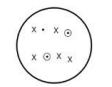
I. Systematic Sampling B.
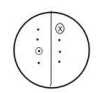
II. Cluster Sampling C.

III. Simple Random Sampling D.

IV. Stratified Random Sampling
Choose the correct answer from the options given below:- To select an unbiased sample in statistical sense we need to make sure each unit has an ______ and ______ chance of selection.
- Theoretical sampling is used when.
A. Extension of the basic population is not known in advance
B. Features of the basic population are not known in advance
C. Sample Size is not defined in advance
D. Repeated drawing of sampling elements with criteria to be defined again in each step
E. Sampling is finished when the whole sample has been studied
Choose the correct answer from the options given below: - Which of the following is not a non-probability method of selecting samples from a population?


