
Homogenous subsets in the sampling are called
Understanding Homogeneous Subsets in Sampling
In statistics, sampling is the process of selecting a subset (a sample) of individuals from a larger group (a population) to estimate characteristics of the whole population. To ensure the sample is representative and to improve the precision of estimates, the population is often divided into smaller groups before sampling.
Identifying Homogeneous Subsets in Sampling
When a population is divided into subgroups, these subgroups can be formed based on different criteria and used in different sampling methods. A specific type of subgrouping aims to create groups where individuals within each group are very similar or homogeneous with respect to certain characteristics relevant to the study.
Let's examine the options provided:
- Clusters: Clusters are subgroups formed in cluster sampling. In this method, the population is divided into groups (clusters), and then a random sample of clusters is selected. All individuals within the selected clusters might be included in the sample. Clusters are often naturally occurring groups (like geographic areas or schools) and are typically heterogeneous, meaning they contain a diverse mix of individuals from the population.
- Samples: A sample is the final set of individuals selected from the population or from the subgroups (like strata or clusters) to participate in the study. A sample itself is not necessarily a division of the population into homogeneous subsets; it's the result of the selection process from those subsets or the entire population.
- Sample sizes: Sample size refers to the number of individuals included in a sample. It is a numerical characteristic of the sample but does not describe the nature or formation of subsets within the population.
- Strata: Strata are subgroups formed in stratified sampling. In this method, the population is divided into non-overlapping subgroups called strata, based on shared characteristics (e.g., age, gender, income level) that are relevant to the study. The key feature of strata is that individuals within each stratum are relatively homogeneous concerning the stratification characteristic, while individuals in different strata are heterogeneous. A sample is then drawn from each stratum.
Based on these definitions, the term for homogeneous subsets created when dividing a population for sampling, specifically where individuals within each group are similar, is 'Strata'. This division into strata is fundamental to stratified random sampling.
| Feature | Strata | Clusters |
|---|---|---|
| Homogeneity within group | Generally Homogeneous | Generally Heterogeneous |
| Heterogeneity between groups | Generally Heterogeneous | Generally Homogeneous |
| Sampling Process | Sample *from* each group | Sample *of* groups (then sample or include all within selected groups) |
| Goal | Reduce sampling error, ensure representation across key characteristics | Reduce cost/effort, practical for large populations |
Therefore, homogeneous subsets in the context of dividing a population for sampling are correctly termed Strata.
Revision Table: Key Sampling Terms
| Term | Description | Relation to Homogeneity |
|---|---|---|
| Population | The entire group of individuals or items under study. | The larger group from which subsets are formed. |
| Sample | A subset of the population selected for study. | Selected individuals; may or may not be homogeneous depending on sampling method. |
| Strata | Non-overlapping subgroups formed based on characteristics. | Individuals *within* a stratum are homogeneous. |
| Clusters | Subgroups, often natural groupings. | Individuals *within* a cluster are typically heterogeneous. |
| Stratified Sampling | Method using strata to select samples proportionally or disproportionately. | Relies on creating homogeneous strata. |
| Cluster Sampling | Method using clusters to select samples. | Relies on selecting heterogeneous clusters. |
Additional Information on Stratified Sampling and Strata
Stratified sampling is a probability sampling technique. The population is divided into "strata" based on specific, relevant characteristics. These characteristics should be related to the variable(s) being studied. The goal is to make the individuals within each stratum as similar (homogeneous) as possible with respect to these characteristics, while making the strata themselves as different (heterogeneous) as possible from one another.
Once the population is stratified, a sample is drawn from each stratum. This sample can be proportional (the sample size from each stratum is proportional to the stratum's size in the population) or disproportional (sample sizes are set based on other criteria, like variability within the stratum). Stratified sampling helps ensure that key subgroups of the population are represented in the sample, which can lead to more precise estimates, especially when there is significant variation between the subgroups (strata).
The term 'strata' is the plural form, and 'stratum' is the singular form for one such homogeneous subset.
Important Questions from Sampling Techniques - Teaching
Match the LIST-I with LIST-II
LIST-I
Sampling frame
(Circles denotes unit selected)LIST-II
Sampling ProcedureA.
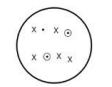
I. Systematic Sampling B.
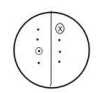
II. Cluster Sampling C.

III. Simple Random Sampling D.

IV. Stratified Random Sampling
Choose the correct answer from the options given below:- To select an unbiased sample in statistical sense we need to make sure each unit has an ______ and ______ chance of selection.
- Theoretical sampling is used when.
A. Extension of the basic population is not known in advance
B. Features of the basic population are not known in advance
C. Sample Size is not defined in advance
D. Repeated drawing of sampling elements with criteria to be defined again in each step
E. Sampling is finished when the whole sample has been studied
Choose the correct answer from the options given below: - Which of the following is not a non-probability method of selecting samples from a population?
- The sampling frame from which sample is to be drawn is known as _________


