
Statement I : The absolute value of the difference between an unbiased estimate and the corresponding population parameter is called sampling error. Statement II : Multi-stage sampling is a restricted non-probability based sampling technique. Indicate the correct code :
Statement I: Sampling Error Analysis
Sampling error is defined as the discrepancy between a sample statistic (such as an unbiased estimate) derived from a sample and the corresponding true value in the population (the population parameter). Statement I accurately describes this concept. Therefore, Statement I is correct.
Statement II: Multi-stage Sampling Type
Multi-stage sampling is a probability-based sampling technique. It involves dividing the population into successive subgroups (stages) and randomly sampling from these subgroups at each stage. This contrasts with non-probability sampling methods, which rely on subjective selection criteria. Statement II incorrectly classifies multi-stage sampling as non-probability based. Therefore, Statement II is incorrect.
Conclusion
Based on the analysis:
- Statement I is correct.
- Statement II is incorrect.
This corresponds to the option where Statement I is correct, and Statement II is incorrect.
Important Questions from Sampling Techniques - Teaching
Homogenous subsets in the sampling are called
Match the LIST-I with LIST-II
LIST-I
Sampling frame
(Circles denotes unit selected)LIST-II
Sampling ProcedureA.
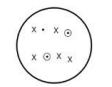
I. Systematic Sampling B.
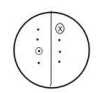
II. Cluster Sampling C.

III. Simple Random Sampling D.

IV. Stratified Random Sampling
Choose the correct answer from the options given below:- To select an unbiased sample in statistical sense we need to make sure each unit has an ______ and ______ chance of selection.
- Theoretical sampling is used when.
A. Extension of the basic population is not known in advance
B. Features of the basic population are not known in advance
C. Sample Size is not defined in advance
D. Repeated drawing of sampling elements with criteria to be defined again in each step
E. Sampling is finished when the whole sample has been studied
Choose the correct answer from the options given below: - Which of the following is not a non-probability method of selecting samples from a population?


