One-fourth of a certain journey was covered at the speed of 20 km/hr, one-third at 30 km/hr and the rest at the speed of 25 km/hr. The average speed (in km/hr) for the entire journey is :
Journey Average Speed Calculation
This solution details the calculation of average speed for a journey composed of segments traveled at different speeds.
Journey Segments Defined
The total journey is broken down into parts based on distance covered and the speed during each part:
- Part 1: Covered $ \frac{1}{4} $ of the total distance at a speed of 20 km/hr.
- Part 2: Covered $ \frac{1}{3} $ of the total distance at a speed of 30 km/hr.
- Part 3: Covered the remaining distance at a speed of 25 km/hr.
Fractions Calculation for Remaining Journey
First, determine the fraction of the journey corresponding to Part 3. The sum of all fractions must equal 1.
Fraction for Part 3 = $ 1 - (\frac{1}{4} + \frac{1}{3}) = 1 - (\frac{3}{12} + \frac{4}{12}) = 1 - \frac{7}{12} = \frac{5}{12} $.
So, Part 3 covers $ \frac{5}{12} $ of the total distance.
Time Calculation for Journey Parts
Assume the total distance is D. Calculate the time taken for each segment using the formula: Time = Distance / Speed.
- Time for Part 1 ($t_1$): $ t_1 = \frac{\frac{1}{4}D}{20 \text{ km/hr}} = \frac{D}{80} $ hours.
- Time for Part 2 ($t_2$): $ t_2 = \frac{\frac{1}{3}D}{30 \text{ km/hr}} = \frac{D}{90} $ hours.
- Time for Part 3 ($t_3$): $ t_3 = \frac{\frac{5}{12}D}{25 \text{ km/hr}} = \frac{5D}{300} = \frac{D}{60} $ hours.
Total Time for Journey
Sum the times calculated for each part to find the total time (T) for the entire journey.
$ T = t_1 + t_2 + t_3 = \frac{D}{80} + \frac{D}{90} + \frac{D}{60} $
Find the least common multiple (LCM) of 80, 90, and 60, which is 720.
$ T = \frac{9D}{720} + \frac{8D}{720} + \frac{12D}{720} = \frac{(9 + 8 + 12)D}{720} = \frac{29D}{720} $ hours.
Average Speed Formula Application
The average speed is the total distance divided by the total time.
Average Speed $ = \frac{\text{Total Distance}}{\text{Total Time}} = \frac{D}{\frac{29D}{720}} $
$ \text{Average Speed} = \frac{720D}{29D} = \frac{720}{29} $ km/hr.
Final Average Speed Result
Convert the improper fraction $ \frac{720}{29} $ to a mixed number.
Dividing 720 by 29 gives 24 with a remainder of 24.
Thus, the average speed is $ 24 \frac{24}{29} $ km/hr.
Similar Questions
Match List - I with List - II.
List - I List - II A. Apple, Orange, Fruits I. 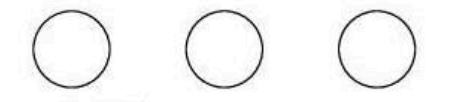
B. Son, Mother, Father II. 
C. Cat, Dog, Elephant III. 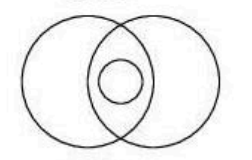
D. Player, Cricket, Ground IV. 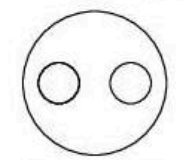
Choose the correct answer from the options given below :For the sets $A=\{0, 1, 2, 3\}$, $B=\{2, 3\}$, $C=\{1, 2, 4\}$, Match List - I with List - II.
List - I List - II A. $A - B$ I. $\{2\}$ B. $B \cap C$ II. $A$ C. $A \cup B$ III. $\{1, 2\}$ D. $A \cap C$ IV. $\{0, 1\}$ Choose the correct answer from the options given below :
Match List - I with List - II : On the basis of share of expenditure in given pie chart.
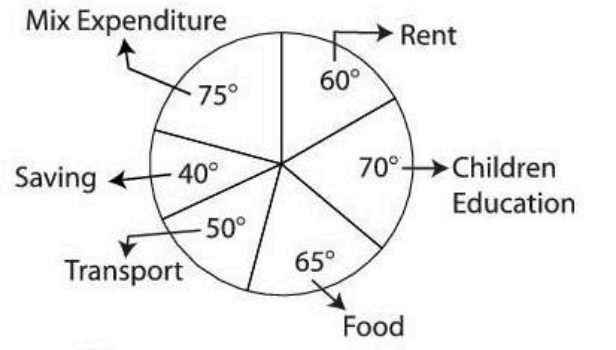
List - I List - II A. Percentage of Expenditure on Rent I. $11.11$ B. Percentage of Expenditure on Transport II. $13.89$ C. Percentage of Expenditure on Saving III. $16.67$ D. Percentage of Expenditure on Food IV. $18.06$ Choose the correct answer from the options given below :
- According to the author, the Indian people
- Indians do not do anything beneficial to society unless
- The author says that India
- The author suggests that
- What value does the author want to build into the educational system ?
- Given below are two statements: one is labelled as Assertion (A) and the other is labelled as Reason (R).
Assertion (A): All even numbers are divisible by two.
Reason (R) : An even number is defined as a number divisible by two.
In the light of the above statements, choose the most appropriate answer from the options given below: - Given below are two statements : one is labelled as Assertion (A) and the other is labelled as Reason (R).
Assertion (A) : Iron rusts faster in moist air.
Reason (R) : Moisture accelerates the oxidation process.
In the light of the above statements, choose the most appropriate answer from the options given below :
Important Questions from Mixed Topic (CUET PG)
- Kalpsutra, the illustrated canonical text is from:-
- The Harappan city almost exclusively devoted to craft production was-:
- Mohandas Karamchand Gandhi launched quit India movement after the failure of:-
- The "Objectives Resolution" was introduced in constituent assembly by:-
- Who among the following was not a member of the constituent assembly:-