
List I- Sampling Methods List II- Concept A. Accidental Sampling I. Based on Convenience B. Expert Sampling II. Based on Expertise of the Respondent C. Snowball Sampling III. Sample Using Networks D. Systematic Sampling IV. Both Random and Non Random (Mixed) Sampling design
To solve the given question, we need to match each sampling method from List I with the correct concept from List II based on their definitions:
- Accidental Sampling: This method is based on selecting respondents who are conveniently available to the researcher. It is often unsystematic and relies on convenience. This matches with Concept I. Answer: A-I.
- Expert Sampling: This involves selecting individuals based on their expertise in a particular field. The primary criterion for this method is the expertise of the respondent, making it match with Concept II. Answer: B-II.
- Snowball Sampling: In this method, existing study subjects recruit future subjects from among their acquaintances. This forms a network or chain of participants. Thus, it is matched with Concept III. Answer: C-III.
- Systematic Sampling: This is a probability sampling method where elements are selected at regular intervals from an ordered list. While not explicitly indicated here, none of the provided concepts aligns closely except Concept IV. Answer: D-IV.
By matching each method with its corresponding concept based on understanding their definitions, we reach the conclusion that the correct matching is A-I, B-II, C-III, D-IV. Hence, the correct option is:
A-I, B-II, C - III, D - IV
Important Questions from Sampling Techniques - Teaching
Homogenous subsets in the sampling are called
Match the LIST-I with LIST-II
LIST-I
Sampling frame
(Circles denotes unit selected)LIST-II
Sampling ProcedureA.
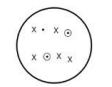
I. Systematic Sampling B.
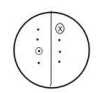
II. Cluster Sampling C.

III. Simple Random Sampling D.

IV. Stratified Random Sampling
Choose the correct answer from the options given below:- To select an unbiased sample in statistical sense we need to make sure each unit has an ______ and ______ chance of selection.
- Theoretical sampling is used when.
A. Extension of the basic population is not known in advance
B. Features of the basic population are not known in advance
C. Sample Size is not defined in advance
D. Repeated drawing of sampling elements with criteria to be defined again in each step
E. Sampling is finished when the whole sample has been studied
Choose the correct answer from the options given below: - Which of the following is not a non-probability method of selecting samples from a population?


