
In which of the following sampling designs, it is imperitive that each element in the population has an equal and independent chance of selection in the sample? A. Random Sampling B. Probability Sampling C. Quota Sampling D. Snowball Sampling Choose the most appropriate answer from the options given below:
Sampling Designs: Ensuring Equal Chance of Selection
The question asks us to identify the sampling designs where every single element within the population must have an equal and independent chance of being chosen for the sample. This is a fundamental principle in statistical sampling, ensuring fairness and reducing bias.
Understanding Sampling Methods
Let's examine each of the sampling methods mentioned:
1. Random Sampling
Random Sampling is a technique where every element in the population has a predetermined, non-zero, and usually equal chance of being selected. Simple Random Sampling (SRS) is a prime example, where each element has exactly the same probability of selection. This method directly fulfills the condition of equal and independent chances.
2. Probability Sampling
Probability Sampling is a broader category that encompasses all sampling techniques where the selection of elements is based on chance. This means that each element has a known probability of being included in the sample. Methods like Simple Random Sampling, Stratified Sampling, and Cluster Sampling fall under this umbrella. The core principle of probability sampling is that selection is not arbitrary, and probabilities are known, which aligns with the requirement of elements having a defined chance (often equal and independent) of selection.
3. Quota Sampling
Quota Sampling is a type of non-probability sampling. In this method, the researcher sets quotas for specific subgroups (e.g., based on age, gender, or location) and then selects participants non-randomly until the quotas are filled. Because the selection within quotas is often left to the interviewer's convenience or judgment, elements do not have an equal and independent chance of being selected. The selection is not based on chance.
4. Snowball Sampling
Snowball Sampling is another non-probability sampling technique, often used when the population is hard to reach or identify. The researcher starts by identifying a few individuals who meet the study criteria and then asks them to refer others. This process continues like a snowball rolling downhill. Clearly, this method does not give every element an equal and independent chance of selection; it relies on referrals and network connections.
Conclusion: Identifying the Correct Designs
Based on the analysis:
- Random Sampling (A) inherently satisfies the condition of equal and independent chances.
- Probability Sampling (B) is the category that guarantees elements have a known, non-zero chance of selection, which typically implies equal and independent chances in its standard forms.
- Quota Sampling (C) is non-probabilistic and does not ensure equal chances.
- Snowball Sampling (D) is also non-probabilistic and relies on referrals, not random selection with equal chances.
Therefore, the sampling designs where it is imperative that each element in the population has an equal and independent chance of selection are Random Sampling and Probability Sampling.
Final Answer Determination:
Considering the options provided based on our analysis:
- Option 1 (A, B, C, D): Incorrect because C and D do not meet the criteria.
- Option 2 (B and C Only): Incorrect because C does not meet the criteria.
- Option 3 (A and B Only): Correct because both Random Sampling and Probability Sampling ensure elements have a known, usually equal and independent, chance of selection.
- Option 4 (B, C, D Only): Incorrect because C and D do not meet the criteria.
Thus, the most appropriate answer includes Random Sampling and Probability Sampling.
Important Questions from Sampling Techniques - Teaching
Homogenous subsets in the sampling are called
Match the LIST-I with LIST-II
LIST-I
Sampling frame
(Circles denotes unit selected)LIST-II
Sampling ProcedureA.
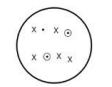
I. Systematic Sampling B.
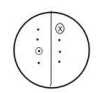
II. Cluster Sampling C.

III. Simple Random Sampling D.

IV. Stratified Random Sampling
Choose the correct answer from the options given below:- To select an unbiased sample in statistical sense we need to make sure each unit has an ______ and ______ chance of selection.
- Theoretical sampling is used when.
A. Extension of the basic population is not known in advance
B. Features of the basic population are not known in advance
C. Sample Size is not defined in advance
D. Repeated drawing of sampling elements with criteria to be defined again in each step
E. Sampling is finished when the whole sample has been studied
Choose the correct answer from the options given below: - Which of the following is not a non-probability method of selecting samples from a population?


