
(a) Type of statistical test
(b) Desired confidence level
(c) Estimated standard deviation
(d) H₀ and H_A
(e) Degree of precision required
Select the most appropriate option :
Key Factors for Sample Size Determination
Determining the correct sample size is essential in research for ensuring statistically significant and reliable results. The choice of sample size depends on several critical factors.
Core Determinants of Sample Size
The determination of sample size in research is primarily based on the following key factors:
- Desired Confidence Level: The level of certainty required that the sample results reflect the population parameters.
- Estimated Standard Deviation: An estimate of the population's variability or dispersion of data.
- Degree of Precision Required: The acceptable margin of error or the desired accuracy of the estimate.
Rationale for Selected Factors
These factors directly influence the calculations used in sample size estimation formulas.
- Confidence Level: A higher confidence level (e.g., 95%) demands a larger sample than a lower one (e.g., 90%) to capture the true population value with greater certainty. This corresponds to a higher critical value (e.g., $z_{\alpha/2}$ for a chosen $\alpha$).
- Standard Deviation ($\sigma$): Greater population variability (larger $\sigma$) means more data points are needed to achieve a specific level of precision. The sample size is often proportional to $\sigma^2$.
- Precision (Margin of Error, E): A smaller margin of error (higher precision) requires a larger sample size. The sample size required is inversely proportional to the square of the desired margin of error (e.g., $n \propto 1/E^2$).
While factors like the type of statistical test and hypotheses (H₀, H<0xE2><0x82><0x90>) are important in overall research design and power analysis, the factors listed (confidence level, standard deviation, and precision) are the most direct inputs for calculating the necessary sample size in many standard scenarios.
Important Questions from Sampling Techniques - Teaching
Homogenous subsets in the sampling are called
Match the LIST-I with LIST-II
LIST-I
Sampling frame
(Circles denotes unit selected)LIST-II
Sampling ProcedureA.
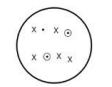
I. Systematic Sampling B.
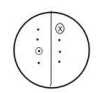
II. Cluster Sampling C.

III. Simple Random Sampling D.

IV. Stratified Random Sampling
Choose the correct answer from the options given below:- To select an unbiased sample in statistical sense we need to make sure each unit has an ______ and ______ chance of selection.
- Theoretical sampling is used when.
A. Extension of the basic population is not known in advance
B. Features of the basic population are not known in advance
C. Sample Size is not defined in advance
D. Repeated drawing of sampling elements with criteria to be defined again in each step
E. Sampling is finished when the whole sample has been studied
Choose the correct answer from the options given below: - Which of the following is not a non-probability method of selecting samples from a population?


