
a. Purposive Sampling
b. Sequential Sampling
c. Probability Sampling
d. Non-probability Sampling
Deliberate Sampling Definition
Deliberate sampling, also known as judgmental sampling, involves researchers selecting participants based on their specific knowledge, experience, or characteristics relevant to the study. The researcher uses their judgment to choose participants who best fit the research purpose.
Relation to Purposive Sampling
Purposive Sampling (Option a) is essentially another term for deliberate sampling. The core idea in both is the researcher's intentional selection of subjects based on predefined criteria to gain specific insights.
Classification under Sampling Types
Deliberate sampling falls under the umbrella of Non-probability Sampling (Option d). This is because participants are not chosen randomly; not every member of the population has an equal chance of being included in the sample. The selection is based on the researcher's judgment, not chance.
Contrasting Sampling Types
- Probability Sampling (Option c) involves random selection methods where every individual has a known, non-zero chance of selection. This is distinct from deliberate sampling.
- Sequential Sampling (Option b) involves collecting data in stages, analyzing it, and deciding whether to continue sampling. It is not a direct synonym for deliberate sampling, although deliberate choices might be made within its stages.
Summary
Given that deliberate sampling is synonymous with purposive sampling and is a type of non-probability sampling, the terms 'Purposive Sampling' and 'Non-probability Sampling' are correctly associated with it.
Important Questions from Sampling Techniques - Teaching
Homogenous subsets in the sampling are called
Match the LIST-I with LIST-II
LIST-I
Sampling frame
(Circles denotes unit selected)LIST-II
Sampling ProcedureA.
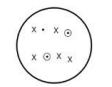
I. Systematic Sampling B.
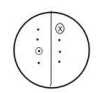
II. Cluster Sampling C.

III. Simple Random Sampling D.

IV. Stratified Random Sampling
Choose the correct answer from the options given below:- To select an unbiased sample in statistical sense we need to make sure each unit has an ______ and ______ chance of selection.
- Theoretical sampling is used when.
A. Extension of the basic population is not known in advance
B. Features of the basic population are not known in advance
C. Sample Size is not defined in advance
D. Repeated drawing of sampling elements with criteria to be defined again in each step
E. Sampling is finished when the whole sample has been studied
Choose the correct answer from the options given below: - Which of the following is not a non-probability method of selecting samples from a population?


