
Flower Structure Tectonic Settings Explained
Flower structures are geological fault patterns. Their formation is determined by the dominant tectonic forces acting on a region.
Positive Flower Structure Tectonics
A positive flower structure develops under transpressional stress regimes. Transpression involves a combination of compression and strike-slip (shear) movement.
- Compression leads to folding and uplift.
- Shear accommodates lateral movement.
This results in faults that diverge upwards from a central shear zone.
Negative Flower Structure Tectonics
A negative flower structure forms in transtensional stress regimes. Transtension combines extension and strike-slip (shear) movement.
- Extension causes subsidence and basin formation.
- Shear accommodates lateral movement.
This results in faults that diverge downwards from a central shear zone.
Summary of Tectonic Settings
Correct identification of the tectonic setting is crucial for understanding these structures. Positive flower structures indicate transpression, while negative flower structures indicate transtension.
Important Questions from Joints And Faults
- Which one of the following is not typically associated with strike-slip faults?
- Which one of the following statements is correct?
- Shortening in the Earth's crust is typically accommodated by
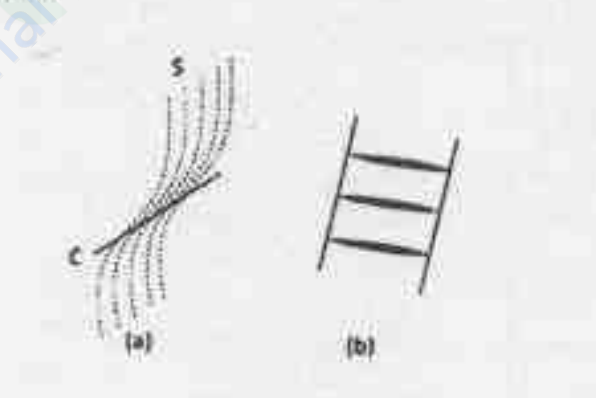
Figures (a) and (b) show S-C structure and en-echelon veins in two different shear zones. Which one of the following options is correct interpretation of sense of shear in figures (a) and (b)?
Each of the following two figures shows a pair of overlapping strike-slip faults with sense of movement.
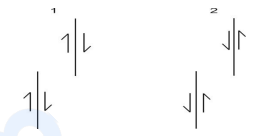
Predict the nature of structures in the overlapping zones of each pair of faults.


