Question
Sexual dimorphism is seen in:
This question was previously asked in
CUET PG 2026 Agri-Business Management Question Paper (25-Mar-2026) (Shift 2)
The correct answer is
Nemathelminthes
Sexual Dimorphism Identification in Animal Phyla
Sexual dimorphism refers to noticeable differences in morphology (like size, color, or shape) between males and females of the same species. It's a key characteristic studied in animal biology.
Analyzing Phyla for Sexual Dimorphism
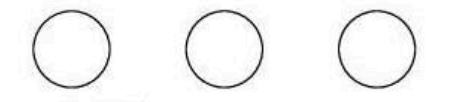
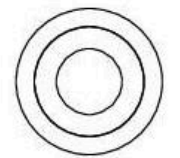
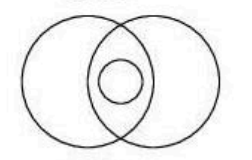
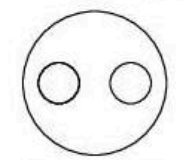
- Cnidaria: Organisms like jellyfish and corals. They often exhibit radial symmetry and are typically hermaphroditic or reproduce asexually. Pronounced sexual dimorphism is generally absent.
- Porifera: Sponges lack distinct sexes and are usually hermaphroditic, meaning an individual can produce both sperm and eggs. Sexual dimorphism is not observed.
- Nemathelminthes: This phylum includes roundworms. Sexual dimorphism is a common feature. For instance, female roundworms are often larger and longer than the males, and males may have a distinct curved tail.
- Platyhelminthes: Flatworms, such as planarians and tapeworms. Many species in this group are hermaphroditic and possess both male and female reproductive organs. Distinct sexual dimorphism is not a defining characteristic.
Conclusion on Sexual Dimorphism
Based on the analysis, Nemathelminthes is the phylum among the options where sexual dimorphism is commonly observed and is a significant characteristic.
Was this answer helpful?
Similar Questions
- The attachment site for microtubules that separates chromosomes during cell division:
- The process of synthesizing ATP from ADP and Pi coupled with electron transport chain is:
- The functionally active form of Vitamin D is:
- Match the LIST-I with LIST-II
LIST-I LIST-II A. Moss I. Wolffia B. Pteridophyte II. Sequoia C. Gymnosperm III. Selaginella D. Angiosperm IV. Sphagnum
Choose the correct answer from the options given below: - Given below are two statements: one is labelled as Assertion A and the other is labelled as Reason R
Assertion A: 12-20% acrylamide in PAGE restricts the migration of large molecules.
Reason R: Pore size of the gel affects the separation of molecules.
In the light of the above statements, choose the most appropriate answer from the options given below - Given below are two statements: one is labelled as Assertion A and the other is labelled as Reason R
Assertion A: Spectroscopy technique is used for the study of interaction of electromagnetic radiation with matter.
Reason R: It is used for the identification of substances through the spectrum emitted or absorbed by them.
In the light of the above statements, choose the most appropriate answer from the options given below - Given below are two statements: one is labelled as Assertion A and the other is labelled as Reason R
Assertion A: The amino acid sequences of Histones H$_3$ and H$_4$ are not highly conserved.
Reason R: Nearly all of the amino acids in a histone molecule are engaged in an interaction with either DNA or another histone.
In the light of the above statements, choose the most appropriate answer from the options given below - Given below are two statements: one is labelled as Assertion A and the other is labelled as Reason R
Assertion A: X chromosome is acrocentric and Y chromosome is submetacentric.
Reason R: This is based on the position of centromere on the chromosome.
In the light of the above statements, choose the most appropriate answer from the options given below - Given below are two statements: one is labelled as Assertion A and the other is labelled as Reason R
Assertion A: Electron transport chain (ETC) and ATP synthesizing system are located on the inner mitochondrial membrane.
Reason R: The inner surface of the inner mitochondrial membrane possess phosphorylating subunits.
In the light of the above statements, choose the most appropriate answer from the options given below Match the LIST-I with LIST-II
LIST-I LIST-II A. Gas Chromatography I. Separation of ionic solutes B. Affinity Chromatography II. Separation based on size of molecules C. Gel-Filtration Chromatography III. Separation of biomolecules with different binding specificities D. Ion-Exchange Chromatography IV. Separation of volatile components
Important Questions from Mixed Topic (CUET PG)
- Kalpsutra, the illustrated canonical text is from:-
- The Harappan city almost exclusively devoted to craft production was-:
- Mohandas Karamchand Gandhi launched quit India movement after the failure of:-
- The "Objectives Resolution" was introduced in constituent assembly by:-
- Who among the following was not a member of the constituent assembly:-
Need Expert Advice?
Upcoming Exams
GATE
February 06, 2027
Test Series

CUET
CUET PG Psychology (HUQP20) 2026 Mock Test Series
10 Tests
781 Attempts
3.7(15)
English
More Questions from CUET PG