Select the option in which the given figure is embedded.

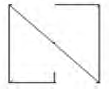
The given figure has three parts: a horizontal line to the right at the top, a vertical line below its left end, and two slanting legs spreading down from the bottom of the vertical line.
In the rectangle figure, the right half of the top edge gives the horizontal line, the vertical line from the middle of the top edge gives the stem, and the two slanting lines from the centre to the bottom corners give the legs.
So the whole figure is traced inside the rectangle without changing its orientation.
Hence, the rectangle with a vertical line from the middle of its top edge and slanting lines to both bottom corners.
Similar Questions
Select the option figure in which the question figure is hidden/embedded.
Question Figure:
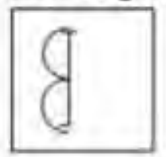
Select the option figure in which the question figure is hidden/embedded.
Question figure:

Select the option figure in which the question figure is hidden/embedded.
Question figure:

Select the option figure in which the question figure is hidden/embedded.

Select the option figure in which the question figure is hidden/embedded.

Select the option figure in which the given figure is hidden / embedded

Select the option figure in which the question figure is hidden / embedded.
Question Figure:

Select the option in which the figure marked ‘X’ is embedded.

Select the option in which the given figure is embedded.
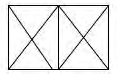
Select the option in which the given figure is embedded.
Important Questions from Hidden Image
Select the option in which the given figure is embedded (rotation is NOT allowed).

Select the option in which the given figure is embedded (rotation of the figure is not allowed).

Select the option in which the given figure is embedded.

Select the option in which the given figure (x) is embedded (Rotation is NOT allowed).

Select the option in which the given figure is embedded (rotation is NOT allowed).