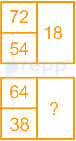
Select the correct option that will fill in the blank and complete the series.
12960
Understanding the Number Series
The question asks to identify the pattern in the given number sequence and find the next term. The sequence provided is: 18, 36, 108, 432, 2160, .....
Identifying the Pattern
Let's analyze the relationship between consecutive terms in the series:
- From 18 to 36: Multiply by 2. ($18 \times 2 = 36$)
- From 36 to 108: Multiply by 3. ($36 \times 3 = 108$)
- From 108 to 432: Multiply by 4. ($108 \times 4 = 432$)
- From 432 to 2160: Multiply by 5. ($432 \times 5 = 2160$)
The pattern observed is that each term is obtained by multiplying the previous term by an integer that increases sequentially (2, 3, 4, 5, ...).
Calculating the Next Term
Following the identified pattern, the next multiplier should be 6.
Therefore, the next term in the series is calculated as:
$2160 \times 6 = 12960$
Conclusion
The missing term in the series is 12960. This corresponds to Option B.
Similar Questions
Choose the option which completes the given figure series.

Select the correct option that will fill in the blank and complete the series.
52, 56, 65, 81, 106, ?Select the correct option that will fill in the blank and complete the series. 21, 43, 85, 171, 341, .......
Select the correct option that will fill in the blank and complete the series.
3, 5, 7, 9, 11, ?
2, 2, 2, 2, 2, ?
Select the correct option that will fill in the blank and complete the series. FKP, GMQ, HOR, ?
Choose the option which comes next in the given figure series.
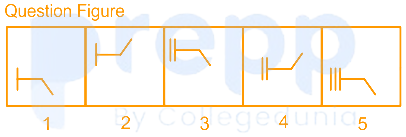
Choose the option which completes the given figure series

Select the option that completes the given figure series.
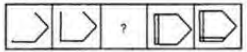
Select the option that completes the given figure series.
Question figure:
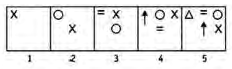
Select the next combination in the following series.
X X0 XX XX0 ?
Important Questions from Series
Choose the option which completes the given figure series.
Select the correct option that will fill in the blank and complete the series.
52, 56, 65, 81, 106, ?Select the correct option that will fill in the blank and complete the series. 21, 43, 85, 171, 341, .......
Select the correct option that will fill in the blank and complete the series.
3, 5, 7, 9, 11, ?
2, 2, 2, 2, 2, ?
Select the correct option that will fill in the blank and complete the series. FKP, GMQ, HOR, ?