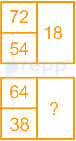
Select the correct option that will fill in the blank and complete the series.
142
Finding the Number Series Pattern
The question asks to identify the next number in the given sequence: 52, 56, 65, 81, 106, ?
To solve this, let's analyze the differences between consecutive terms:
- $56 - 52 = 4$
- $65 - 56 = 9$
- $81 - 65 = 16$
- $106 - 81 = 25$
Identifying the Pattern Logic
Observe the differences calculated: 4, 9, 16, 25. These numbers are perfect squares:
- $4 = 2^2$
- $9 = 3^2$
- $16 = 4^2$
- $25 = 5^2$
The pattern shows that the difference between terms increases by consecutive squares, starting from $2^2$.
Calculating the Next Term
Following the pattern, the next difference should be the next square, which is $6^2$.
- Next difference $= 6^2 = 36$
To find the missing number in the series, add this difference to the last known term (106):
- Missing number $= 106 + 36$
- Missing number $= 142$
Therefore, the correct option is 142.
Similar Questions
Choose the option which completes the given figure series.

Select the correct option that will fill in the blank and complete the series.
18, 36, 108, 432, 2160, .............Select the correct option that will fill in the blank and complete the series. 21, 43, 85, 171, 341, .......
Select the correct option that will fill in the blank and complete the series.
3, 5, 7, 9, 11, ?
2, 2, 2, 2, 2, ?
Select the correct option that will fill in the blank and complete the series. FKP, GMQ, HOR, ?
Choose the option which comes next in the given figure series.
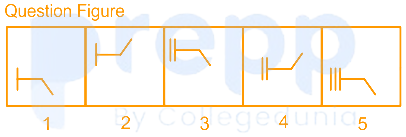
Choose the option which completes the given figure series

Select the option that completes the given figure series.
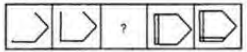
Select the option that completes the given figure series.
Question figure:
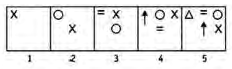
Select the next combination in the following series.
X X0 XX XX0 ?
Important Questions from Series
Choose the option which completes the given figure series.
Select the correct option that will fill in the blank and complete the series.
18, 36, 108, 432, 2160, .............Select the correct option that will fill in the blank and complete the series. 21, 43, 85, 171, 341, .......
Select the correct option that will fill in the blank and complete the series.
3, 5, 7, 9, 11, ?
2, 2, 2, 2, 2, ?
Select the correct option that will fill in the blank and complete the series. FKP, GMQ, HOR, ?