Match the following traditional dances with the states they are performed in: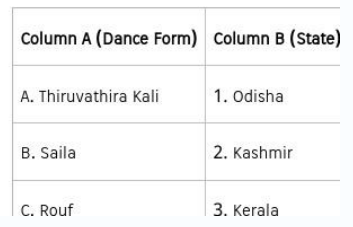
A-3, B-1, C-2
Major traditional dances and their states: Bihu – Assam; Garba – Gujarat; Bhangra and Giddha – Punjab; Ghoomar – Rajasthan; Lavani – Maharashtra; Yakshagana – Karnataka; Chhau – Jharkhand, Odisha and West Bengal; Nati – Himachal Pradesh; Cheraw – Mizoram.
Matching each dance in the list with the state where it is traditionally performed gives A with 3, B with 1 and C with 2.
Hence, the answer is A-3, B-1, C-2.
Similar Questions
The Koya Dance is associated with which of the following states?
_________ is the folk dance of Punjab.
Vilasini Natyam and Veeranatyam are dances associated with which of the following states?
In which of the following dances from Assam do the movements by the dancers resemble butterflies and birds?
Who achieved fame for the Pandanallur school of Bharatanatyam?
In which of the following dances from Manipur is the drum prominently used as a part of dance movements?
Which of the following forms of dance is performed by Kumudini Lakhia ?
Which of the following is NOT a ‘Gharana’ in the Kathak dance form of India?
Which of the following dances is traditionally performed by tea cultivators in Assam?
To which of the following Gharanas did Hindustani Classical Vocalist, Bhimsen Joshi belong?
Important Questions from Dances
From which of the following states, Kathakali is originated?
The Koya Dance is associated with which of the following states?
Pavri Nach is performed by the Kokna tribe of which of the following states?
Stories from the Ramayana and Mahabharata provide the content of most ______ plays.
Dumhal is a classical folk dance, which is performed by men only and this is originated by the ___________ tribe in the Kashmir region.