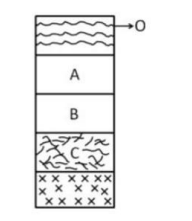
A. Calcification E. Warm and humid climate B. Laterization F. Solution in carbonate rocks C. Karstification G. Potential evapotranspiration equal or greater than precipitation D. Podzolization H. Cool and moist climate
Matching Processes with Conditions
This solution explains the matching of geological and climatic processes based on their characteristic environments.
A. Calcification and Climatic Conditions
Calcification is associated with arid or semi-arid climates where potential evapotranspiration is greater than or equal to precipitation (G). This condition leads to the accumulation of calcium carbonate in soils.
B. Laterization and Climate
Laterization occurs in warm and humid climates (E). This environment, typical of tropical regions, promotes the leaching of silica and the concentration of iron and aluminum oxides.
C. Karstification and Geology
Karstification is fundamentally the process of solution in carbonate rocks (F), such as limestone and dolomite. Water dissolves these rocks, leading to the formation of characteristic karst topography.
D. Podzolization and Climate
Podzolization is a soil-forming process typical of cool and moist climates (H). These conditions are often found under coniferous or mixed forests and favour the leaching of minerals.
Summary of Matches
The correct pairings connecting the processes (A, B, C, D) with their conditions (E, F, G, H) are:
- A - G (Calcification - Potential evapotranspiration >= precipitation)
- B - E (Laterization - Warm and humid climate)
- C - F (Karstification - Solution in carbonate rocks)
- D - H (Podzolization - Cool and moist climate)
This corresponds to option C.
Important Questions from Formation Of Soil
- A grassland soil that contains dark and thick mineral surface horizon, abundant humus and basic cations, and remains soft after drying is known as:
- Read the following statements and identify the corresponding soil forming processes
I. It is the process of removal of constituents in suspension or solution by percolating water from upper to lower layers.
II. It is the process of deposition of soil material in the lower layers The production of organic acids accelerates leaching in the soil horizon
Read the following statements about clay particles and choose the CORRECT answer
$\text{I}$ : Clay particles are platy. Therefore water tension acts on their large surface area to cause cohesion.
$\text{II}$ : Clay particles have electrically charged surfaces. Charges on the clay attract opposite charges on other particles, holding them together.From which horizon of the given soil profile is the maximum solute flux released?