
India's health infrastructure and health care is a tier system comprising: (i) Primary level (ii) Secondary level (iii) Tertiary level
(i), (ii) and (iii)
Understanding India's Health Infrastructure
India's health infrastructure is structured as a tiered system to provide healthcare services across different levels of complexity and geographical reach. This system aims to make healthcare accessible to both rural and urban populations.
The healthcare delivery system in India is broadly divided into the following three levels:
- Primary Level
- Secondary Level
- Tertiary Level
Detailed Explanation of Each Level
Primary Health Care Level
This is the first point of contact between the community and the healthcare system. It focuses on preventive care, basic curative services, maternal and child health, immunisation, and health education.
Facilities at this level include:
- Sub-Centres (SCs)
- Primary Health Centres (PHCs)
- Health and Wellness Centres (HWCs)
These centres are typically located in rural areas and serve a defined population.
Secondary Health Care Level
This level provides more complex medical services than the primary level. Patients are usually referred to secondary care facilities from primary health centres for consultations with specialists, basic surgeries, and diagnosis.
Facilities at this level include:
- Community Health Centres (CHCs)
- District Hospitals
These facilities are located in towns and district headquarters and act as a bridge between primary and tertiary care.
Tertiary Health Care Level
This is the highest level of healthcare, offering advanced medical care, complex surgeries, and specialized treatments. It includes super-specialty hospitals and research institutions.
Facilities at this level include:
- Regional Hospitals
- Super Speciality Hospitals
- Medical Colleges and Research Institutions (like AIIMS)
These facilities are located in major cities and provide highly specialized services, often acting as referral centres for the entire region.
Summary of India's Health Care Tier System
| Level | Focus | Examples of Facilities |
|---|---|---|
| Primary | Preventive care, basic treatment, outreach | Sub-Centres, PHCs, HWCs |
| Secondary | Specialist consultation, basic surgery, diagnosis | CHCs, District Hospitals |
| Tertiary | Advanced medical care, complex surgeries, research | Regional Hospitals, Super Speciality Hospitals, Medical Colleges |
Based on this structure, India's health infrastructure and healthcare system indeed comprise the Primary, Secondary, and Tertiary levels.
Revision Table: India's Health System Tiers
Let's quickly review the key components of each tier in India's health care system.
- Primary Health Care: First contact, basic services, rural focus (Sub-Centres, PHCs).
- Secondary Health Care: Specialist care, referral point, district level (CHCs, District Hospitals).
- Tertiary Health Care: High-level specialization, complex cases, urban focus (Medical Colleges, Super Speciality Hospitals).
Additional Information on India's Health Care System
Understanding the tiered structure is crucial for public health planning and policy-making in India. Each level plays a vital role in ensuring continuum of care. Efforts are continuously made to strengthen linkages between these levels to improve efficiency and access to quality healthcare across the country.
The primary level is often considered the foundation, essential for achieving universal health coverage by addressing common health issues and providing preventive services close to where people live. The secondary and tertiary levels provide necessary support for more serious conditions and specialized needs.
Similar Questions
____________ was a policy introduced to promote equity in Indian agriculture. The purpose was to ____________ concentration of land ownership in a few hands.
Which of the following is a final source of energy?
During the period between 1950 and 1990, the proportion of GDP contributed by agriculture significantly ________.
Important Questions from Miscellaneous
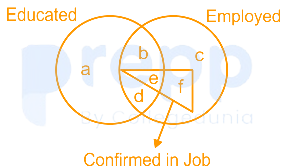
Read the given figure and find the region representing persons who are educated and employed but not confirmed in job.
The magazine in which Mahatma Gandhi mentioned what he wanted the Constitution to do is:
Which gas shields the surface of the earth from ultraviolet radiation from the sun?
Which event is marked as an Intangible Cultural Heritage of Humanity by UNESCO?
Who has been conferred with the rank of the Commander of the Order of the British Empire in 2018?



