
In the sequence of tiles shown below, the missing tile indicated by the question mark should be
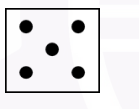
To solve the problem, we need to identify the pattern in the sequence of tiles shown in the images. Let's analyze the sequence step by step:
- In the first tile, we have 1 dot.
- In the second tile, we have 2 dots.
- The number of dots appears to be increasing in a pattern: 1, 2, ...
- Following this pattern, the missing tile should have 3 dots.
Continuing the sequence from the last part:
- The fourth tile has 4 dots.
- The fifth tile has 5 dots.
The sequence is forming a natural progression, where each next tile has one additional dot than the previous one. Considering this, the missing tile should naturally contain 3 dots.
The correct image based on this logic, where the missing tile should have 3 dots, matches the option provided as the correct answer:
Important Questions from 2D 3D Pattern Visualization
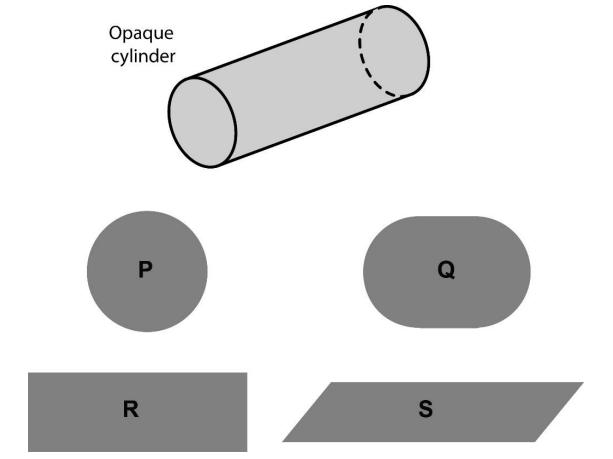
An opaque cylinder (shown below) is suspended in the path of a parallel beam of light, such that its shadow is cast on a screen oriented perpendicular to the direction of the light beam. The cylinder can be reoriented in any direction within the light beam. Under these conditions, which one of the shadows P, Q, R, and S is NOT possible?
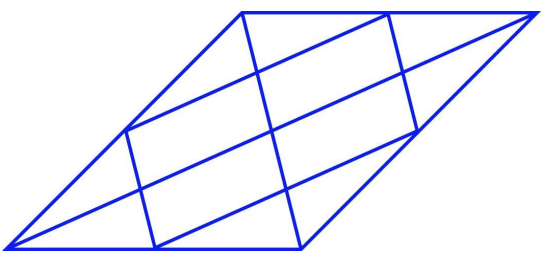
How many triangles are present in the given figure?
The figure shows a grid formed by a collection of unit squares. The unshaded unit square in the grid represents a hole.
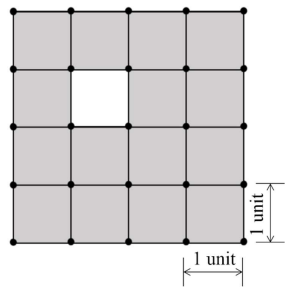
What is the maximum number of squares without a "hole in the interior" that can be formed within the 4 × 4 grid using the unit squares as building blocks?A palindrome is a word that reads the same forwards and backwards. In a game of words, a player has the following two plates painted with letters.
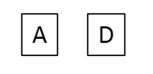
From the additional plates given in the options, which one of the combinations of additional plates would allow the player to construct a five-letter palindrome. The player should use all the five plates exactly once. The plates can be rotated in their plane.
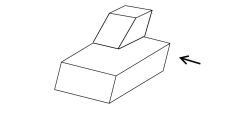
A block with a trapezoidal cross-section is placed over a block with rectangular cross section as shown above.
Which one of the following is the correct drawing of the view of the 3D object as viewed in the direction indicated by an arrow in the above figure?


