Mycorrhizal Fungi-Plant Interactions
Mycorrhizal fungi form symbiotic associations with plant roots. The nature of this interaction can vary, particularly influenced by the availability of soil nutrients.
Interaction Types with Plants
The interactions between soil mycorrhizal fungi and plants can manifest in several ways:
- Mutualism: This is the most typical relationship. The fungus enhances the plant's uptake of water and essential nutrients (especially phosphorus) from the soil. In return, the plant supplies the fungus with carbohydrates produced during photosynthesis. Both organisms benefit.
- Parasitism: While often mutualistic, the relationship can become parasitic under specific conditions. For example, if soil nutrients are abundant, the fungus might extract more resources from the plant than it provides, potentially weakening the host.
- Commensalism: This interaction occurs when the fungus benefits, and the plant is neither significantly harmed nor helped. The fungus might utilize root exudates, with minimal direct benefit or cost to the plant under certain circumstances.
- Predation: This involves one organism consuming another. This type of interaction does not describe the relationship between mycorrhizal fungi and plants.
Based on soil nutrient availability, the interactions can shift. Abundant nutrients might favour parasitic or commensalistic behaviour in the fungus, whereas nutrient-poor conditions typically promote mutualism.
Summary of Interactions
Therefore, the interactions that can occur between soil mycorrhizal fungi and plants, depending on nutrient availability, include Mutualism, Parasitism, and Commensalism. Predation is not applicable.
Important Questions from Community interactions
- A native species of butterfly at one site in North America used to feed on plant species P. In the 1960s, an exotic plant species Q was introduced at this site. The butterfly switched to feeding on Q, so much so that it was no longer found feeding on P. When the plant species Q was removed from the site in the 1990s, the butterfly species went locally extinct. Later, a population of the same butterfly species from elsewhere, that still fed on plant P, came and occupied the same site. Which one or more of the processes listed below has/have occurred here?
- Which one of the following is a result of antagonistic coevolution?
- Observations of algal species showed that their diversity was higher in pools where there were grazing snails compared to pools without snails. Which one of the following statements best explains this result?
- Which one of the following ecological processes best explains the observation thatseedling establishment increases with distance from the parent tree in a forest?
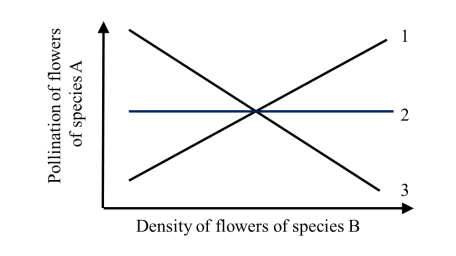
Two co-occurring plant species, A and B, flower at the same time. They are visited by the same pollinator species. If these plants are pollinator-limited, then which one or more of the following statements is/are correct with regard to the figure shown below?