
Cold Joint Definition in Concrete
A cold joint specifically refers to the undesirable interface or boundary that forms between two layers of concrete when a fresh batch is poured against concrete that has already begun to set or has hardened.
This situation arises when there's a significant delay between successive concrete placements. The first layer loses its plasticity and sufficient heat of hydration before the next layer is added. Consequently, the two layers fail to bond properly, creating a weak plane within the structure. This discontinuity can compromise the overall strength and durability of the concrete member.
Important Questions from Building Construction Techniques
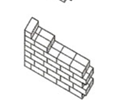
Match the brick masonry bond type in Group I with the corresponding illustration in Group II
Group I Group II (P) Rat Trap (1) 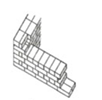
(Q) English (2) 
(R) Flemish (3) 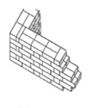
(S) Stretcher (4) 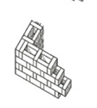
(5) 
- Match the Elements in Group - I with their Applications in Group - II
Group - I Group - II P Bracket 1 Door Q Baluster 2 Dome R Key stone 3 Cornice S Holdfast 4 Arch 5 Staircase - Match the Vibrator Types in Group-I with their related Areas of Application in Group-II
Group-I Group-II P Needle Vibrator 1 Concrete Pavement Q Shutter Vibrator 2 Pre-cast Concrete Unit R Surface Vibrator 3 Beam-Column Junction S Table Vibrator 4 Retaining Wall 5 Slip Forming - Match the type of Temporary Structures in Group - I with their corresponding Functions in Group - II
Group-I Group-II P Scaffolding 1 To support unsafe structure Q Formwork 2 To support platforms for workmen and materials at raised height during construction R Shoring 3 Removal of water from pits S Underpinning 4 Mould for RCC Structure 5 Strengthening the existing foundation Associate the terms in Group-I with the building hardware in Group-II
Group-I Group-II P Parliamentary 1 Bar Q Aldrop 2 Lock R Panic 3 Hinge S Mortise 4 Bolt


