
Based on the three statements given below, choose the CORRECT option.
Statement I: Echinoids have water vascular system.
Statement II: Delthyrium and pedicle foramen are found in the brachial valve of brachiopods.
Statement III: Cardinal teeth, adductor muscles and chondrophore are found in bivalves.
Statement I Analysis: Echinoids
Statement I claims that echinoids possess a water vascular system. Echinoids belong to the phylum Echinodermata. A key characteristic feature of echinoderms is the presence of a water vascular system, which facilitates movement, feeding, and gas exchange. Thus, Statement I is correct.
Statement II Analysis: Brachiopods
Statement II asserts that the delthyrium and pedicle foramen are located in the brachial valve of brachiopods. In brachiopods, the delthyrium and the associated pedicle foramen (an opening for the pedicle) are characteristic structures found on the pedicle valve (ventral valve), not the brachial valve (dorsal valve). Therefore, Statement II is incorrect.
Statement III Analysis: Bivalves
Statement III states that cardinal teeth, adductor muscles, and chondrophore are found in bivalves. Bivalves utilize adductor muscles to close their shells. Cardinal teeth are part of the hinge structure in many bivalves, aiding articulation. A chondrophore is a projection that supports the ligament in certain bivalve groups. Hence, Statement III is correct.
Conclusion on Statements
- Statement I: Correct
- Statement II: Incorrect
- Statement III: Correct
Based on the analysis, Statements I and III are correct, while Statement II is incorrect. This aligns with Option 1.
Important Questions from Paleobiology (Taxonomy, Morphology of Invertebrates)
- Which of the following is/are diagnostic morphological feature(s) of brachiopods?
- Match the following invertebrate genera in Group I with their corresponding Class/Phylum in Group II:
Group I Group II P. Mytilus 1. Brachiopoda Q. Planorbis 2. Cephalopoda R. Productus 3. Gastropoda S. Acanthoceras 4. Pelecypoda - Given below are pairs of "living fossils". Which one of the following is a brachiopod-mollusc pair?
- Match the features (Group I) with the corresponding invertebrate genera (Group II).
Group I Group II P. Cardinal Fossula 1. Calymene Q. Chrondrophore 2. Rhynchonella R. Lophophore 3. Zaphrentis S. Glabella 4. Mya Match the following patterns (listed in Group I) with their appropriate Cephalopod sutures (listed in Group II). Arrow gives the direction of aperture.
Group I Group II P. 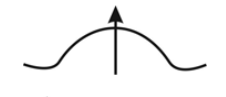
1. Ceratitic Q. 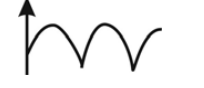
2. Nautilitic R. 
3. Goniatitic S. 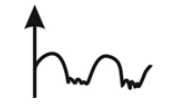
4. Orthoceratitic


