Why the Indian Rupee is Falling: Key Reasons and Economic Impact
Why in the News?
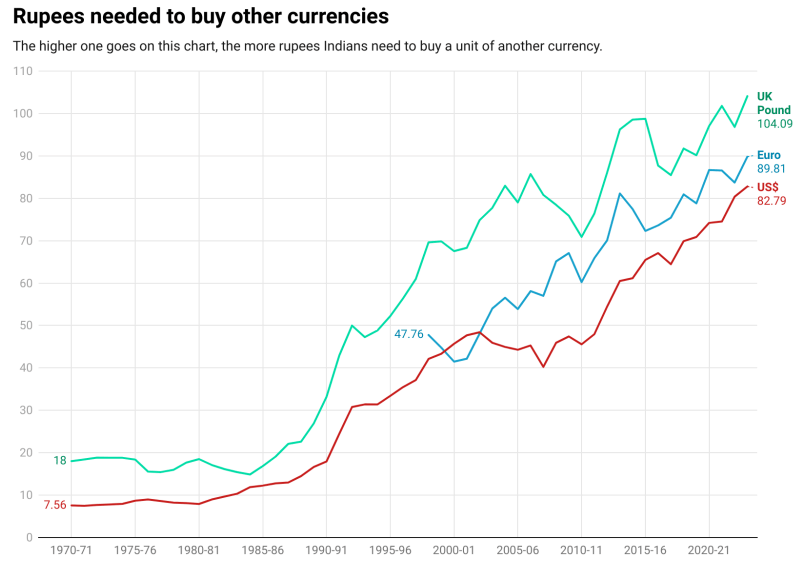
The Indian rupee recently hit a record low against the US dollar, breaching the 85 mark. This development raises significant concerns for the Indian economy. Below is an in-depth look at the factors behind this decline and its implications.
News Details
- Record Low Against the Dollar: The Indian rupee hit an all-time low of 85.83 against the US dollar, reflecting a sharp depreciation.
- Panic Dollar Buying: Importers engaged in panic dollar buying, further exacerbating the rupee's fall.
- RBI Intervention: The Reserve Bank of India (RBI) intervened to curb the decline, stabilizing the rupee slightly before market close.
- Persistent Decline: The rupee has been on a weakening streak, setting record lows for eight consecutive sessions.
Reasons for the Fall
- High Dollar Demand: Maturing non-deliverable forwards (NDF) and currency futures increased dollar demand in the forex market.
- Global Dollar Strength: The US dollar remained firm due to expectations of fewer Federal Reserve interest rate cuts.
- Protectionist Policies: Speculation about protectionist measures under the Trump administration heightened inflation concerns, strengthening the dollar.
- Trade Deficit: A widening trade deficit added to the pressure on the rupee, as import payments require dollars.
- FPI Outflows: Foreign portfolio investors withdrew funds from Indian equity markets due to valuation concerns and a preference for safer US treasuries.
Impacts
- Higher Import Costs: A weaker rupee increases the cost of imports, particularly crude oil, fueling domestic inflation.
- Corporate Margins: Companies with dollar-denominated liabilities face increased costs, squeezing profit margins.
- Investor Sentiment: Persistent currency weakness deters foreign investors and triggers further capital outflows.
- Fiscal Strain: Rising costs for imports and external debt servicing strain government finances.
Response by RBI
- Spot Market Intervention: The RBI sold dollars in the spot market to stabilize the rupee.
- NDF Market Action: The RBI intervened in the NDF market to prevent excessive forex reserve depletion.
- Gradual Adjustment Policy: The RBI allowed the rupee to adjust over time, correcting overvaluation and maintaining competitiveness.
About Exchange Rate
- Definition: The exchange rate represents the price of one currency in terms of another, such as the amount of rupee required to buy one US dollar.
- Market Dynamics: Exchange rates fluctuate based on supply and demand dynamics in the currency market.
Types of Demand Impacting Rupee Exchange Rate
- Trade in Goods:
- Higher Imports: Increased imports from the US raise dollar demand, weakening the rupee.
- Trade Imbalance: Persistent trade deficits favor the dollar.
- Trade in Services:
- Tourism and Outsourcing: Demand for foreign services like tourism increases dollar demand.
- Service Exports: Robust IT service exports can strengthen the rupee.
- Investment Flows:
- FPI Inflows: Higher foreign portfolio investments boost rupee demand.
- FPI Outflows: Fund withdrawals by foreign investors weaken the rupee.
Factors Affecting Demand
- Inflation Rates: Higher inflation in India reduces the rupee's purchasing power.
- Interest Rate Differentials: Lower interest rates in India make the dollar more attractive to investors.
- Trade Policies: Protectionist measures reduce demand for Indian goods and services.
- Geopolitical Events: Political instability and global tensions increase demand for safe-haven currencies like the dollar.
Challenges
- Persistent Trade Deficits: India’s reliance on imports, particularly crude oil, creates constant dollar demand.
- Dependence on Foreign Investments: The rupee is vulnerable to FPI and FDI flow shifts.
- High Inflation: Inflation erodes the rupee’s purchasing power and competitiveness.
- Geopolitical Risks: Global tensions can lead to currency volatility.
- Debt Servicing Costs: A weaker rupee increases the burden of repaying dollar-denominated external debt.
- Limited Forex Reserves: Depletion of reserves could constrain RBI’s ability to manage future crises.
Way Forward
- Boosting Exports:
- Promote export-oriented industries.
- Provide incentives for sectors like textiles, pharmaceuticals, and IT.
- Attracting Stable Investments:
- Focus on long-term FDI over volatile FPI.
- Simplify regulations and improve ease of doing business.
- Diversifying Imports:
- Reduce crude oil dependence by investing in renewable energy.
- Encourage domestic production of critical imports like electronics.
- Managing Inflation:
- Implement fiscal and monetary policies to control inflation.
- Strengthening Reserves:
- Build robust forex reserves to manage volatility.
- Explore currency swap agreements with trading partners.
- Policy Reforms:
- Enhance productivity and competitiveness through structural reforms.
- Strengthen trade agreements for better global market access.
Download the PREPP App and attempt FREE IAS Exam Mock Tests and get complete study material!
*The article might have information for the previous academic years, please refer the official website of the exam.
How likely are you to recommend Prepp.in to a friend or a colleague?
Not so likely
Highly likely
UPSC CSE (IAS) 2027 Prelims Mock Test Series
Live Quizzes
Quizzes
Live Tests

• Live
Live Test : UPSC CSE Prelims CSAT (Paper-II) (Oct 08 - 11)
120 Minutes
80 Questions
200 Marks
English, Hindi
MEDIUM
Test will end in 18:14:24
Full Tests
Full Test - 04: UPSC CSE Prelims CSAT (Paper-II)
120 Minutes
80 Questions
200 Marks
English, Hindi
MEDIUM
Attempted by 18 aspirants in 12 hours
Full Test - 03: UPSC CSE Prelims CSAT (Paper-II)
120 Minutes
80 Questions
200 Marks
English, Hindi
MEDIUM
Attempted by 19 aspirants in 12 hours
Previous Year Papers
UPSC CSE Prelims 2026 GS Paper 1 Question Paper (24-May-2026)
120 Minutes
100 Questions
200 Marks
2,977 Attempted
English, Hindi
MEDIUM
Attempted by 12 aspirants in 12 hours
UPSC CSE Prelims 2026 CSAT Paper 2 Question Paper (24-May-2026)
120 Minutes
80 Questions
200 Marks
3,154 Attempted
English, Hindi
MEDIUM
Attempted by 12 aspirants in 12 hours
Videos

17 February 2025 | The Hindu Must Read Articles | Current Affairs
7,202 Views
•4
•7 months ago

16 February 2026 | The Hindu Must Read Articles | Current Affairs
6,962 Views
•4
•7 months ago

13 February 2026 | The Hindu Must Read Articles | Current Affairs
8,765 Views
•5
•7 months ago

12 February 2026 | The Hindu Must Read Articles | Current Affairs
5,788 Views
•4
•7 months ago






Also Check
IAS Exam Overview
IAS Exam Admit Card
IAS Exam Question Paper 2026
IAS Exam Mains Syllabus
IAS Exam Application Process
IAS Exam Eligibility
IAS Exam Result
IAS Exam Exam Pattern
IAS Exam CSAT Syllabus
IAS Exam Answer Key
IAS Exam Previous Year Paper
IAS Exam Current Affairs
IAS Exam Mains Question Paper
IAS Exam IAS Courses
IAS Exam UPSC Study Notes
IAS Exam Foundation Course 2024
IAS Exam Prelims Question Paper
IAS Exam Exam Center
IAS Exam Foundation Course 2025
IAS Exam Notification 2026
IAS Exam IAS Success Stories
IAS Exam Salary
IAS Exam Cutoff
IAS Exam Mock Tests
IAS Exam News


Comments