Why Olive Ridley Sea Turtles Are Dying: Threats, Habitat, and Conservation Efforts
Why in the News?
Dead Olive Ridley sea turtles are increasingly washing ashore in Visakhapatnam, India, raising alarms among conservationists and marine biologists.
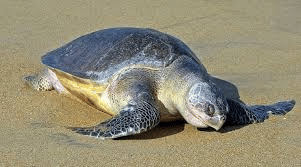
Why Are Olive Ridley Sea Turtles Dying?
Marine pollution and trawling activities are the leading suspects behind these alarming deaths. These human-induced factors exacerbate the challenges faced by this vulnerable species.
Impact
The rising number of deaths poses a severe threat to the survival of Olive Ridley sea turtles, already listed as a vulnerable species under multiple conservation frameworks.
About Olive Ridley Sea Turtle
Scientific Name
Lepidochelys olivacea
Common Names
Also known as the Pacific ridley sea turtle, these turtles are one of the smallest yet most abundant sea turtle species globally.
Habitat and Distribution
Habitat
Olive Ridley turtles thrive in diverse marine environments, including coastal areas, estuaries, and open oceans.
Distribution
They are predominantly found in the warm and tropical waters of the Pacific, Indian, and Atlantic Oceans. In India, their nesting sites are concentrated along the eastern coastline, particularly in Odisha and Andhra Pradesh.
Characteristics and Behavior
Size:
Adult Olive Ridley turtles typically weigh between 35–50 kg and measure approximately 60–70 cm in length.
Appearance:
Their olive-green shell gives them their distinctive name.
Diet:
As omnivores, they feed on jellyfish, algae, crustaceans, and small fish.
Mass Nesting (Arribada):
Olive Ridley turtles are globally recognized for their synchronized mass nesting events, known as arribada, where thousands of females gather to lay eggs on the same beach.
Threats to Olive Ridley Sea Turtles
- Bycatch: Accidental capture in fishing nets remains a leading cause of mortality.
- Habitat Loss: Coastal development projects often destroy crucial nesting sites.
- Pollution: Marine debris, plastic waste, and oil spills adversely affect their health and survival.
- Poaching: Illegal wildlife trade targets their eggs, meat, and shells.
- Climate Change: Rising sea levels and temperature fluctuations disrupt nesting sites and influence hatchling sex ratios.
Conservation Status
IUCN Red List
Listed as Vulnerable
Wildlife Protection Act 1972
Included in Schedule I, offering the highest level of legal protection.
CITES
Listed under Appendix I, restricting international trade.
Call to Action
The conservation of Olive Ridley sea turtles requires collaborative efforts between governments, NGOs, and local communities. Implementing sustainable fishing practices, protecting nesting habitats, and reducing marine pollution are vital steps toward ensuring their survival.
Download the PREPP App and attempt FREE IAS Exam Mock Tests and get complete study material!

Live Test : UPSC CSE Prelims CSAT (Paper-II) (Oct 08 - 11)
Full Test - 04: UPSC CSE Prelims CSAT (Paper-II)
Full Test - 03: UPSC CSE Prelims CSAT (Paper-II)
UPSC CSE Prelims 2026 GS Paper 1 Question Paper (24-May-2026)
UPSC CSE Prelims 2026 CSAT Paper 2 Question Paper (24-May-2026)

17 February 2025 | The Hindu Must Read Articles | Current Affairs

16 February 2026 | The Hindu Must Read Articles | Current Affairs

13 February 2026 | The Hindu Must Read Articles | Current Affairs









Comments