Israel-Hamas Ceasefire and Hostage Release Deal
Why in the News?
The recent decision by the Centre's Standing Committee of the National Board for Wildlife (NBWL) to permit exploratory oil and gas drilling in the eco-sensitive zone (ESZ) of the Hoollongapar Gibbon Wildlife Sanctuary in Assam has sparked concerns about the potential threats to the habitat of the endangered Western Hoolock Gibbons.
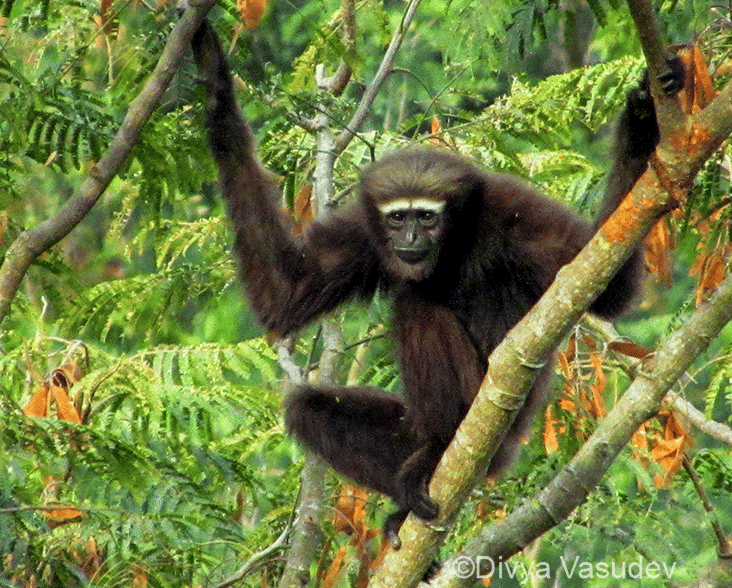
About the Western Hoolock Gibbon
- Scientific Name: Hoolock hoolock
- The Western Hoolock Gibbon (Hoolock hoolock) is a small ape belonging to the gibbon family (Hylobatidae). Renowned for its agility and unique vocalizations, it holds the distinction of being the only ape species found in India.
Habitat and Distribution
- Habitat: The species thrives in contiguous, broad-leaved wet evergreen and mixed evergreen forests, particularly in mountainous regions. A dense, unfragmented forest canopy is essential for its survival.
- Distribution: Found in Assam, Mizoram, Meghalaya, as well as in neighboring regions like Bangladesh and Myanmar (west of the Chindwin River).
Characteristics and Behavior
- Vocalizations: Known for its loud and elaborate calls, often performed as duets by mated pairs, sometimes accompanied by younger family members.
- Diet: Primarily frugivorous, feeding on ripe fruits, but also consumes flowers, leaves, shoots, and insects, particularly during the monsoon season.
- Ecological Role: Plays a crucial role as a seed disperser, aiding in forest regeneration and maintaining ecosystem balance.
Threats to the Western Hoolock Gibbon
- Habitat Loss: Rapid deforestation, forest clearance for tea cultivation, and slash-and-burn (jhum) agriculture have drastically reduced its habitat.
- Population Decline: The population has plummeted by over 90% since the 1980s, highlighting the urgency for conservation efforts.
Conservation Status
- IUCN Red List: Endangered
- Wildlife Protection Act, India: Schedule III
- CITES Listing: Appendix I
Conservation Efforts and Challenges
With its critical role in forest ecosystems and its precarious status, the Western Hoolock Gibbon demands focused conservation strategies. The recent decision to allow industrial activity in its habitat underscores the tension between development and environmental preservation. Strengthened protection measures, community involvement, and sustainable practices are essential to secure the future of this unique species.
Download the PREPP App and attempt FREE IAS Exam Mock Tests and get complete study material!

Live Test : UPSC CSE Prelims CSAT (Paper-II) (Oct 08 - 11)
Full Test - 04: UPSC CSE Prelims CSAT (Paper-II)
Full Test - 03: UPSC CSE Prelims CSAT (Paper-II)
UPSC CSE Prelims 2026 GS Paper 1 Question Paper (24-May-2026)
UPSC CSE Prelims 2026 CSAT Paper 2 Question Paper (24-May-2026)

17 February 2025 | The Hindu Must Read Articles | Current Affairs

16 February 2026 | The Hindu Must Read Articles | Current Affairs

13 February 2026 | The Hindu Must Read Articles | Current Affairs









Comments