Water Hyacinth: An Invasive Threat to Kenyan Lakes and Ecosystems
Overview of Water Hyacinth
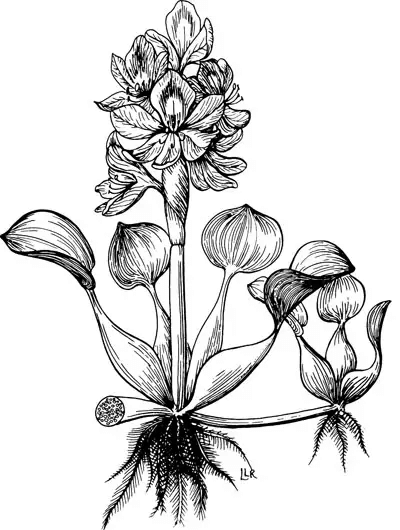
- Water hyacinth (Eichhornia crassipes) is a floating aquatic plant known for its clusters of spongy stalks and beautiful purple flowers.
- Native to South America, it has become an invasive species, causing significant environmental and economic damage in over 50 countries, including Kenya.
Key Characteristics
- Scientific Name: Eichhornia crassipes (Family: Pontederiaceae)
- Appearance: Floating leaves with spongy stalks, beautiful purple flowers, and rapid growth in water bodies.
- Habitat: Originally from South America, it now thrives in water bodies worldwide, often disrupting ecosystems.
Environmental Impact
- Oxygen Depletion: The dense mats of water hyacinth reduce dissolved oxygen levels, damaging fish populations and increasing Biological Oxygen Demand (BOD).
- Waterway Blockage: These mats obstruct waterways, impeding boat traffic, recreation, and flood control efforts.
- Increased Mosquito Breeding: Stagnant water around hyacinth mats creates ideal breeding conditions for mosquitoes.
- Decomposition: As water hyacinth decays, it releases large quantities of rotting plant material, further depleting oxygen and affecting water quality.
Economic and Social Impact:
- Fishermen's Livelihoods: The presence of water hyacinth disrupts fishing activities and negatively impacts the livelihoods of local fishermen.
- Flood Control: Hyacinth blocks water flow, reducing flood management efficiency.
Uses of Water Hyacinth:
- Phytoremediation: Water hyacinth can be used for cleaning contaminated water by trapping toxic chemicals and heavy metals.
- Eco-Friendly Products: In some regions, water hyacinth is utilized to create sustainable products, generating employment opportunities.
Conclusion:
- Water hyacinth is a double-edged sword—while it offers certain environmental benefits, its invasive nature causes severe ecological and economic harm.
- Managing and controlling its spread remains a priority for affected regions, including Kenya.
Download the PREPP App and attempt FREE IAS Exam Mock Tests and get complete study material!
*The article might have information for the previous academic years, please refer the official website of the exam.
How likely are you to recommend Prepp.in to a friend or a colleague?
Not so likely
Highly likely
UPSC CSE (IAS) 2027 Prelims Mock Test Series
Live Quizzes
Quizzes
Live Tests

• Live
Live Test : UPSC CSE Prelims CSAT (Paper-II) (Oct 08 - 11)
120 Minutes
80 Questions
200 Marks
English, Hindi
MEDIUM
Test will end in 05:29:27
Full Tests
Full Test - 04: UPSC CSE Prelims CSAT (Paper-II)
120 Minutes
80 Questions
200 Marks
English, Hindi
MEDIUM
Attempted by 19 aspirants in 12 hours
Full Test - 03: UPSC CSE Prelims CSAT (Paper-II)
120 Minutes
80 Questions
200 Marks
English, Hindi
MEDIUM
Attempted by 20 aspirants in 12 hours
Previous Year Papers
UPSC CSE Prelims 2026 GS Paper 1 Question Paper (24-May-2026)
120 Minutes
100 Questions
200 Marks
2,989 Attempted
English, Hindi
MEDIUM
Attempted by 12 aspirants in 12 hours
UPSC CSE Prelims 2026 CSAT Paper 2 Question Paper (24-May-2026)
120 Minutes
80 Questions
200 Marks
3,167 Attempted
English, Hindi
MEDIUM
Attempted by 13 aspirants in 12 hours
Videos

17 February 2025 | The Hindu Must Read Articles | Current Affairs
7,202 Views
•4
•7 months ago

16 February 2026 | The Hindu Must Read Articles | Current Affairs
6,962 Views
•4
•7 months ago

13 February 2026 | The Hindu Must Read Articles | Current Affairs
8,765 Views
•5
•7 months ago

12 February 2026 | The Hindu Must Read Articles | Current Affairs
5,788 Views
•4
•7 months ago






Also Check
IAS Exam Overview
IAS Exam Admit Card
IAS Exam Question Paper 2026
IAS Exam Mains Syllabus
IAS Exam Application Process
IAS Exam Eligibility
IAS Exam Result
IAS Exam Exam Pattern
IAS Exam CSAT Syllabus
IAS Exam Answer Key
IAS Exam Previous Year Paper
IAS Exam Current Affairs
IAS Exam Mains Question Paper
IAS Exam IAS Courses
IAS Exam UPSC Study Notes
IAS Exam Foundation Course 2024
IAS Exam Prelims Question Paper
IAS Exam Exam Center
IAS Exam Foundation Course 2025
IAS Exam Notification 2026
IAS Exam IAS Success Stories
IAS Exam Salary
IAS Exam Cutoff
IAS Exam Mock Tests
IAS Exam News


Comments