USAID Freeze and Its Global Impact: Key Takeaways
Why in the News?
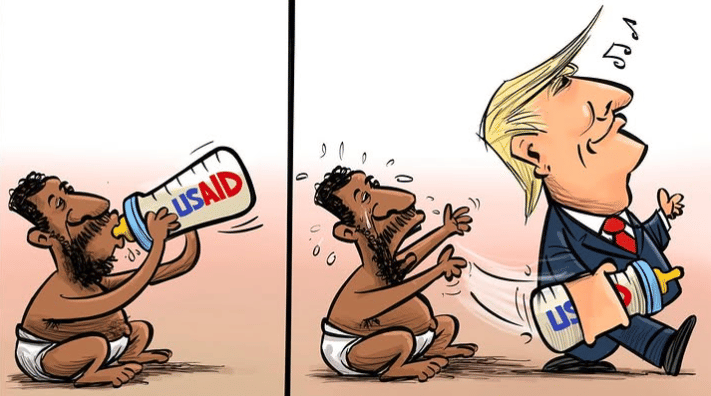
President Donald Trump recently signed an executive order imposing a 90-day freeze on all foreign development assistance provided by the United States Agency for International Development (USAID). This decision has sparked global debate regarding its political, economic, and humanitarian consequences.
News Details
- Administrative Leave for Personnel: Around 10,000 USAID employees were placed on administrative leave, except for mission-critical staff.
- Website Content Wiped: The USAID website was stripped of content, leaving only a notice about the freeze.
- Legal Challenge: A federal judge issued a temporary restraining order on staff reductions but upheld the freeze on fund disbursal.
Why Was USAID Frozen?
- Efficiency Assessment: The U.S. administration aims to evaluate program effectiveness and alignment with national interests.
- Political Strategy: Critics argue this move targets Biden-era programs and is a politically motivated decision.
- Budget Reallocation: The government intends to redirect funds towards domestic infrastructure and economic development.
- Elon Musk’s Stance: As head of the Department of Government Efficiency (DOGE), Musk has been vocal about shutting down USAID, calling it inefficient and wasteful.
- Criticism from Experts: Many former USAID officials believe this move could isolate the U.S. from global humanitarian efforts.
What is USAID?
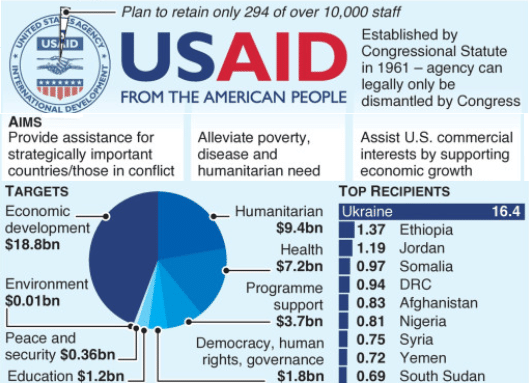
- Founded in 1961: USAID was established to consolidate U.S. foreign aid and development assistance.
- Mission Statement: To advance democracy, security, and economic prosperity worldwide.
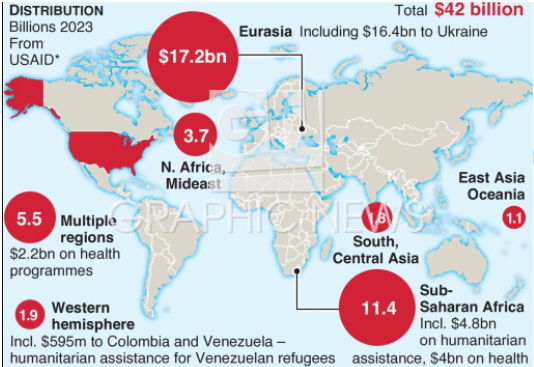
- Budget and Reach: In 2024, USAID had a budget of $44.2 billion and operated in over 100 countries.
- Key Programs:
- PEPFAR (AIDS relief)
- Feed the Future (Food security initiatives)
- Power Africa (Energy development)
- Water for the World (Clean water access)
Why Does USAID Matter?
- Humanitarian Aid Leader: USAID contributes 42% of all UN-tracked humanitarian aid.
- Global Health Initiatives: Funding for immunization, maternal health, and disease control.
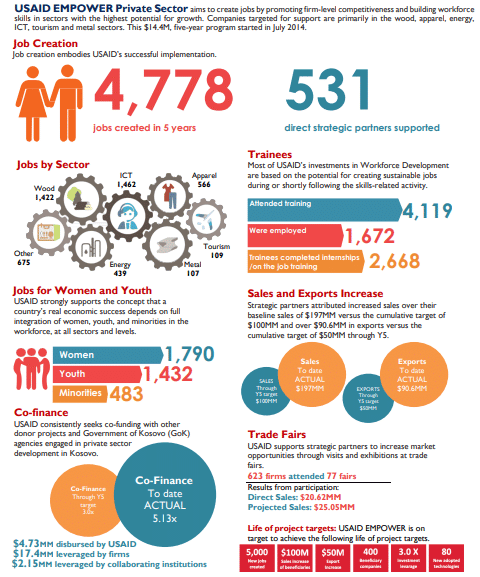
- Economic Development: Improves infrastructure, food security, and education in underprivileged regions.
- Disaster Relief: A first responder to crises such as earthquakes, famines, and refugee emergencies.
Impact of the Freeze on the World
Humanitarian Crises
- Africa:
- Only 12 personnel remain in the Africa bureau, affecting poverty, disease, and conflict mitigation programs.
- Initiatives like Power Africa and Feed the Future may collapse, endangering food security.
- Gaza and the West Bank:
- USAID provided $1.8 billion in aid since 2021.
- The freeze threatens medical support and economic recovery.
- Conflict Zones:
- Syria, Yemen, and South Sudan rely on U.S. aid for stability and peace efforts.
- Haiti Exception:
- While most aid is frozen, $40.7 million was approved for Haiti’s police force.
- Job Losses in Partner Countries:
- Many local NGOs and contractors face closure and mass unemployment.
Impact on India
- Declining Dependence: India has reduced its reliance on USAID over the past decade.
- Healthcare Support:
- USAID-funded HIV/AIDS, TB, and maternal health programs received $79.3 million in 2024.
- The freeze threatens program continuity.
- Project Suspensions:
- USAID has ordered implementing organizations in India to halt operations.
- Government Response:
- The Indian government may need to reallocate funds to sustain ongoing projects.
Challenges of the USAID Freeze
- Loss of Experienced Personnel:
- Mass layoffs mean USAID loses institutional knowledge.
- Increased Global Instability:
- Countries like Ethiopia, Afghanistan, and Somalia may face worsening conditions.
- NGO Dependency:
- Many international NGOs rely on USAID funding to function effectively.
- Diplomatic Fallout:
- The freeze could strain U.S. relations with allied nations dependent on American aid.
- Impact on U.S. Soft Power:
- USAID has been a crucial diplomatic tool.
- Scaling it back weakens U.S. influence in global affairs.
- Private Sector Partnerships:
- Many businesses collaborating with USAID may face setbacks.
Way Forward
- Alternative Funding Models:
- Encouraging private sector involvement and philanthropic contributions.
- Multilateral Engagements:
- Affected countries should seek support from the UN and World Bank.
- Domestic Funding:
- Governments must assess and allocate national funds for vital programs.
- Policy Reversal and Advocacy:
- Lawmakers, humanitarian organizations, and allies must advocate for a reconsideration of the freeze.
- Regional Cooperation:
- Countries can enhance bilateral ties and establish regional funding initiatives to compensate for U.S. withdrawal.
Conclusion
The USAID freeze has far-reaching consequences, from humanitarian crises to diplomatic tensions. While the U.S. government aims to prioritize domestic spending, the decision comes at a significant global cost. Governments, NGOs, and international organizations must act swiftly to mitigate the impact of this freeze and ensure continued global development and stability.
Download the PREPP App and attempt FREE IAS Exam Mock Tests and get complete study material!

Live Test : UPSC CSE Prelims CSAT (Paper-II) (Oct 08 - 11)
Full Test - 04: UPSC CSE Prelims CSAT (Paper-II)
Full Test - 03: UPSC CSE Prelims CSAT (Paper-II)
UPSC CSE Prelims 2026 GS Paper 1 Question Paper (24-May-2026)
UPSC CSE Prelims 2026 CSAT Paper 2 Question Paper (24-May-2026)

17 February 2025 | The Hindu Must Read Articles | Current Affairs

16 February 2026 | The Hindu Must Read Articles | Current Affairs

13 February 2026 | The Hindu Must Read Articles | Current Affairs









Comments