SYRIA: The Fall of the Assad Regime and Its Global Implications
Why in the News?
Bashar al-Assad and his family have been granted asylum in Russia following the collapse of the Assad regime in Syria, marking a pivotal moment in the country's civil war. The decision was made after extensive negotiations with rebel forces, with Russia citing "humanitarian grounds" for ensuring the safety of the former Syrian president and his close relatives.
Key Events Surrounding the Fall of the Assad Regime
- Asylum in Russia: After years of escalating conflict, Assad and his family sought refuge in Russia. This diplomatic move has significant implications for Syria’s future political landscape.
- Celebrations Across Damascus: The fall of the regime led to widespread celebrations in Damascus, where opposition forces and civilians removed portraits and statues of Assad from public spaces.
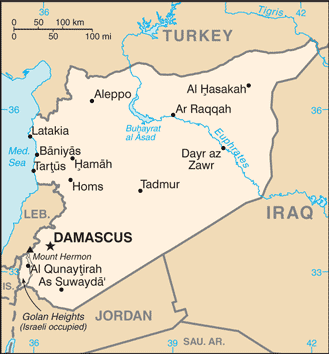
- Strategic Shifts: Rebel forces achieved significant military victories, capturing Homs on December 7, 2024, and encircling Damascus, weakening Assad’s military defenses.
Recent Developments Leading to Assad’s Fall
- Homs Offensive: The capture of Homs marked a critical turning point in the civil war. Rebel forces effectively severed Assad’s key supply lines, contributing to the regime’s collapse.
- Encirclement of Damascus: Rebel forces surrounded the Syrian capital after taking control of key towns, including Al-Sanamayn. The Syrian Army’s defenses quickly disintegrated under coordinated attacks.
- Minimal Resistance in Damascus: Government forces were overwhelmed, and many abandoned strategic positions. State media efforts to maintain order were unsuccessful, as citizens experienced heightened fear and uncertainty.
- Political Prisoner Release: Hayat Tahrir al-Sham (HTS) freed political prisoners, including detainees from Sednaya Prison, symbolizing the end of Assad’s brutal repression.
![UPSCCA]()
Factors Behind the Collapse of the Assad Regime
- Prolonged Civil War: The ongoing conflict since 2011 led to widespread disillusionment with Assad’s leadership, exacerbated by years of violence and humanitarian crises.
- Loss of Support: A significant reduction in military and financial backing from key allies, such as Russia and Hezbollah, weakened the regime’s ability to fight back.
- Economic Struggles: Decades of sanctions, the destruction of critical infrastructure, and economic mismanagement undermined Assad’s authority and his ability to govern effectively.
- Widespread Discontent: The regime’s oppressive tactics, including chemical weapon attacks and war crimes, further alienated both the Syrian population and the international community.
![Upscca]()
The History of the Syrian Civil War: From Uprising to Armed Conflict
- The Arab Spring Roots: The civil war in Syria began in 2011, spurred by peaceful protests demanding political reforms during the Arab Spring uprising.
- Escalation to Civil War: The Syrian government’s violent crackdown on protesters led to the formation of armed opposition groups, which turned the conflict into a bloody civil war.
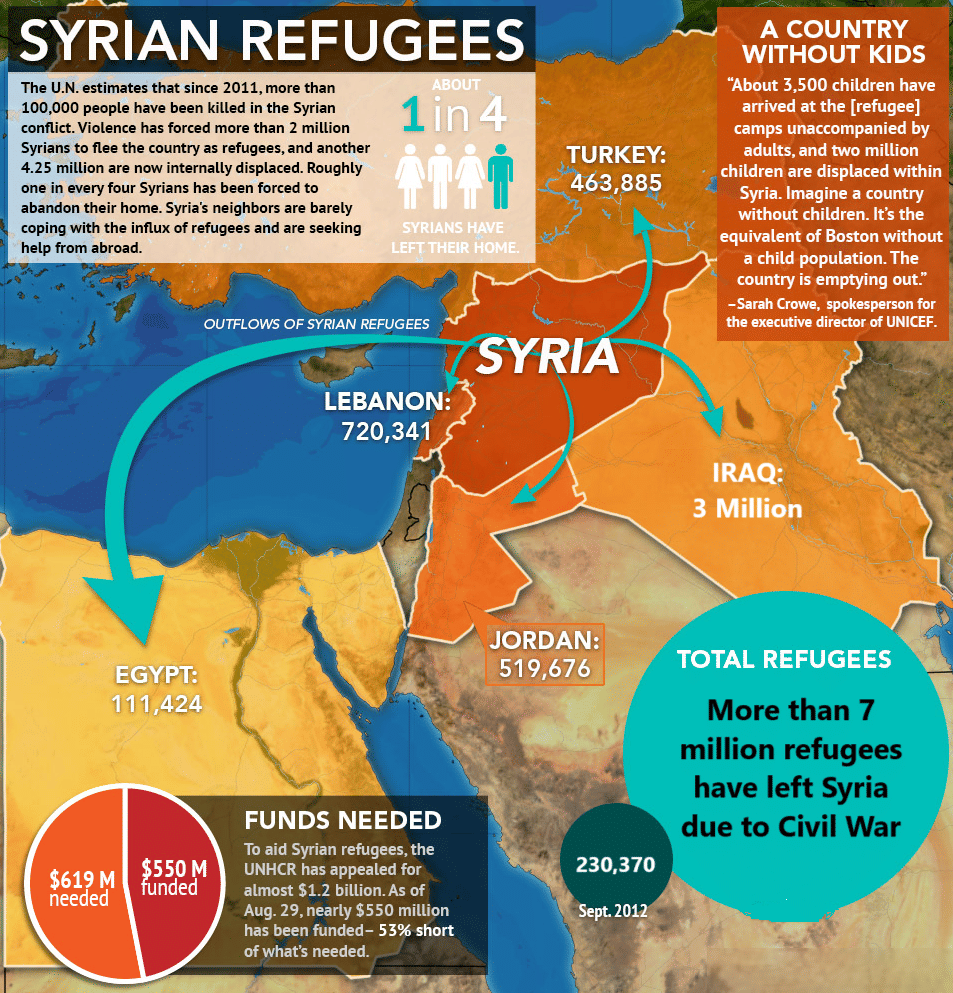
- A Major Humanitarian Crisis: The war has caused over 580,000 deaths and displaced millions, with much of the civilian suffering attributed to pro-Assad forces.
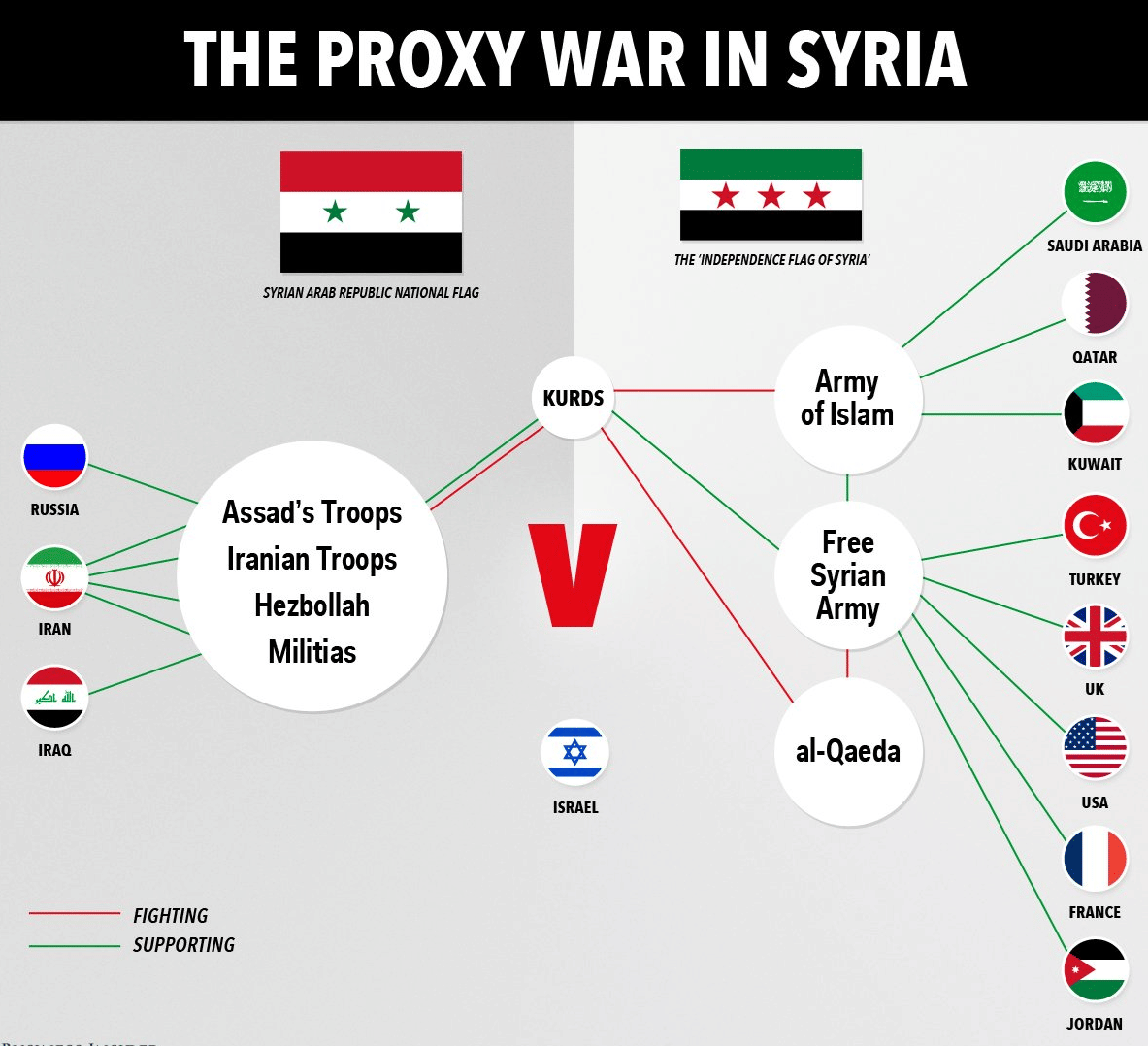
- International Involvement: The conflict quickly became a proxy war, with Russia, Iran, Turkey, and the US supporting different factions, complicating efforts to bring about a resolution.
Key Players in the Syrian Civil War
- The Assad Regime: Supported by Russia and Iran, Assad relied on military force and propaganda to stay in power.
- Rebel Groups: A broad coalition of opposition forces, including HTS, led the final offensives that led to Assad’s downfall.
- Kurdish Forces: The Kurdish-led Syrian Democratic Forces (SDF) controlled northern Syria and focused on autonomy while fighting ISIS.
- Russia & Iran: Russia’s military assistance and Iran’s financial backing were pivotal in supporting Assad’s regime.
- ISIS and Extremists: Various extremist factions, such as ISIS, took advantage of the chaos to gain power, though they were later targeted in global counterterrorism efforts.
- Israel & US: Both countries launched military operations in Syria, with Israel focusing on Iran and Hezbollah targets, while the US supported opposition groups and Kurdish forces.
![upscca]()
The Global and Regional Implications of Assad’s Fall
- Impact on Russian Influence: Russia’s strategic position in the Middle East has been severely challenged, diminishing its dominance in the region.
- Setback for Iran: The loss of Assad has harmed Iran’s regional ambitions and its long-term investments in Syria.
- Security Concerns for Israel: With the collapse of Assad’s regime, Israel launched operations to protect its borders and ensure stability in the region.
- Humanitarian Crisis and Refugees: The power vacuum left by Assad’s fall has raised fears of prolonged instability, complicating efforts to facilitate the return of refugees and rebuild Syria.
The Road Ahead: Moving Toward Stability and Reconstruction
- Political Transition: Establishing a transitional government in Syria is essential to ensuring peace. The new leadership must represent Syria's diverse groups and promote stability.
- Global Support for Reconstruction: International efforts, including financial aid and technical expertise, are needed to rebuild Syria’s infrastructure and governance systems.
- Focus on Humanitarian Relief: Efforts to address the needs of displaced Syrians, including refugees and political prisoners, will be crucial for fostering national reconciliation.
- Preventing Extremism: Countering extremist ideologies and preventing retaliation by groups like HTS is vital for a peaceful and secure transition.
- Diplomatic Engagement: Syria’s new government must prioritize diplomacy with neighboring countries to ensure regional stability and security.
Conclusion: A New Chapter for Syria and the Middle East
The fall of the Assad regime is a monumental shift in the history of Syria and the broader Middle East. As the country begins the process of rebuilding, global and regional cooperation will be essential in shaping a stable future.
Download the PREPP App and attempt FREE IAS Exam Mock Tests and get complete study material!
*The article might have information for the previous academic years, please refer the official website of the exam.
How likely are you to recommend Prepp.in to a friend or a colleague?
Not so likely
Highly likely
UPSC CSE (IAS) 2027 Prelims Mock Test Series
Live Quizzes
Quizzes
Live Tests

• Live
Live Test : UPSC CSE Prelims CSAT (Paper-II) (Oct 08 - 11)
120 Minutes
80 Questions
200 Marks
English, Hindi
MEDIUM
Test will end in 14:15:32
Full Tests
Full Test - 04: UPSC CSE Prelims CSAT (Paper-II)
120 Minutes
80 Questions
200 Marks
English, Hindi
MEDIUM
Attempted by 18 aspirants in 12 hours
Full Test - 03: UPSC CSE Prelims CSAT (Paper-II)
120 Minutes
80 Questions
200 Marks
English, Hindi
MEDIUM
Attempted by 19 aspirants in 12 hours
Previous Year Papers
UPSC CSE Prelims 2026 GS Paper 1 Question Paper (24-May-2026)
120 Minutes
100 Questions
200 Marks
2,981 Attempted
English, Hindi
MEDIUM
Attempted by 12 aspirants in 12 hours
UPSC CSE Prelims 2026 CSAT Paper 2 Question Paper (24-May-2026)
120 Minutes
80 Questions
200 Marks
3,158 Attempted
English, Hindi
MEDIUM
Attempted by 13 aspirants in 12 hours
Videos

17 February 2025 | The Hindu Must Read Articles | Current Affairs
7,202 Views
•4
•7 months ago

16 February 2026 | The Hindu Must Read Articles | Current Affairs
6,962 Views
•4
•7 months ago

13 February 2026 | The Hindu Must Read Articles | Current Affairs
8,765 Views
•5
•7 months ago

12 February 2026 | The Hindu Must Read Articles | Current Affairs
5,788 Views
•4
•7 months ago






Also Check
IAS Exam Overview
IAS Exam Admit Card
IAS Exam Question Paper 2026
IAS Exam Mains Syllabus
IAS Exam Application Process
IAS Exam Eligibility
IAS Exam Result
IAS Exam Exam Pattern
IAS Exam CSAT Syllabus
IAS Exam Answer Key
IAS Exam Previous Year Paper
IAS Exam Current Affairs
IAS Exam Mains Question Paper
IAS Exam IAS Courses
IAS Exam UPSC Study Notes
IAS Exam Foundation Course 2024
IAS Exam Prelims Question Paper
IAS Exam Exam Center
IAS Exam Foundation Course 2025
IAS Exam Notification 2026
IAS Exam IAS Success Stories
IAS Exam Salary
IAS Exam Cutoff
IAS Exam Mock Tests
IAS Exam News


Comments