Supreme Court’s Directive on UAPA Amendment Challenge
Why in the News?
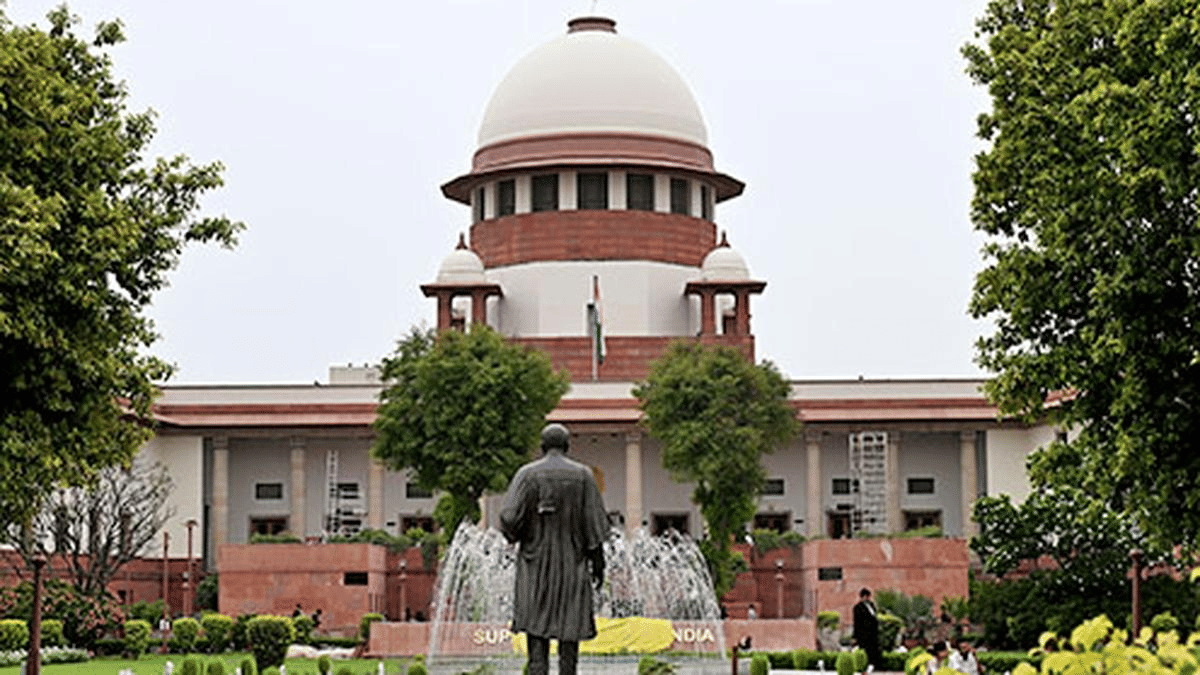
The Supreme Court of India has recently ruled that petitions challenging the 2019 amendment to the Unlawful Activities (Prevention) Act (UAPA) must first be heard and decided by the High Court.
Case Background
Petitioners argue that the 2019 amendment grants excessive and unchecked power to the Central government, allowing it to designate individuals as terrorists without judicial intervention. A bench led by Chief Justice of India Sanjiv Khanna emphasized that the High Court should analyze and deliberate on the constitutional validity of these amendments before the Supreme Court intervenes.
Understanding the Unlawful Activities (Prevention) Act (UAPA)
Purpose of the UAPA
- The UAPA is India’s primary anti-terrorism law aimed at preventing activities that threaten the nation’s sovereignty and integrity. It enables the government to designate organizations as terrorist groups and prosecute individuals engaged in unlawful activities.
Historical Context and Constitutional Basis
- Enacted in 1967, the UAPA emerged following recommendations from the National Integration Council’s Committee on National Integration and Regionalization. Its constitutional legitimacy is derived from the Constitution (Sixteenth Amendment) Act, 1963, which empowered Parliament to impose reasonable restrictions in the interests of national security on:
- Freedom of Speech and Expression
- Right to Assemble Peaceably and Without Arms
- Right to Form Associations or Unions
Evolution of the UAPA
- The UAPA has undergone several amendments to expand its scope and authority. Key amendments include those in 1969, 2004, 2008, 2012, and 2019.
Key Provisions of the 2019 UAPA Amendment
Designation of Individuals as Terrorists
- Previously, only organizations could be classified as terrorist entities. The 2019 amendment enables the Central government to label individuals as terrorists without judicial oversight.
Enhanced Powers of the National Investigation Agency (NIA)
- The amendment authorizes the NIA to:
- Investigate terrorism-related cases
- Seize property linked to terrorist activities
- Approve seizures without state government consent
Lower Ranks Allowed to Investigate Cases
- The amendment permits NIA officers of the rank of Inspector and above to conduct investigations. Earlier, only higher-ranked officers had this authority.
Strengthened International Cooperation
- The 2019 amendment incorporates international treaties, such as the International Convention for the Suppression of Acts of Nuclear Terrorism (2005), into the UAPA framework.
Criticism and Controversies Surrounding UAPA
Low Conviction Rate
- Between 2016 and 2020, only 212 out of 24,134 individuals arrested under UAPA were convicted, highlighting concerns about the law’s efficiency and potential misuse.
Alleged Violation of Fundamental Rights
- Critics argue that the law infringes upon the right to life, liberty, and free speech, as individuals can be designated as terrorists without trial.
Broad and Vague Definitions
- Terms like "terrorist," "likely to threaten," and "likely to strike terror" are considered ambiguous, leading to potential misuse by law enforcement agencies.
International Criticism
- The United Nations special rapporteurs have stated that the UAPA 2019 contradicts the Universal Declaration of Human Rights and the International Covenant on Civil and Political Rights.
Alleged Misuse Against Dissent
- The law has been reportedly used to target activists, journalists, and protestors, raising concerns over its role in suppressing dissent and minority voices.
"Process as Punishment" Concerns
- Many individuals accused under UAPA face prolonged incarceration during trials, with some being acquitted after years in prison. Critics argue that the process itself becomes a form of punishment.
Future Implications and Reforms
Judicial Review and Oversight
- Legal experts and activists advocate for judicial oversight to ensure that individuals accused under UAPA receive fair trials and bail provisions.
Balancing National Security and Civil Liberties
- Policymakers must strike a balance between protecting national security and safeguarding fundamental rights to prevent the misuse of the law.
Conclusion
The 2019 amendment to UAPA remains a contentious issue, with debates surrounding its effectiveness, constitutionality, and potential for misuse. While it strengthens India’s anti-terrorism framework, ensuring that it is not misapplied is crucial for maintaining democratic values and fundamental rights.
Download the PREPP App and attempt FREE IAS Exam Mock Tests and get complete study material!

Live Test : UPSC CSE Prelims CSAT (Paper-II) (Oct 08 - 11)
Full Test - 04: UPSC CSE Prelims CSAT (Paper-II)
Full Test - 03: UPSC CSE Prelims CSAT (Paper-II)
UPSC CSE Prelims 2026 GS Paper 1 Question Paper (24-May-2026)
UPSC CSE Prelims 2026 CSAT Paper 2 Question Paper (24-May-2026)

17 February 2025 | The Hindu Must Read Articles | Current Affairs

16 February 2026 | The Hindu Must Read Articles | Current Affairs

13 February 2026 | The Hindu Must Read Articles | Current Affairs









Comments