Sumatran Rhinoceros: A Success Story in Conservation
Why in the News?
A one-year-old Sumatran rhinoceros has recently been reported to be in good health, marking a significant achievement in the conservation of this critically endangered species. Conservation efforts continue to play a vital role in the survival of the Sumatran rhinoceros (Dicerorhinus sumatrensis), one of the rarest and smallest rhino species on Earth.
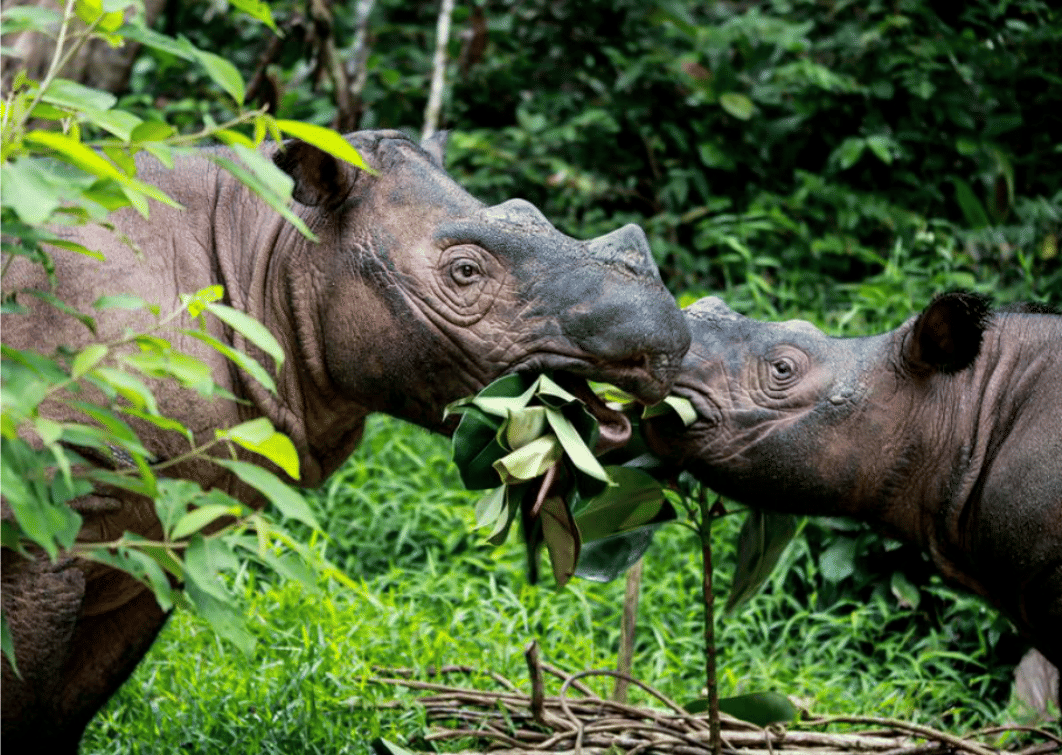
About Sumatran Rhinoceros
- Scientific Name: Dicerorhinus sumatrensis
- Etymology: The name Dicerorhinus derives from Greek, meaning "two-horned nose," referring to its distinctive two horns. The species name sumatrensis reflects its origin in Sumatra, Indonesia.
- The Sumatran rhinoceros is one of the five remaining species of rhinoceros and is native to Southeast Asia. The other four species are:
- Black Rhinoceros (Diceros bicornis)
- White Rhinoceros (Ceratotherium simum)
- Indian Rhinoceros (Rhinoceros unicornis)
- Javan Rhinoceros (Rhinoceros sondaicus)
Habitat and Distribution
Historically, the Sumatran rhinoceros was found across rainforests, swamps, and cloud forests in regions including India, Bhutan, Myanmar, Thailand, Malaysia, and Indonesia. Today, however, only a few significant populations remain:
- Four populations in Sumatra
- One population in Borneo
The species is now extinct in Malaysia and is critically endangered in other parts of its former range.
Physical Characteristics and Behavior
- Size: Adult Sumatran rhinoceroses stand between 112–145 cm (3.67–4.76 ft) at the shoulder. Their body length ranges from 2.36–3.18 meters (7.74–10.43 ft), with a weight between 500–1,000 kg (1,100–2,200 lb).
- Horns: The Sumatran rhinoceros has two horns: the larger nasal horn, measuring 15–25 cm (5.9–9.8 in), and a smaller posterior horn, which is often just a stub.
- Behavior: Primarily solitary, the Sumatran rhinoceros comes together during courtship and rearing of offspring. The species is known for its distinctive vocalizations, mud wallowing, and territorial marking.
- Diet: A folivore, the Sumatran rhinoceros feeds mainly on leaves, twigs, and saplings, consuming up to 50 kg (110 lb) of food each day.
Key Threats to the Sumatran Rhinoceros
- Poaching: Rhino horns are highly prized on the illegal wildlife trade market, often sought after for their supposed medicinal properties.
- Habitat Loss: Deforestation caused by logging, agriculture, and human encroachment has drastically reduced the natural habitat of the Sumatran rhinoceros.
- Small Population Size: With fewer than 80 individuals remaining, the species faces the risk of inbreeding and loss of genetic diversity.
- Human-Wildlife Conflict: Expanding human settlements near rhino habitats result in increased poaching risks and habitat degradation.
Conservation Status of the Sumatran Rhinoceros
- IUCN Status: Critically Endangered
- CITES Status: Appendix I (highest level of protection)
- Wildlife Protection Act Status: Schedule I (protection from hunting and poaching)
Conclusion
Efforts to conserve the Sumatran rhinoceros are vital to the survival of this critically endangered species. With less than 80 individuals remaining, it is crucial to address threats like poaching, habitat loss, and human-wildlife conflict to ensure the species' future.
Download the PREPP App and attempt FREE IAS Exam Mock Tests and get complete study material!

Live Test : UPSC CSE Prelims CSAT (Paper-II) (Oct 08 - 11)
Full Test - 04: UPSC CSE Prelims CSAT (Paper-II)
Full Test - 03: UPSC CSE Prelims CSAT (Paper-II)
UPSC CSE Prelims 2026 GS Paper 1 Question Paper (24-May-2026)
UPSC CSE Prelims 2026 CSAT Paper 2 Question Paper (24-May-2026)

17 February 2025 | The Hindu Must Read Articles | Current Affairs

16 February 2026 | The Hindu Must Read Articles | Current Affairs

13 February 2026 | The Hindu Must Read Articles | Current Affairs









Comments